

Dvořák’s Complete Symphonies
José Serebrier & Bournemouth Symphony Orchestra
Warner Classics
Show/Hide reviews
 José Serebrier conducts Dvořák’s Complete Symphonies [Bournemouth Symphony Orchestra; Warner Classics]
José Serebrier has been working his way through Antonin Dvořák’s Nine Symphonies. The recordings are now boxed and include first-releases for No.1 and the coupled-together Fourth and Fifth. Those who have been collecting the individual issues may feel let-down because (as far as I know) the only way to complete the cycle is to buy the set and duplicate five discs, which remain as originally issued.
Those five releases have all been reviewed on The Classical Source (links below), mostly by myself, and I can only concur with Robert Matthew-Walker’s enthusiasm for Serebrier’s account of Symphony No.8, which elsewhere I described as being “flexible, loving and scrupulously detailed ... splendid in character and insight.”
It remains then to pass comment on the three Symphonies that are new to the catalogue as conducted by Serebrier. The First is addressed by him in his note for the booklet. He refers to the “glaring harmonic errors in the last movement, which I have corrected for this recording ... had he heard the work and revised the score, Dvořák would have done the same.” Serebrier goes on to say that he listened to numerous versions of this work (to see how his conductor-colleagues dealt with these passages – they didn’t!) and consulted widely. He has combined the revisions by Clark McAlister (the Editor-in-Chief at Kalmus, the publisher of the work’s Critical Edition) with his own emendations.
‘The Bells of Zlonice’ is large-scale and ambitious, 56 minutes from Serebrier. He conducts it with great conviction and energy, the Bournemouth Symphony Orchestra vibrant in response. Although it may not be Dvořák’s greatest music there is much drama and poetry enshrined in it, powerfully and sensitively conveyed here, the lengthy first-movement exposition indivisibly repeated (typically), the 20-minute playing-time for this opener not a second too long; there is some glorious music here. So too in the restless Adagio, given Brucknerian space by Serebrier, and the Scherzo dances vivaciously with pointed rhythms, then proudly marches into the Trio. As for the finale, effectively unique given Serebrier’s additional alterations (even if recent recordings such as by Jiří Bělohlávek and Karel Mark Chichon use the Critical Edition), it emerges as purposeful and resplendent, sometimes jaggedly so.
The disc is completed by two Slavonic Dances, No.4 and – with a fond farewell – No.8, both from Opus 72 (bringing the box’s total to eight, including four from Opus 46); both are given with pride and, where appropriate, pathos and also a cuckooing clarinet! The resonance of the A-flat Dance is cut off a little too soon.
The other new disc couples Symphonies 4 and 5 (if strangely in reverse order), wonderfully delectable works both, bar none. No.5, with claims to be Dvořák’s unofficial ‘pastoral symphony’ (like Brahms 2), is seen in a slightly tougher light by Serebrier, certainly rhythmically, while not denuding its flora and fauna, and open air, aspects. There is a love of life here, a celebration of beauty and exuberance, the orchestration full of beguiling detail. The Andante con moto sings an eloquent song, but the link into the Scherzo is poorly edited – ‘black-hole’ silence for a few seconds in music that should flow one to another (the yearning introduction to the third movement is also marked Andante con moto) – yet once it is into its stride there is plenty of joyful liveliness. Dvořák reserves the greatest striving, and some ominous clouds, for the finale, and also one of his most expansive melodies; come the end, all is imperious triumph, fanfares to the fore, relished eagerly by those in Bournemouth.
Quite why Symphony 4 is so little played is a mystery; it overflows with tunes and high spirits: life-enhancing music tinged with soulfulness in the slow movement (quite Wagnerian in its Tannhäuser-like scoring, but with Dvořák’s greater humanity). Then the Scherzo (once used as the signature-tune for BBCTV’s The Expert, which first aired in 1968 and starred Marius Goring) really struts the dance-floor and gets even more foot-tapping in the Trio ... and if this isn’t enough the finale sweeps the listener along infectiously and also touches the heart with yet-another of Dvořák’s generous melodies.
Serebrier’s Dvořák cycle is an excellent set, good and varied, to rank with such classic versions as those conducted by Kertész, Kubelík, Rowicki and Suitner – and others – and with some initial sonic shortcomings overcome for the more-recent releases. If the concert-goer is denied many of this composer’s riches, the record-collector is well-served and has the enlightenment of knowing music beyond those scores that are habitually trotted out. My listening ended with the Fourth Symphony, its coda making one want to get up and jive! And how emphatic Serebrier makes the final chords: Dvořák at his most outgoing.
Colin Anderson, Classical Source
 Dvořák: The Complete Symphonies (Box set)
One of the most recorded conductors of his generation, José Serebrier here completes his much lauded survey of Dvořák's symphonies, adding Nos. 1, 4 and 5 to a series of Bournemouth Symphony Orchestra performances that have been praised for their considerable expressivity, remarkable handling of detail and supreme orchestral balance. The works are accompanied by a variety of other concert pieces, among which are a selection of Dvořák's lively, nationalist-driven Slavonic Dances as well as the wonderfully lyrical Legends, endearing miniature tone poems which reveal the Czech composer's mastery of the shortest forms.
‘When it comes to conducting Dvořák, José Serebrier isn't afraid to get mud on his boots,’ declared Gramophone magazine of the legendary maestro. An eight-time GRAMMY winner with more than 300 releases to his discography, Serebrier has a special affinity for Slavic music. But until recently he had recorded only two symphonies by Antonín Dvořák, Nos. 8 and 9. This has been remedied with a newly recorded Complete Symphonies Cycle with the Bournemouth Symphony Orchestra. This long-awaited set on Warner Classics also features a variety of other concert pieces; among them a selection of Dvořák’s lively, nationalist-driven Slavonic Dances, as well as the wonderfully lyrical Legends, charming tone poems which reveal the Czech composer’s mastery of shorter forms.
The Dvořák project began with three individual CD releases: symphonies 7, 8 and 9, each coupled with shorter evocative tone poems and dances. The cycle has gone on to garner rave reviews: ‘Serebrier's balance of the varying instrumental tapestries is well-nigh ideal: it is impossible to imagine a finer account of the work than this... The recording quality is simply flawless.’ (Symphonies 2-3, International Record Review).
In the booklet notes, Maestro Serebrier explains that Dvořák’s Symphony No. 1 ‘The Bells of Zlonice‘ was composed for a competition in early 1865 but the score was never returned to the composer and he never heard it performed. It was re-discovered in 1923 and given its premiere in 1936. Serebrier, convinced of “some glaring harmonic errors in the last movement”, consulted with music publishers, musicologists and historians, and with the Dvořák manuscript library in Prague, before correcting these. He believes Dvořák would have done the same had he heard the work.
Presto Classical
 Dvořák Complete Symphony Cycle, José Serebrier & Bournemouth Symphony Orchestra
Warner Classics
José Serebrier is, quite simply, a recording legend. In his incredible career it perhaps comes as a surprise that, while he has previously recorded several of Dvořák’s symphonies, this series marks his first ever recordings of Symphonies Nos. 1–7, and follows the Glazunov Symphonies and Concertos available as a box set from Warner Classics. With liner notes by Maestro Serebrier, and a world-class production team on board, this is set to be an important landmark in the recording of Dvořák’s symphonies.
Editorial Review, Amazon.com
José Serebrier has been working his way through Antonin Dvořák’s Nine Symphonies. The recordings are now boxed and include first-releases for No.1 and the coupled-together Fourth and Fifth. Those who have been collecting the individual issues may feel let-down because (as far as I know) the only way to complete the cycle is to buy the set and duplicate five discs, which remain as originally issued.
Those five releases have all been reviewed on The Classical Source (links below), mostly by myself, and I can only concur with Robert Matthew-Walker’s enthusiasm for Serebrier’s account of Symphony No.8, which elsewhere I described as being “flexible, loving and scrupulously detailed ... splendid in character and insight.”
It remains then to pass comment on the three Symphonies that are new to the catalogue as conducted by Serebrier. The First is addressed by him in his note for the booklet. He refers to the “glaring harmonic errors in the last movement, which I have corrected for this recording ... had he heard the work and revised the score, Dvořák would have done the same.” Serebrier goes on to say that he listened to numerous versions of this work (to see how his conductor-colleagues dealt with these passages – they didn’t!) and consulted widely. He has combined the revisions by Clark McAlister (the Editor-in-Chief at Kalmus, the publisher of the work’s Critical Edition) with his own emendations.
‘The Bells of Zlonice’ is large-scale and ambitious, 56 minutes from Serebrier. He conducts it with great conviction and energy, the Bournemouth Symphony Orchestra vibrant in response. Although it may not be Dvořák’s greatest music there is much drama and poetry enshrined in it, powerfully and sensitively conveyed here, the lengthy first-movement exposition indivisibly repeated (typically), the 20-minute playing-time for this opener not a second too long; there is some glorious music here. So too in the restless Adagio, given Brucknerian space by Serebrier, and the Scherzo dances vivaciously with pointed rhythms, then proudly marches into the Trio. As for the finale, effectively unique given Serebrier’s additional alterations (even if recent recordings such as by Jiří Bělohlávek and Karel Mark Chichon use the Critical Edition), it emerges as purposeful and resplendent, sometimes jaggedly so.
The disc is completed by two Slavonic Dances, No.4 and – with a fond farewell – No.8, both from Opus 72 (bringing the box’s total to eight, including four from Opus 46); both are given with pride and, where appropriate, pathos and also a cuckooing clarinet! The resonance of the A-flat Dance is cut off a little too soon.
The other new disc couples Symphonies 4 and 5 (if strangely in reverse order), wonderfully delectable works both, bar none. No.5, with claims to be Dvořák’s unofficial ‘pastoral symphony’ (like Brahms 2), is seen in a slightly tougher light by Serebrier, certainly rhythmically, while not denuding its flora and fauna, and open air, aspects. There is a love of life here, a celebration of beauty and exuberance, the orchestration full of beguiling detail. The Andante con moto sings an eloquent song, but the link into the Scherzo is poorly edited – ‘black-hole’ silence for a few seconds in music that should flow one to another (the yearning introduction to the third movement is also marked Andante con moto) – yet once it is into its stride there is plenty of joyful liveliness. Dvořák reserves the greatest striving, and some ominous clouds, for the finale, and also one of his most expansive melodies; come the end, all is imperious triumph, fanfares to the fore, relished eagerly by those in Bournemouth.
Quite why Symphony 4 is so little played is a mystery; it overflows with tunes and high spirits: life-enhancing music tinged with soulfulness in the slow movement (quite Wagnerian in its Tannhäuser-like scoring, but with Dvořák’s greater humanity). Then the Scherzo (once used as the signature-tune for BBCTV’s The Expert, which first aired in 1968 and starred Marius Goring) really struts the dance-floor and gets even more foot-tapping in the Trio ... and if this isn’t enough the finale sweeps the listener along infectiously and also touches the heart with yet-another of Dvořák’s generous melodies.
Serebrier’s Dvořák cycle is an excellent set, good and varied, to rank with such classic versions as those conducted by Kertész, Kubelík, Rowicki and Suitner – and others – and with some initial sonic shortcomings overcome for the more-recent releases. If the concert-goer is denied many of this composer’s riches, the record-collector is well-served and has the enlightenment of knowing music beyond those scores that are habitually trotted out. My listening ended with the Fourth Symphony, its coda making one want to get up and jive! And how emphatic Serebrier makes the final chords: Dvořák at his most outgoing.
Colin Anderson, Classical Source
One of the most recorded conductors of his generation, José Serebrier here completes his much lauded survey of Dvořák's symphonies, adding Nos. 1, 4 and 5 to a series of Bournemouth Symphony Orchestra performances that have been praised for their considerable expressivity, remarkable handling of detail and supreme orchestral balance. The works are accompanied by a variety of other concert pieces, among which are a selection of Dvořák's lively, nationalist-driven Slavonic Dances as well as the wonderfully lyrical Legends, endearing miniature tone poems which reveal the Czech composer's mastery of the shortest forms.
‘When it comes to conducting Dvořák, José Serebrier isn't afraid to get mud on his boots,’ declared Gramophone magazine of the legendary maestro. An eight-time GRAMMY winner with more than 300 releases to his discography, Serebrier has a special affinity for Slavic music. But until recently he had recorded only two symphonies by Antonín Dvořák, Nos. 8 and 9. This has been remedied with a newly recorded Complete Symphonies Cycle with the Bournemouth Symphony Orchestra. This long-awaited set on Warner Classics also features a variety of other concert pieces; among them a selection of Dvořák’s lively, nationalist-driven Slavonic Dances, as well as the wonderfully lyrical Legends, charming tone poems which reveal the Czech composer’s mastery of shorter forms.
The Dvořák project began with three individual CD releases: symphonies 7, 8 and 9, each coupled with shorter evocative tone poems and dances. The cycle has gone on to garner rave reviews: ‘Serebrier's balance of the varying instrumental tapestries is well-nigh ideal: it is impossible to imagine a finer account of the work than this... The recording quality is simply flawless.’ (Symphonies 2-3, International Record Review).
In the booklet notes, Maestro Serebrier explains that Dvořák’s Symphony No. 1 ‘The Bells of Zlonice‘ was composed for a competition in early 1865 but the score was never returned to the composer and he never heard it performed. It was re-discovered in 1923 and given its premiere in 1936. Serebrier, convinced of “some glaring harmonic errors in the last movement”, consulted with music publishers, musicologists and historians, and with the Dvořák manuscript library in Prague, before correcting these. He believes Dvořák would have done the same had he heard the work.
Presto Classical
Warner Classics
José Serebrier is, quite simply, a recording legend. In his incredible career it perhaps comes as a surprise that, while he has previously recorded several of Dvořák’s symphonies, this series marks his first ever recordings of Symphonies Nos. 1–7, and follows the Glazunov Symphonies and Concertos available as a box set from Warner Classics. With liner notes by Maestro Serebrier, and a world-class production team on board, this is set to be an important landmark in the recording of Dvořák’s symphonies.
Editorial Review, Amazon.com

Dvořák Symphony Cycle Volume Two: Symphony No. 7
José Serebrier & Bournemouth Symphony Orchestra
Warner Classics
Show/Hide reviews
 The Seventh Symphony receives a warm, rounded performance
LET'S start with the etceteras, which will inevitably be regarded as fillers or add-ons, underestimating their significance and musical value. Dvorak's Scherzo Capriccioso is one of his great works. It brims with brio, is infectiously accessible and, with its spring-loaded theme, bounds off the page. José Serebrier's new recording of it with the Bournemouth Symphony Orchestra, volume two of Warner Classics' survey of the composer's symphonies, reiterates the question: why is this work, along with the lovely symphonic poem, In Nature's Realm, so neglected in concert programmes? Its length? The fact that, as a 16-minute overture of unswerving brilliance it might upstage anything that follows? Goodness knows. The Seventh Symphony receives a warm, rounded performance that resolutely refuses to over-egg the drama of the piece, but lets it speak naturally in a spacious performance that resists rhetoric and eschews exaggeration. Nicely-planned programme, with the proceedings launched by a beefy account of the Slavonic Dance in G minor.
Michael Tumelty
 José Serebrier extends his Dvorak survey with fiery, colorful renditions of the composer’s mature masterpieces in various forms.
 Recorded 21-22 September 2011, this most recent addition to the José Serebrier survey of the Dvorak symphony cycle should prove among the most colorful of installments, opening with the 1878 G Minor Slavonic Dance, a high-powered Furiant (Presto) rife with cross rhythms and a lovely flute part.
From the opening pedal D in the bass, the 1885 D Minor Symphony reveals itself a worthy successor to the Beethoven and Schumann symphonies, both dramatic and eminently lyrical. Conductors ranging from Talich to Leitner, Kertesz to Szell, Celibidache to Giulini, have gloried in its finely wrought colors and seamless transitions. The first movement, Allegro maestoso, extends its melodic texture to embrace a serene song in B-flat Major, the Bournemouth woodwinds chirruping in gracious colors. Once Serebrier establishes the movement’s swaggering momentum, the structural influence of sonata-form plays out with intricately harmonious inevitability, marked by trumpets and tympani. But no less effective come the marvelously delicate passages and open-work, weaving the ground-motif in Dvorak’s ever fertile variants until a ferocious peroration in stretto surveys a height allotted to Beethoven, Wagner, and Brahms of theF Major Symphony.
The Poco adagio reveals equal melodic mastery, utilizing a repeated falling seventh in the strings, pianissimo, to effect a sense of pageant and melancholy at once. The massive swirls and dynamic shifts in the slow movement more than once point to the Brahms influence, particularly in his D Major Symphony. But the scoring and color elements in Dvorak prove even more sensuous and intricately harmonious than those in Brahms, especially as the strings merge with winds and tympani. Here, it becomes rather obvious that Serebrier vies with his venerated George Szell’s uncanny sway in this movement as recorded for Epic Records by the Cleveland Orchestra. The play of triple and duple meters invests the Scherzo: Vivace movement, a natural vehicle for a virtuoso ensemble. The Bournemouth cello and viola line, along with the already-heralded woodwinds, deserves recognition for its lithe, vivid energy. The glorious, spontaneous thrust of the music well hearkens to another Seventh, that of Beethoven. Nice bassoon work. The eminently bucolic Trio section bestows a pure pantheism without apology. The da capo returns to the primal syncopations, perhaps touched by tragedy as the coda explodes around us. The Finale: Allegro brings something of Schumann’s capacity for march-chorale to the fore, culminating in as glorious cello melody in A Major. Serebrier allows this section (repeated, true to sonata-form) a grand leisure, basking in Dvorak’s magical textural interplay. The sonic mass provided by the brass should make every audiophile especially chipper. With scoring marvelously close to Wagner’s Tannhauser, the procession moves to a terrific coda in D Major, a kind of pan-harmonic gloria in incandescent colors.
The tonepoem or overture in sonata-form In Nature’s Realm, the first of the triptych devoted to “Nature, Life, and Love” (1892), allows Serebrier’s forces sonorous, loving scope, from the ducks’ rising off the lake to the chorale invocations celebratory of the composer’s innate pantheism. Delicate filigree from strings and bassoon make for splendidly lilting effects, the string, brass, and woodwind lines soaring in “natural piety,” to quote William Wordsworth. When the music takes a darker turn, the Bournemouth battery becomes involved, only to be assuaged by the main theme and the running string figures.
The 1883 Scherzo capriccioso combines its eponymous scherzo form with the classical sonata-form to create whimsically resonant effects, revealing a gift for melody that proves incredibly magnanimous. An abundantly clever romp, the carefree music even includes a harp cadenza. Ever since I first heard this buoyant and lusciously scored piece under Rudolf Kempe, I have fallen under its eternal spell, and Serebrier and spirited company do not disappoint. Waltzes and Slavonic dances abound in merry alchemy of ¾ time in and around D-flat Major. Serebrier keeps his trumpets forward, but a spooky clarinet creeps in, a suggestion of woodland goblins and bucolic fairies. The English horn solo that introduces the middle section presents a haunted moment all its own in a piece marked by spontaneity and orchestral wizardry of the highest order.
Recorded 21-22 September 2011, this most recent addition to the José Serebrier survey of the Dvorak symphony cycle should prove among the most colorful of installments, opening with the 1878 G Minor Slavonic Dance, a high-powered Furiant (Presto) rife with cross rhythms and a lovely flute part.
From the opening pedal D in the bass, the 1885 D Minor Symphony reveals itself a worthy successor to the Beethoven and Schumann symphonies, both dramatic and eminently lyrical. Conductors ranging from Talich to Leitner, Kertesz to Szell, Celibidache to Giulini, have gloried in its finely wrought colors and seamless transitions. The first movement, Allegro maestoso, extends its melodic texture to embrace a serene song in B-flat Major, the Bournemouth woodwinds chirruping in gracious colors. Once Serebrier establishes the movement’s swaggering momentum, the structural influence of sonata-form plays out with intricately harmonious inevitability, marked by trumpets and tympani. But no less effective come the marvelously delicate passages and open-work, weaving the ground-motif in Dvorak’s ever fertile variants until a ferocious peroration in stretto surveys a height allotted to Beethoven, Wagner, and Brahms of theF Major Symphony.
The Poco adagio reveals equal melodic mastery, utilizing a repeated falling seventh in the strings, pianissimo, to effect a sense of pageant and melancholy at once. The massive swirls and dynamic shifts in the slow movement more than once point to the Brahms influence, particularly in his D Major Symphony. But the scoring and color elements in Dvorak prove even more sensuous and intricately harmonious than those in Brahms, especially as the strings merge with winds and tympani. Here, it becomes rather obvious that Serebrier vies with his venerated George Szell’s uncanny sway in this movement as recorded for Epic Records by the Cleveland Orchestra. The play of triple and duple meters invests the Scherzo: Vivace movement, a natural vehicle for a virtuoso ensemble. The Bournemouth cello and viola line, along with the already-heralded woodwinds, deserves recognition for its lithe, vivid energy. The glorious, spontaneous thrust of the music well hearkens to another Seventh, that of Beethoven. Nice bassoon work. The eminently bucolic Trio section bestows a pure pantheism without apology. The da capo returns to the primal syncopations, perhaps touched by tragedy as the coda explodes around us. The Finale: Allegro brings something of Schumann’s capacity for march-chorale to the fore, culminating in as glorious cello melody in A Major. Serebrier allows this section (repeated, true to sonata-form) a grand leisure, basking in Dvorak’s magical textural interplay. The sonic mass provided by the brass should make every audiophile especially chipper. With scoring marvelously close to Wagner’s Tannhauser, the procession moves to a terrific coda in D Major, a kind of pan-harmonic gloria in incandescent colors.
The tonepoem or overture in sonata-form In Nature’s Realm, the first of the triptych devoted to “Nature, Life, and Love” (1892), allows Serebrier’s forces sonorous, loving scope, from the ducks’ rising off the lake to the chorale invocations celebratory of the composer’s innate pantheism. Delicate filigree from strings and bassoon make for splendidly lilting effects, the string, brass, and woodwind lines soaring in “natural piety,” to quote William Wordsworth. When the music takes a darker turn, the Bournemouth battery becomes involved, only to be assuaged by the main theme and the running string figures.
The 1883 Scherzo capriccioso combines its eponymous scherzo form with the classical sonata-form to create whimsically resonant effects, revealing a gift for melody that proves incredibly magnanimous. An abundantly clever romp, the carefree music even includes a harp cadenza. Ever since I first heard this buoyant and lusciously scored piece under Rudolf Kempe, I have fallen under its eternal spell, and Serebrier and spirited company do not disappoint. Waltzes and Slavonic dances abound in merry alchemy of ¾ time in and around D-flat Major. Serebrier keeps his trumpets forward, but a spooky clarinet creeps in, a suggestion of woodland goblins and bucolic fairies. The English horn solo that introduces the middle section presents a haunted moment all its own in a piece marked by spontaneity and orchestral wizardry of the highest order.
Gary Lemco

Serebrier's control is masterly in Dvorak's 7th Symphony
Dvorak's D minor Symphony is one of his greatest achievements, placed by Donald Tovey along with the C major Symphony of Schubert and the four symphonies of Brahms, as "among the greatest and purest examples of his art-form since Beethoven". It is not an easy work to perform. Sometimes the music indeed suggests the influence of Brahms, but the work is also infused with a lyricism that sets it closer to Schubert, while it is Bohemian in much of its melodic nature and touched with a tragic feeling entirely its own. It is also highly original formally, and one of the strength's of José Serebrier's performance is his sense of form and phrasing, both in detail and in the larger concept. All good phrasing derives from a feeling for the underlying harmony; but a conductor must also sense when in a symphonic structure matters should be kept taust and when a fluency of tempo and rubato gives the players the necessary freedom and allows the music to flower.
Serebrier's control is masterly in Dvorak's opening Allegro maestoso. His understanding of the structure is secure; he also trusts his players and knows when to give them their head, with the violas (Dvorak's own under-privileged instrument) and in the solos for second oboe and third horn as much as when it is the turn of the principals. After the dark forcefulness with which he plays the opening theme, its return gently on horns in the movement's closing bars has a touchingly conclusive effect.
The recording is exceptionally quick in catching all these nuances, which are not merely decorative but are an essential part of the invention. They are beautifully handled both in the darkness of the Poco adagio and with the somewhat enigmatic Scherzo - scherzo in name and in many performances, such as those of Mackerras and Kertész, but hardly in nature with a powerfully driven performance such as this one by Serebrier, in which the dance is there but shadowed as if holding secrets. Again, the instrumental clarity is exemplary, in both performance and recording, grasping the point of the moments when a running figure on second violins or violas ads a particular shading to the colour of the melody. The start of the finale seems on the fast side for music that is darkly scored and full of portent; but Serebrier's view of the symphony is consistently held, and throughout is clearly expounded.
Two of the pieces that fill up the disc are almost of the nature of rather large lollipops. The G minor Slavonic Dance is whirled away at high speed and in high spirits, as is the more complicated Scherzo capricioso. Also included is an amiable performance of In Nature's Realm, one of the lesser known of the trilogy of overtures that includes Carnival and Othello.
John Warrack
Editorial
José Serebrier's second disc in a projected cycle of the Dvorak Symphonies with the Bournemouth Symphony Orchestra for Warner Classics has as its centerpiece the Seventh Symphony, regarded as one of Dvorak's greatest achievements. John
Warrack, who writes on page 36 that it is not an easy work to perform, is most impressed by the conductor's masterly control and total understanding of the work's many nuances.
The Indefatigable Serebrier, who was born in Uruguay of Polish and Russian parents and trained both as a composer and as a conductor in the United States, was a Stokowski protégé and also worked with Dorati, Monteux and Szell. His extensive recorded discography, with orchestras from around the world, reads like an A-Z, from the Bamberg, ECO, LSO, Philharmonica, RSNO, SCO, via Melbourne, Sydney, Moscow
and Rome, to the RPO and Toulouse Chamber Orchestra,with his energy and enthusiasm undiminished.
LET'S start with the etceteras, which will inevitably be regarded as fillers or add-ons, underestimating their significance and musical value. Dvorak's Scherzo Capriccioso is one of his great works. It brims with brio, is infectiously accessible and, with its spring-loaded theme, bounds off the page. José Serebrier's new recording of it with the Bournemouth Symphony Orchestra, volume two of Warner Classics' survey of the composer's symphonies, reiterates the question: why is this work, along with the lovely symphonic poem, In Nature's Realm, so neglected in concert programmes? Its length? The fact that, as a 16-minute overture of unswerving brilliance it might upstage anything that follows? Goodness knows. The Seventh Symphony receives a warm, rounded performance that resolutely refuses to over-egg the drama of the piece, but lets it speak naturally in a spacious performance that resists rhetoric and eschews exaggeration. Nicely-planned programme, with the proceedings launched by a beefy account of the Slavonic Dance in G minor.
Michael Tumelty
Gary Lemco
Serebrier's control is masterly in Dvorak's 7th Symphony
Dvorak's D minor Symphony is one of his greatest achievements, placed by Donald Tovey along with the C major Symphony of Schubert and the four symphonies of Brahms, as "among the greatest and purest examples of his art-form since Beethoven". It is not an easy work to perform. Sometimes the music indeed suggests the influence of Brahms, but the work is also infused with a lyricism that sets it closer to Schubert, while it is Bohemian in much of its melodic nature and touched with a tragic feeling entirely its own. It is also highly original formally, and one of the strength's of José Serebrier's performance is his sense of form and phrasing, both in detail and in the larger concept. All good phrasing derives from a feeling for the underlying harmony; but a conductor must also sense when in a symphonic structure matters should be kept taust and when a fluency of tempo and rubato gives the players the necessary freedom and allows the music to flower.
Serebrier's control is masterly in Dvorak's opening Allegro maestoso. His understanding of the structure is secure; he also trusts his players and knows when to give them their head, with the violas (Dvorak's own under-privileged instrument) and in the solos for second oboe and third horn as much as when it is the turn of the principals. After the dark forcefulness with which he plays the opening theme, its return gently on horns in the movement's closing bars has a touchingly conclusive effect.
The recording is exceptionally quick in catching all these nuances, which are not merely decorative but are an essential part of the invention. They are beautifully handled both in the darkness of the Poco adagio and with the somewhat enigmatic Scherzo - scherzo in name and in many performances, such as those of Mackerras and Kertész, but hardly in nature with a powerfully driven performance such as this one by Serebrier, in which the dance is there but shadowed as if holding secrets. Again, the instrumental clarity is exemplary, in both performance and recording, grasping the point of the moments when a running figure on second violins or violas ads a particular shading to the colour of the melody. The start of the finale seems on the fast side for music that is darkly scored and full of portent; but Serebrier's view of the symphony is consistently held, and throughout is clearly expounded.
Two of the pieces that fill up the disc are almost of the nature of rather large lollipops. The G minor Slavonic Dance is whirled away at high speed and in high spirits, as is the more complicated Scherzo capricioso. Also included is an amiable performance of In Nature's Realm, one of the lesser known of the trilogy of overtures that includes Carnival and Othello.
John Warrack
The Indefatigable Serebrier, who was born in Uruguay of Polish and Russian parents and trained both as a composer and as a conductor in the United States, was a Stokowski protégé and also worked with Dorati, Monteux and Szell. His extensive recorded discography, with orchestras from around the world, reads like an A-Z, from the Bamberg, ECO, LSO, Philharmonica, RSNO, SCO, via Melbourne, Sydney, Moscow and Rome, to the RPO and Toulouse Chamber Orchestra,with his energy and enthusiasm undiminished.
VERDI: COMPLETE BALLET MUSIC (2CD BOX)
Naxos
Show/Hide reviews
CRESCENDO MAGAZINE, GERMANY
Serebrier reminds us somewhat of Victor de Sabata and the early mastery of Arturo Toscanini...an intimate magic.
This is a premiere: the complete ballet music from the operas by Guiseppe Verdi that we have long awaited. But did we know that we would get such a finely-nuanced, well-balanced, firey, full of energy, and characterful version from the experienced master José Serebrier, which is at once authentically freshly Italian and full of blooming cantabile? Stylistically, Serebrier reminds us somewhat of Victor de Sabata and the early mastery of Arturo Toscanini. Also the sharp, martial music is played with verve, although never getting out of control. The rarities from Macbeth, Don Carlos, Trovatore and others--really unknown-- from Jerusalem are absolutely fascinating, even though we were not expecting any real surprises. The strong music from the well-known numbers from Otello and Aida, the wonderful Four Seasons Ballet from Vespri Siciliani and the melancholy Summer, all have an intimate magic.
Christoph Schlueren
Sämtliche ermittelbaren Ballettmusiken aus den Opern Giuseppe Verdis, das ist eine Première, die wir uns lange gewünscht haben. Und wer könnte für eine so feinnuancierte, wohlbalancierte, feurige, schwung- und charaktervolle Darbietung sorgen wie Altmeister José Serebrier, dessen authentisch frische Italianità und blühende Kantabilität hinreißen? Stilistisch erinnert Serebrier gelegentlich etwas an Victor de Sabata und den frühen, noch nicht abgebrühten Toscanini. Auch das Scharfe, Martialische wird mit Verve ausgespielt, doch kippt es nie ins Unkontrollierte. Die Raritäten aus Macbeth, Don Carlos, dem Trovatore und insbesondere – völlig unbekannt – aus Jérusalem faszinieren, wenngleich keine Überraschungen zu erwarten sind; es ist ebenso starke Musik wie die bekannteren Nummern aus Otello und Aida oder die herrlichen vier Jahreszeiten aus ‚I verspri siciliani’, und der melancholische Sommer umfängt mit innigem Zauber.
Christoph Schlüren
 There isn't a bar that fails to entertain
Artistic Quality: 10
Sound Quality: 10
The only other serious competition in this repertoire, and it’s not nearly as complete as this release (the Aida items are missing!), is an old Philips Due mostly conducted by the late Antonio de Almeida. Those are good performances, but they don’t outclass these, either interpretively or sonically. You might say that it doesn’t take much interpretive insight to conduct Italian ballet music, but ultimately the goal is always the same: to avoid boredom. This may be even harder in music whose purpose is largely decorative and expressively limited. It’s to Serebrier’s (and Verdi’s) credit that there isn’t a bar here that fails to entertain, or that doesn’t make an excellent case for believing that this music is of much higher quality than its reputation suggests.
The ballet from Aida is well known, of course, but that from Otello is a minor masterpiece in a strikingly similar vein. “The Four Seasons” ballet from I vespri siciliani is Verdi’s largest, lasting a solid half an hour, and it’s wonderfully performed here. It has moments that you might mistake for Delibes or Tchaikovsky. Don Carlos is also fully mature Verdi, while the ballet in Macbeth is pretty well known as it’s often included in modern performances of the opera (the witches’ waltz at the end is particularly fun). The two big “finds” for most listeners will be the extensive ballet music from Jérusalem (a.k.a. I lombardi), and the similarly large-scale (20 minutes) dance episodes from Il trovatore. This last item quotes the “gypsy” tunes from the opera’s first act, including the Anvil Chorus, and it’s really delightful. The sonics are clear and vivid, and with a playing time of nearly two hours, this set easily becomes the modern reference for this undervalued repertoire.
David Hurwitz
 The performances have plenty of snap and the hi-resolution surround sound is of excellent quality.
This is the latest in the Naxos audio-only Blu-ray line, an album also available as a double CD. The program is both stereo and surround using 96K/24-bit resolution, with the surround being the Blu-ray standard of DTS-HD Master Audio 5.1. You can switch between PCM stereo and surround using the color buttons on your player’s remote. There are on-screen options but you can play the Blu-ray without using the display at all if you wish. It just takes a bit longer than a CD to load, as does any Blu-ray.
Verdi didn’t create much concert music, and the ballets he wrote for many of his operas were often a sort of afterthought—sometimes insisted on by the venue where they were performed, such as the Paris Opera. He often published the scores to his operas without the ballets included as he didn’t feel they were very important. This program is supposedly the first time all of Verdi’s opera ballet music has been assembled together in a single recording.
There are 23 tracks in the lengthy program, and off the bat the three short ballet pieces from Aida will be immediately familiar to most listeners. Then there is the opening track: the five minutes of ballet music from Act III of Otello, plus the hour-hour “The Four Seasons” ballet from I vespri siciliani, which ends the program. Those are fairly familiar, as the ballet selections from Macbeth and Don Carlo. However, the two selections here from Il trovatore and the one from Jérusalem are all but unknown.
The notes by Serebrier give some details on each of the opera ballets. The conductor is noted for his interest in unusual repertory and even film scores, so this is right up his alley. The recording was made in Dorset, UK. The performances have plenty of snap and the hi-res surround is of excellent quality. This collection should be of interest to both the opera enthusiast as well as those who are averse to opera but interested in romantic period concert music—especially music for the ballet.
John Sunier

The Naxos/Serebrier venture is simply superior on all counts.
If any composer desired to have their creations appear within 19th century French Grand Opéra, there was no way of avoiding the compulsory injection known as “ballet.” No doubt an argumentative topic, the stringent requisites added yet another dimension to the operatic world that will unlikely ever be repeated. Francois Auber’s La Muette di Portici (1828) is credited for ushering in the new realm of theatrics which lasted until the mid 1890s. It is within this timeline that the stylized music of Giuseppe Verdi wound its own distinct way onto the Parisian stage. The genesis of each Verdi opera illustrative of ballet music has a distinct and unique story. Generally speaking, ballet seldom made sense as a vehicle to enhance, clarify or expand upon the opera’s storyline. More often than not, it acted more as a disruptive and distractive force, intended more as a divertissement to satisfy the day’s aristocratic patrons.
Relevancy aside, this Naxos CD is the first of its kind, bringing together in one album the collection of all Verdi ballet music, some of which has been seldom heard for years. The recording is perfect from beginning to end. Award winning José Serebrier has a penchant for digging into the peripheries of opera by uncovering new discoveries and parlaying them into a thoughtful and coherent manner. Under his masterful supervision, The Bournemouth Symphony Orchestra hits every note and dynamic with punctilious flair. From percussion to strings to woodwind to brass, detail abounds. The tempos have comfortable zest without a sense of drag.
The CD opens with Verdi’s colorful and descriptive scoring of Otello containing seven separate movements as a salutation to the Venetian ambassadors found at the end of Act III. Shy of six minutes the accelerated journey is scoped with imagination and poignancy; the textures vary greatly and have anticipated patches of Falstaff. Although premiering in 1843 at La Scala under the title I Lombardi alla prima crociata, the Paris opening in 1847 transformed the title to Jérusalem in which the long forgotten extended ballet adheres to more formal structure, including the continuous melodic dance passages for one, two, four and an ensemble. La Peregrina is a showcase piece featuring a beautiful section for solo violin. Saddled on both sides of the Triumphal March from Aida are three splendid movements, initiated by the Bournemouth Symphony’s beautifully executed flute section wafting with exotic élan. The multi-tiered Il trovatore will ring familiarity in the opening Pas des Bohémiens which shadows distinguishable strains of the lead-in bars to The Anvil Chorus. Though a sample commentary, the strong Verdian vibrancy is everywhere.
Serebrier’s forward is well written and informative. Quoted as saying, “Whenever I conduct Verdi operas I find myself having to insist on including the ballet scenes, most of which have been left out of the published scores or included as an optional addendum…”, Serebrier’s passion for ballet music is well represented. Verdi’s powerful music helped shape artistic expression, and whether it be in the form of an arabesque, fouetté, jeté or temps levé his music ultimately transformed dance into inestimable finesse and delicateness.
The Naxos/Serebrier venture is simply superior on all counts.
Christie Grimstad

The performances under Serebrier are everything that the music needs: lively, responsive and dramatic. The recording claims to be the “first time that all the ballet music from Verdi’s operas has been brought together in a single recording.” They are very well performed and recorded here. The price is right if you want to explore some Verdi with which many listeners will be totally unfamiliar.
Paul Corfield Godfrey
The Mail on Sunday
 There’s almost two hours of music here, and you can get it for a tenner. Wonderful value, especially when the music is so accomplished, and the conducting so expert. Serebrier trained with the legendary Leopold Stokowski, the greatest orchestral magician of the 20th century, and on this evidence, with the orchestra playing out of their skins, a fair bit of that wizardry has rubbed off on him.
David Mellor
Two hours of pure, unadulterated pleasure. Verdi’s prodigious talents matched at every turn by those of José Serebrier and his first-rate players
What a shame that most of Verdi’s ballet music – primarily written to satisfy Parisian audiences – is rarely heard these days, especially when it’s so irresistibly tuneful. Indeed, as José Serebrier points out in his excellent liner-notes these ‘bolt-ons’ have occasionally been pressed into service elsewhere, most notably in Jerome Robbins’ 1979 ballet The Four Seasons. And listening to this effervescent set it’s not difficult to see why; Verdi was a melodist supreme, an instinctive man of the theatre, and that shines through in this recording. It’s also heartening to hear the Bournemouth band – which enjoyed something of a renaissance long ago – is once again in such electric form.
The thrustful, swaggering Ballabile from the Act III of Otello – penned for the Paris premiere in 1894 – makes a splendid introduction to the set. Serebrier finds a thrilling momentum and ceremonial whirl here, the music capped by a hefty, crowd-pleasing bass-drum thwack. And what a pleasure it is to discover that Naxos have produced a recording of untrammelled weight and range. The same musical and aural delights are apparent in the ballet music from Macbeth, revised for Paris in 1865. This may be slightly less memorable than that for Otello, but there’s an unmistakable undertow here, the music firmly rooted in the drama that surrounds it; indeed, those regal and impassioned perorations are simply glorious.
Jérusalem, which began life in 1843 as I Lombardi, was retitled and revised for Paris four years later. It’s disconcerting to discover that some of this ballet music is very similar to that of the partying Parisians in La Traviata (1853). That’s especially so in the deftly articulated – and convivial – Pas de quatre and the sparkling Pas de deux, whose frothiness hardly seems appropriate to a sober tale centred on the Crusades. Nevertheless, Verdi’s score is delivered with energy and polish, the melting, harp-led tunes of the Pas de solo most beautifully written and played.
The first CD ends with a substantial ballet from the original – French – version of Don Carlo. This too is unremittingly dramatic and, at times, most exquisitely scored. Serebrier and his band invest the music with a limpid beauty and rhythmic pliancy that just underscores Verdi’s gift for simple –yet heartfelt – tunes; but there’s heaving passion and bright majesty as well, and the Naxos engineers have done a magnificent job capturing the noble fanfares and dynamically impressive tuttis. Indeed, I’d say this is the most spectacular Naxos sound I’ve heard in a long time; bravos all round.
The ballet music from Aida is unusual in that it’s an integral part of the action and not just a fashionable accessory. Predictably it gets a rousing performance on this CD, the sinuous arabesques of the Act I ballet wonderfully atmospheric. But Verdi had to bow to convention once more with Il trovatore, revised and retitled Le trouvère for Paris in 1856. The flashing gypsy rhythms are very well managed, and even if there’s a hint of rumty-tumtiness to the writing at times there’s no mistaking the hot blood that courses through its veins. The real delight is listening to the orchestra play as if their natural home were a theatre pit; in fact, it’s hard to imagine these scores more idiomatically played.
One might be forgiven for thinking that two hours of this fare would be tedious, but when the level of invention and the standard of musicianship are this high the time just flies by. Part of the secret is that Serebrier creates and sustains a powerful sense of theatre, the wild Galop (tr. 10) crying out for applause and an encore; all I can say is, thank heavens for the repeat button. After the fizz and fun of this finale the integral ballet music from Les vêpres siciliennes – written for Paris in 1855 – has a clear structure and strong narrative. A depiction of the four seasons, the first part – ‘L’inverno’ – has the assurance and sweep of a piece by Glazunov or Tchaikovsky. As for ‘La primavera’ it’s blessed with a spontaneity and lift – a natural danceability – that’s hard to resist, while ‘L’estate’ is most elegantly phrased; the changeability of autumn is evoked in music of felicity and strength.
There’s not a duff note or dull moment in the entire set, Verdi’s prodigious talents matched at every turn by those of Serebrier and his first-rate players. This is fresh, spontaneous music-making, whose dramatic peaks – while emphatic – are never coarse or overdriven. The Naxos engineers deserve plenty of praise too, as the fine sound adds immeasurably to one’s enjoyment of these vital scores.
Two hours of pure, unadulterated pleasure.
Dan Morgan
Serebrier reminds us somewhat of Victor de Sabata and the early mastery of Arturo Toscanini...an intimate magic.
This is a premiere: the complete ballet music from the operas by Guiseppe Verdi that we have long awaited. But did we know that we would get such a finely-nuanced, well-balanced, firey, full of energy, and characterful version from the experienced master José Serebrier, which is at once authentically freshly Italian and full of blooming cantabile? Stylistically, Serebrier reminds us somewhat of Victor de Sabata and the early mastery of Arturo Toscanini. Also the sharp, martial music is played with verve, although never getting out of control. The rarities from Macbeth, Don Carlos, Trovatore and others--really unknown-- from Jerusalem are absolutely fascinating, even though we were not expecting any real surprises. The strong music from the well-known numbers from Otello and Aida, the wonderful Four Seasons Ballet from Vespri Siciliani and the melancholy Summer, all have an intimate magic.
Christoph Schlueren
Sämtliche ermittelbaren Ballettmusiken aus den Opern Giuseppe Verdis, das ist eine Première, die wir uns lange gewünscht haben. Und wer könnte für eine so feinnuancierte, wohlbalancierte, feurige, schwung- und charaktervolle Darbietung sorgen wie Altmeister José Serebrier, dessen authentisch frische Italianità und blühende Kantabilität hinreißen? Stilistisch erinnert Serebrier gelegentlich etwas an Victor de Sabata und den frühen, noch nicht abgebrühten Toscanini. Auch das Scharfe, Martialische wird mit Verve ausgespielt, doch kippt es nie ins Unkontrollierte. Die Raritäten aus Macbeth, Don Carlos, dem Trovatore und insbesondere – völlig unbekannt – aus Jérusalem faszinieren, wenngleich keine Überraschungen zu erwarten sind; es ist ebenso starke Musik wie die bekannteren Nummern aus Otello und Aida oder die herrlichen vier Jahreszeiten aus ‚I verspri siciliani’, und der melancholische Sommer umfängt mit innigem Zauber.
Christoph Schlüren
Artistic Quality: 10
Sound Quality: 10
The only other serious competition in this repertoire, and it’s not nearly as complete as this release (the Aida items are missing!), is an old Philips Due mostly conducted by the late Antonio de Almeida. Those are good performances, but they don’t outclass these, either interpretively or sonically. You might say that it doesn’t take much interpretive insight to conduct Italian ballet music, but ultimately the goal is always the same: to avoid boredom. This may be even harder in music whose purpose is largely decorative and expressively limited. It’s to Serebrier’s (and Verdi’s) credit that there isn’t a bar here that fails to entertain, or that doesn’t make an excellent case for believing that this music is of much higher quality than its reputation suggests.
The ballet from Aida is well known, of course, but that from Otello is a minor masterpiece in a strikingly similar vein. “The Four Seasons” ballet from I vespri siciliani is Verdi’s largest, lasting a solid half an hour, and it’s wonderfully performed here. It has moments that you might mistake for Delibes or Tchaikovsky. Don Carlos is also fully mature Verdi, while the ballet in Macbeth is pretty well known as it’s often included in modern performances of the opera (the witches’ waltz at the end is particularly fun). The two big “finds” for most listeners will be the extensive ballet music from Jérusalem (a.k.a. I lombardi), and the similarly large-scale (20 minutes) dance episodes from Il trovatore. This last item quotes the “gypsy” tunes from the opera’s first act, including the Anvil Chorus, and it’s really delightful. The sonics are clear and vivid, and with a playing time of nearly two hours, this set easily becomes the modern reference for this undervalued repertoire.
David Hurwitz
This is the latest in the Naxos audio-only Blu-ray line, an album also available as a double CD. The program is both stereo and surround using 96K/24-bit resolution, with the surround being the Blu-ray standard of DTS-HD Master Audio 5.1. You can switch between PCM stereo and surround using the color buttons on your player’s remote. There are on-screen options but you can play the Blu-ray without using the display at all if you wish. It just takes a bit longer than a CD to load, as does any Blu-ray.
Verdi didn’t create much concert music, and the ballets he wrote for many of his operas were often a sort of afterthought—sometimes insisted on by the venue where they were performed, such as the Paris Opera. He often published the scores to his operas without the ballets included as he didn’t feel they were very important. This program is supposedly the first time all of Verdi’s opera ballet music has been assembled together in a single recording.
There are 23 tracks in the lengthy program, and off the bat the three short ballet pieces from Aida will be immediately familiar to most listeners. Then there is the opening track: the five minutes of ballet music from Act III of Otello, plus the hour-hour “The Four Seasons” ballet from I vespri siciliani, which ends the program. Those are fairly familiar, as the ballet selections from Macbeth and Don Carlo. However, the two selections here from Il trovatore and the one from Jérusalem are all but unknown.
The notes by Serebrier give some details on each of the opera ballets. The conductor is noted for his interest in unusual repertory and even film scores, so this is right up his alley. The recording was made in Dorset, UK. The performances have plenty of snap and the hi-res surround is of excellent quality. This collection should be of interest to both the opera enthusiast as well as those who are averse to opera but interested in romantic period concert music—especially music for the ballet.
John Sunier
The Naxos/Serebrier venture is simply superior on all counts.
If any composer desired to have their creations appear within 19th century French Grand Opéra, there was no way of avoiding the compulsory injection known as “ballet.” No doubt an argumentative topic, the stringent requisites added yet another dimension to the operatic world that will unlikely ever be repeated. Francois Auber’s La Muette di Portici (1828) is credited for ushering in the new realm of theatrics which lasted until the mid 1890s. It is within this timeline that the stylized music of Giuseppe Verdi wound its own distinct way onto the Parisian stage. The genesis of each Verdi opera illustrative of ballet music has a distinct and unique story. Generally speaking, ballet seldom made sense as a vehicle to enhance, clarify or expand upon the opera’s storyline. More often than not, it acted more as a disruptive and distractive force, intended more as a divertissement to satisfy the day’s aristocratic patrons.
Relevancy aside, this Naxos CD is the first of its kind, bringing together in one album the collection of all Verdi ballet music, some of which has been seldom heard for years. The recording is perfect from beginning to end. Award winning José Serebrier has a penchant for digging into the peripheries of opera by uncovering new discoveries and parlaying them into a thoughtful and coherent manner. Under his masterful supervision, The Bournemouth Symphony Orchestra hits every note and dynamic with punctilious flair. From percussion to strings to woodwind to brass, detail abounds. The tempos have comfortable zest without a sense of drag.
The CD opens with Verdi’s colorful and descriptive scoring of Otello containing seven separate movements as a salutation to the Venetian ambassadors found at the end of Act III. Shy of six minutes the accelerated journey is scoped with imagination and poignancy; the textures vary greatly and have anticipated patches of Falstaff. Although premiering in 1843 at La Scala under the title I Lombardi alla prima crociata, the Paris opening in 1847 transformed the title to Jérusalem in which the long forgotten extended ballet adheres to more formal structure, including the continuous melodic dance passages for one, two, four and an ensemble. La Peregrina is a showcase piece featuring a beautiful section for solo violin. Saddled on both sides of the Triumphal March from Aida are three splendid movements, initiated by the Bournemouth Symphony’s beautifully executed flute section wafting with exotic élan. The multi-tiered Il trovatore will ring familiarity in the opening Pas des Bohémiens which shadows distinguishable strains of the lead-in bars to The Anvil Chorus. Though a sample commentary, the strong Verdian vibrancy is everywhere.
Serebrier’s forward is well written and informative. Quoted as saying, “Whenever I conduct Verdi operas I find myself having to insist on including the ballet scenes, most of which have been left out of the published scores or included as an optional addendum…”, Serebrier’s passion for ballet music is well represented. Verdi’s powerful music helped shape artistic expression, and whether it be in the form of an arabesque, fouetté, jeté or temps levé his music ultimately transformed dance into inestimable finesse and delicateness.
The Naxos/Serebrier venture is simply superior on all counts.
Christie Grimstad
The performances under Serebrier are everything that the music needs: lively, responsive and dramatic. The recording claims to be the “first time that all the ballet music from Verdi’s operas has been brought together in a single recording.” They are very well performed and recorded here. The price is right if you want to explore some Verdi with which many listeners will be totally unfamiliar.
Paul Corfield Godfrey
There’s almost two hours of music here, and you can get it for a tenner. Wonderful value, especially when the music is so accomplished, and the conducting so expert. Serebrier trained with the legendary Leopold Stokowski, the greatest orchestral magician of the 20th century, and on this evidence, with the orchestra playing out of their skins, a fair bit of that wizardry has rubbed off on him. David Mellor
Dvořák Symphony Cycle Volume One: Symphony No. 9
José Serebrier & Bournemouth Symphony Orchestra
Warner Classics
"Enthusiasm and sonic loveliness mark conductor José Serebrier’s latest traversal of Dvorak, a projected complete cycle of the symphonies and symphonic poems...a thrilling experience."
"It should surely rank with the finest – if not the best of all"
International Record Review
"A fresh-faced account of the ‘New World’ Symphony, a very expressive performance, subtly detailed and with a wide dynamic range
"
ClassicalSource
"Serebrier shows how the essence of this symphony lies in lyrical detail.
"
Classical Iconoclast
Show/Hide reviews


And so it proves in a fresh-faced account of the ‘New World’ Symphony, a very expressive performance, subtly detailed and with a wide dynamic range, which the recording encompasses with ease – although the Lighthouse (as so often, as recorded) remains problematically coloured, reverberant and recessive at times, but the ear adjusts. Following an uplifting account of the first movement (exposition repeated), the famous Largo follows on almost immediately (a conscious decision on Serebrier’s part or an editing glitch?). This is a great success at a flowing tempo, an unsentimental reading that touches the heart (the cor anglais player should have been credited) and which allows Serebrier to negotiate seamless tempo-relationships (which he also does notably in the opening movement) and build tension without mawkishness. The scherzo follows almost with a break: it’s too soon! Exhilaration and lilt inform the music, though, and the finale (this time with a convincing attacca into it) is enjoys light and shade on its way to a resounding (and jazzy!) conclusion.
This very enjoyable version of a popular symphony is followed by something from Dvořák’s Bohemian soul, the always-delightful Czech Suite with its bucolic drones, pastoral melodies and elegant measures. Although fortissimos ‘swell’ too much in this acoustic, Serebrier and his players (not least the woodwind solos) lavish much affection on this pleasurably gentle and shapely music. To close is another Slavonic Dance, the yearning E minor from the Opus 72 set, its nostalgic gambits radiantly played; it’s a heart-rending rendition.
This makes a handsome beginning to a notable enterprise. Next up are three stellar masterpieces from Dvořák’s catalogue, the Seventh Symphony, In Nature’s Realm and Scherzo capriccioso.
Colin Anderson
Christoph Schlueren
It’s easy to become a little obsessed with obscure, underrated music. You bang on and on about works which you’re convinced are masterpieces which no one ever seems to play. Which means that it’s also easy to dismiss pieces of classical music which are genuinely popular. You think you know them so well as to never need to hear them again. Grieg’s Piano Concerto and Dvořák’s Ninth Symphony are perhaps the easiest of all to undervalue; they’re deservedly loved because they’re both pretty much both perfect. Stephen Hough’s Grieg concerto recording will be reviewed in a few weeks’ time, so here’s a pretty good recording of the Dvořák 9th Symphony hailing from, er, Bournemouth!!.
José Serebrier, born in Uruguay, was a very youthful assistant to Leopold Stokowski back in the 1960s when he was still in his teens. His repertoire has focused on music of the last century, but he’s equally great in the mainstream. This Dvořák 9th recording is flexible and soulful with a lot of idiomatic rubato. Serebrier is simply following his instincts and trusting the score. And it’s a cliché to say so, but there are passages here which you feel as if you are hearing for the first time, my favourites being the dancing woodwinds seven minutes into the Largo and the crisply articulated start of the Scherzo. Serebrier also nails perfectly the work’s close – a wistful, warm farewell, a blazing tutti melting into a soft wind chord. Sparkling readings of two Slavonic Dances top and tail the disc, but the highlight is Dvořák’s Czech Suite. It’s a delight; the Furiant of the last movement witty and pointed. The playing is excellent and the recording quality outstanding.
Graham Rickson
Conductor Jose Serebrier enters upon a full cycle of the Dvorak symphonies with reverence: this disc presents his third recorded version of the New World Symphony, in which he here takes the first movement repeat. Recorded 22-23 June 2011, the inscription benefit from the warm acoustics of the Lighthouse, Poole Arts Centre, Poole, Dorset. Since Serebrier himself remains a canny listener of recordings, the influence on his interpretations of such Dvorak masters as Stokowski, Talich, and Kubelik seems evident by his attention to the marvelous interior lines that define much of Dvorak’s especial orchestral magic.
The Bournemouth Symphony, too, sounds eager and responsive to Serebrier’s various demands for dynamic adjustments, much as it had rendered fine performances under Constantin Silvestri. The seamless and thrilling writing of the C Major Slavonic Dance first assaults us; then we experience the same sumptuous patina in the Adagio–Allegro molto of the New World. Strings, horns, and woodwinds impress with their deep and etched intonation; and if the tempos and pausen do not quite exceed the dramatic impetus of Fricsay’s famous versions from Berlin sand RIAS, Serebrier’s still qualifies as an eminently “patient” rendition. No list of personnel accompanies the disc, but the English horn solo and string-quartet intimacies of the Largo prove beguiling. Resonant and athletic, the Scherzo: molto vivace proceeds with its war-chant, the strings buoyant and the triangle adding its bit of irreplaceable color. The secondary tune might have been conceived especially to invoke Hiawatha. The final movement combines febrile drive and inspirited melodic contour, the degree of nuance in the divided string choirs, supported by full-blooded brass work, ensures a thrilling experience. Compliments to the bass fiddle section of the BSO, which consistently impels us to hearken to Dvorak’s sensuously wrought vertical lines. No review should ignore the fine tympani work, particularly as it taps out the five-note motto under the somber horns prior to the rousing coda. The expansiveness, the spaciousness of the last chords, opens a “new world” before us, one as yet unfettered by the dark side of the American character.
Dvorak composed the Czech Suite in 1879, and its five movements project Breughel’s sense of rustic bliss. Essentially a Praeludio followed by a series of Slavonic Dances, the suite projects an immediate charm that cannot be denied. Individual woodwind colors tint the scene with nostalgia and that transcendentalist sensibility we read in Thoreau. The Polka gently conveys, Allegretto grazioso, the flavor of the bucolic life invested with national costumes. The bassoon work suggests Dvorak well knew Beethoven’s Pastoral Symphony. Deft woodwind writing in the Sousedska (Minuetto) movement points to the equally piquant writing of the Wind Serenade, Op. 44. A lovely flute solo introduces the Romanza, a nocturne worthy of the placid music on the water in Smetana’s Moldau.
The sustained melodic line again testifies to the splendid sonic aura the Bournemouth Symphony can project when properly induced by its conductor, courtesy of recording producer, engineer, and editor Phil Rowlands. The prancing figures of the finale, an alternately delicate and aggressive Furiant: Presto, celebrate the glories of the Czech sensibility with that alchemical mix of strength and yearning that link Dvorak to Schumann and the Romantics in uncanny musical kinship.
Among the most hauntingly beautiful of the sets of Slavonic Dances, the E Minor provides a moving encore to this first installment of this new Dvorak cycle, a mixture of sentiment and orchestral power from a master who never set down a bad note of music.
Gary Lemco

The New World is an evergreen wonder, of course -- a memorable symphony with the music's inarguable status fully exposed in this excellent performance. Serebrier's tempos are beautifully set. Every detail is given time and space to speak, with vitality coming from within rather than sounding externally applied. This is a warm, affectionate reading that is among the best in a crowded field. The other pieces are just as fine.
Next in the series is Dvorák's Seventh Symphony, which is much anticipated in view of this issue.
James Manishen
Serebrier has conducted and recorded Dvořák many times, but this performance is electrified by a glorious sense of discovery. Might this have been what Dvořák and many millions of Europeans before him and after have felt when they encountered America? There are many more venerable recordings, but this bursts with open-hearted exuberance. Serebrier shows what America might have meant for Dvořák, a man steeped in European tradition, from a land-locked country. Expansive, surging crescendi, suggesting wide open spaces, not just physical but as creative opportunity. Vigorous rhythmic power, evoking the liveliness of American "can do" enterprise. The Bournemouth Symphony Orchestra here is very bright, and very brassy, more like an American orchestra, which suits this symphony well, and they sound invigorated.
Dvořák's big codas dazzle, creating large forms, but above all, Serebrier shows how the essence of this symphony lies in lyrical detail. Mountains, plains, cities and technology - do some of these rhythms suggest trains, and machines ? Yet the symphony's finest moments stress individuality, either human or from nature. Hence the delicate "vernal" motifs like the wonderful English horn motif, now known as "going home". It wasn't borrowed music but Dvořák's own, representing, perhaps, idealistic innocence. That's why it became a spiritual, not the other way round. Serebrier separates notes so each is heard clearly. This creates a magical sense of wonder, but hints at fragility. The Largo dissolves with exquisite tenderness. Even in the vigorous, confident Allegro con fuoco, the pure, clean sounds of solo instrments shine. The sound recording is so good you can hear piccolo and triangle ring. This is where studio recording proves its worth, for that pristine clarity is very much at the heart of this symphony.
It's prescient that this Volume One in Serebrier's Dvořák series with the Bournemouth Symphony Orchestra starts with the Slavonic Dance op 46 no 1 (presto) because the first chord explodes! It's followed by an unusually alert reading that feels like dance on a grand scale, yet even the tiny whips - like fast moving footsteps - are deftly precise. Surrounding From the New World with the Czech Suite op 39 and the Slavonic Dance op 72 no 2 (allegretto) is perceptive, for it underlines the idea of dance in the symphony. Dance is rhythmic pattern, and movement, and From the New World uses ensemble patterns as well as motivic freedom. Dancers in groups, dancers solo, all functioning in a complex whole. You can almost visualize an American city with teeming traffic in a very un-European grid of streets. Or buildings as hives of activity. Maybe that's what Dvořák really meant about using "Indian" sounds, stomping ostinato as a rhythm of life.

A Must-have for collectors and students of Dvorak’s work. “New World Symphony” has rarely sounded more vital.
At the intersection between the worlds of European classical and romantic music stands the house that Antonin Dvorak built. The expansive orchestral offerings that comprise this recent CD release from Warner Classics features some of the Czech composer’s most beloved and influential work. Under the baton of esteemed conductor Jose Serebrier, the musicians of the Bournemouth Symphony Orchestra mediate a sort of aural transcendence between themselves and listeners. Case in point: Symphony No. 9 – known commonly as the “New World Symphony” – has rarely sounded more vital than it does here; familiar themes unfold, a grand pathos is intimated, and then made manifest in gloriously colourful – and economical - exposition. “Its tightness, beauty and immediacy have guaranteed it a place among the most famous works in the repertoire. Repeated performances do not rob it of its magic,” Serebrier writes in the liner notes. “This is my third recording of it, and I continue to approach it with wonderment.” For listeners though, the wonderment doesn’t end there, continuing instead through the Czech Suite’s patriotic revelry and bookended by the familiar melodies of the composer’s Slavonic Dances. A must-have for collectors and students of Dvorak’s work.
Chris Morgan
Glazunov - Complete Concertos
José Serebrier/Russian National Orchestra
Warner Classics 2564 67946-5, 2 CDs
"THIS SET IS A GODSEND"
”
The Telegraph, UK
Show/Hide reviews
The kinship between Glazunov’s two piano concertos with the spirit of Rachmaninov seems fairly plain, although the B Major projects a Slavic impulse that bows at once to Balakirev, Rimsky-Korsakov, and Chopin. Soloist Alexander Romanovsky keeps the glittery plastic effusiveness of the keyboard part in the forefront, the piano’s adding more color than content. The writing has more in common with the dreamy harp sections of Tchaikovsky ballets than the thunderous drama of that composer’s concertos. The Andante does provide a tender song. The last movement shares a melodic shape with the equivalent movement in Edward MacDowell’s D Minor Concerto, for my money. The 1911 Concerto No. 1 in F Minor takes its structure from the Tchaikovsky Trio in A Minor, whose own second movement is a theme and variations in the form of character pieces. Its first movement theme more than resembles the third movement from Rachmaninov’s Second Symphony. The lighter scoring of some episodes resembles a cross between Liszt and Litolff.
Glazunov’s last orchestral piece, the Saxophone Concerto (1934) came at the request of Sigurd Rascher, who had to badger Glazunov for its completion even at a hospital bedside. The bravura comes in the form of long uninterrupted solo lines, which virtuoso Marc Chisson negotiates seamlessly. Lyrical and moody, the music does not create any maelstroms but elicits the capacity of the alto saxophone to cast idiosyncratic reveries abroad. The last movement has its “learned” element of counterpoint into whose texture the saxophone weaves a heavy-footed folk dance, occasionally imitative of a saltarello. Nice riffs, trills, and intervallic leaps from Chisson, a tour de force accomplished unobtrusively throughout. If Scriabin favors “poems,” then Glazunov likes “reveries,” and his 1890 D-flat Major concert piece for French horn--aptly nuanced by Alexey Serov--floats majestically. Coincidentally, Scriabin’s first orchestral piece--a Reverie--has the same opus number in his catalogue. Glazunov dedicated his C Major Concerto Ballata (1931) to Pablo Casals. The antique form of the balata conforms to the Medieval strain in Glazunov, considering his Op. 79 Suite. A mercurial piece in several moods, it offers the cello soloist--Wen-Sinn Yang--many opportunities for virtuoso display and the sailing of a lofty tone. The frothy energy of the orchestral tissue reminds me of Edward Elgar or Hamilton Harty. When the balletic impulse takes over, the innate lyric gift that belongs to Glazunov comes to the fore with undeniable charm.
Gary Lemco

This set is a godsend. Glazunov’s Violin Concerto maintains its hold on the repertoire, but how many times do we hear the two piano concertos or the one for saxophone, let alone the Concerto Ballata for cello or the miniatures he wrote for violin, cello and horn?
José Serebrier’s recordings of Glazunov’s eight completed symphonies, plus the torso of a projected ninth, have established a valuable core of music in the catalogue, but this two-disc album of the concertos with the Russian National Orchestra is far, far more than merely an appendage.
Glazunov had an instinct for the dynamics of concerto writing, his ear for orchestral colour combining with his mellow lyricism and secure architectural sense to create a frisson that some of the symphonies might lack.
The Violin Concerto, winsomely played by Rachel Barton Pine, was the first to be composed in 1904; the pair of piano concertos, with Alexander Romanovsky here a soloist of soul and spirit, followed over the next couple of decades.
True, Glazunov’s style did not change markedly with the years — not even for the Saxophone Concerto of 1934 — but he knew precisely how to harness instruments’ individual expressive qualities.
Geoffrey Norris
Serebrier already has impeccable credentials in Glazunov – witness his complete symphonies for the same label. Do read the Serebrier-Dixon interview. His Fourth Symphony is one of the best ever readings of this joyous work. His others are very fine indeed despite competition from Svetlanov (SVET), Polyansky (Brilliant), Otaka (Bis), Järvi (Orfeo); Fedoseyev on MP3 (ex-Melodiya-Eurodisc) and Rozhdestvensky (Olympia and recently Melodiya).
There five true concertos. With one exception – Piano concerto 1 – these are all shorter than 21 minutes. Add to this three genre miniatures.
Soloist and orchestra launch the Violin Concerto in a tender yet insinuating way - a sly seduction. They have a deeply fulfilling way with the solo filament and the orchestral score. Barton-Pine is a class act with steady tone and an aptitude for dynamic variation. She achieves this without disturbing the even production of her silvery thread which has a very agreeable viola-accented sepia overtone. Her con slancio death-defying double-stopping in III is done with every appearance of ease. It sounds terrifying yet is totally fluent and utterly and intricately secure like a divine music-box – not machine-like. Her tone is not platinum-bleached but instead is fragrant with conifer resin. Magnificent recording balance too that allowed me to hear Tchaikovskian details I had never previously registered especially in the pathos of the discreet writing at the start of the third movement. The flute in III is tellingly emotive at 3:00 and again at 3:20. I would not want you to turn your back on Shumsky, Krasko or Sivo; the latter resplendent in 1966 Decca analogue stereo. However Barton-Pine is no also-ran; the more I hear it the more I am confirmed in my initial appraisal that this has to be first choice among modern versions. It even harries golden age Sivo.
The complementary ease of their work is perhaps a reflection of Barton-Pine and Serebrier’s having worked in concert – see review. Her Cedille discs of Joachim and Brahms concertos and of Beethoven and Clement are further testimony to her great qualities.
The Second Piano Concerto is a work written in 1917, a decade after the last complete symphony (No. 8) though you can hear something of that symphony mixed with oriental spices in the finale. With its heart’s-ease opening theme this is a work that combines scirrocos of Tchaikovskian drama with the decorative delights of the Saint-Saens concertos.
The longest work here, at just over half an hour, is the First Piano Concerto. Its dancing delicacy is fully displayed at 5:34 in the first movement but there is more grandstanding blazon later on and a strong infusion of stormy Rachmaninov. If you love the Arensky and Scriabin concertos you must hear this and the Second Concerto. Time and again these recordings satisfy with their technical qualities – the saw-toothed bite of the brass is just one example on display in the finale of the First Concerto.
Alexander Romanovsky has the necessary tempestuous command for the piano concertos as well as reserves of quiet tenderness and a way of spinning filigree to connote fruity substance.
Marc Chisson suaves and soothes his way through the Saxophone Concerto – a work that alongside the Fourth Symphony, the Finnish Fantasy and the Violin Concerto is among my favourites. It is touching, joyous, smoothly melancholy, whistleable and very distinctive. Here there a few transient reservations – Chisson, on occasions, falls into a sort of fluty quiet flutter and his velvety key action can be heard; still what do we expect: keys need to be depressed and released to play this glory-saturated instrument. The music is completely unjazzy; you might have wondered since it was Glazunov’s last work - written for Sigurd Rascher the year before the composer’s death. Serebrier in his liner-note tells us that he performed it with Rascher in 1961 in Utica, NY. Fascinating!
The Chant du Ménestrel strikes me as a melancholy tale. Again it is done with real pathos accentuated by a truly superior recording. We have heard all these artists in this work before. It was one of the fillers to Serebrier’s splendid live Rachmaninov Bells also on Warner (review review). The lovely little Reverie is a charmingly romantic mood-brevity. Alexey Serov’s masterly French horn takes the role of serenading lover rather than buffoon huntsman. Barton-Pine returns at the end of disc two. She is centre-stage in the nostalgic Méditation, a work mildly in hock to the Siegfried Idyll and plays us out in a soothing sunset.
The Casals-dedicated Concerto Ballata sports the sort of title we might have expected of a cello concerto by Medtner. Its rounded and undulating contours are completely consistent with its lyrical inclinations although its tunes are not as instantly catchy as those in the other concertos. It is not without drama or without some echoes of the Violin Concerto but it has less ‘face’ and is lower key by comparison with the other concertos. There are other capable recordings by Rudin (Naxos), Rostropovich, 1964 (EMI), Shallon (Koch Schwann 311 119 H1) and Yegor Dyachkov (Chandos CHAN 9528).
A criticism is that one work follows the other with too little intervening silence.
This goes straight to the top of the recommended versions of the concertos. I cannot imagine it being surpassed, so strong and sympathetic are these performances and recordings.
Rob Barnett


Uncovering the Concertos of Glazunov, a 'Musician's Musician'
Alexander Glazunov is the kind of composer who earns the term “musician’s musician.”
Passionately interested in the distinctive qualities of instruments, he not only learned the obligatory piano, but also the violin, cello, trumpet, trombone, French horn, clarinet and several percussion instruments. As a result, his each of his concertos reflects a deep understanding of the instruments' capabilities, all in a lush, late Romantic style. A welcome new two-CD set by the Russian National Orchestra under José Serebrier collects his concertos for violin, piano, cello and saxophone, plus a handful of miniatures he wrote for violin, cello and horn.
Born in St. Petersburg in 1865, Glazunov had an eventful career that stretched from the late 19th century through the 1930s. He was a student of Rimsky-Korsakov and the director of the St. Petersburg Conservatory while Shostakovich was a student there. While teaching occupied much of his later career – and he finally left the Soviet Union in 1928, amid the changing political climate – he did manage to write some skillful and individual concertos along with symphonies, ballets and other works.
First up was the Violin Concerto in 1904, a charming and still underrated piece in which the expressive potential of the violin is fully realized. Rachel Barton Pine gives a performance that is both ravishing and nimble, navigating every fluctuation in tempo and mood. Two Piano Concertos followed, with the first, from 1911, full of rich, romantic-era orchestration and a lengthy yet memorable theme and variations finale. The second (1917) shows a more distinctive voice and an awareness of more modern harmonies. Both are performed with gusto by Alexander Romanovsky.
The Chant du ménestrel for cello again shows Glazunov’s ear for orchestral color while the Saxophone Concerto, written two years before his death in 1936, shows Glazunov at his most adventurous. Marc Chisson’s velvety sound and relaxed style make this seldom-heard piece a treat to experience. Serebrier -- a composer himself -- recently finished recording a cycle of Glazunov’s symphonies to rave reviews, and with this new set, he's bringing renewed attention to this still underexposed composer.


Alexander Glazunov (1865-1936) sometimes receives short shrift regarding his musical output. This son of St Petersburg deserves better. José Serebrier is a passionate advocate for this prolific Russian composer, someone who might well have born too late for his particular brand of romancing and tunefulness to have made the greatest of impacts – but surely as the decades flow ever onwards we can now accept Glazunov as the creator of some beautifully crafted, eloquent and vibrant music. His ballet score, The Seasons, is a masterpiece, for example. Having already recorded Glazunov’s symphonies, it’s now good that Serebrier has collected all the composer’s concertante works in this handsome release. The set opens with the Violin Concerto (1904), another masterpiece, and, indeed, quite familiar to music-lovers, not least through Heifetz’s and other legendary violinists’ advocacy of it. Rachel Barton Pine plays this concentrated and so-likeable work with a delicious mix of elegance, beauty of tone and flexibility, ideal for its melodiousness and fantasy. Her realising of the cadenza is particularly rich in expression, and the finale – heralded by trumpet fanfares – sparkles with imagery.
Of the two piano concertos, the half-hour First (1911) is in the novel design of a ruminative opening movement followed by a set of Variations. (Of course, Beethoven used this format in his Opus 111 Piano Sonata, and Prokofiev would do similarly in his powerful and modernistic Second Symphony.) At times the opening movement seems to be dining out on Rachmaninov’s successes. The ‘tranquil’ Theme of the second movement melts in the mouth, the piano’s statement of it adding soulfulness. There follow commentaries that are heroic, lyrical and dancing, the ‘Finale’ being a grandstand conclusion true to the spirit of the ‘romantic piano concerto’. The Second (1917) introduces the soloist almost straight away as part of a reflective opening, the first of three relatively short movements that play continuously and which open up many moods and contrasts. Neatly, the finale at nine minutes plays for the same length as the first two movements combined, the middle one suggestive of nocturnal reverie, a song without words. In both works Alexander Romanovsky is fleet-fingered, characterful and committed.
Concerto Ballata (ballata is the Italian for poetry and music forms that have corresponding opening and closing stanzas) dates from 1931 when Glazunov was settled in Paris. He dedicated it to Pablo Casals, but seemingly the Spanish cellist never played it. At twenty minutes, and covering a lot of emotional ground, this intense and volatile work finds Glazunov firing on all cylinders and really testing the soloist. Wen-Sinn Yang makes a strong case for music that can be claimed as a late masterpiece in Glazunov’s catalogue. This performance draws one back to get to know further a work that is often striking and unpredictable.
The Concerto for Alto Saxophone (1934) is Glazunov’s last opus. Short it may be – fourteen minutes here – and with accompaniment from string orchestra, but it is full of charm, longing, restlessness, and even some swing. It seems that commissioner Sigurd Rascher had to badger the composer to write it, which he eventually did, at times when hospitalised, but these circumstances pale in the face of the sheer expressiveness of the music and the wholly idiomatic way that Glazunov writes for the saxophone, seeming to relish its distinctive timbre and its particular capabilities for long lines and puckish quickness. Marc Chisson is totally inside this temperate and lovely piece.
Also included are short works featuring solo instruments. Chant du ménestral (Song of the Minstrel, 1900) for cello and orchestra is a sad miniature. The Rêverie for horn, the earliest work here, has its moonlit quotient and sends the soloist into the stratosphere, such demands easily met by Alexey Serov. Placed at the end of the second disc as a peaceful encore is another relatively early title, the heartfelt Méditation for violin. With excellent and natural sound captured in the Svetlanov Hall (Evgeny Svetlanov was also a notable conductor of Glazunov’s music) and an illuminating booklet note from José Serebrier – whose constant presence at these sessions was no doubt inspiring to the sheer quality of these performances – this is a release of generous and imaginative music, one to treasure.
Colin Anderson
Mennin: Symphony No 9/Serebrier: "Poema Elegiaco"; "Nueve"/William Lee: "Veri"/Adelaide Symphony Orchestra/Orchestre Symphonique de la RTBF Bruxelles/José Serebrier, conductor
Urlicht CD UAV 5985 [69’21”] Recorded 1969; 1983
Show/Hide reviews
I first heard this recording of Peter Mennin’s Ninth Symphony 33 years ago, when it appeared on cassette, but since the demise of that medium it has long been unobtainable. It was, at the time, the first recording I had heard of José Serebrier which convinced me that he is a great conductor. The performance he elicited from the Adelaide Symphony Orchestra is more than magnificent: it is an account which raises the stature of this final work by one of America’s greatest symphonic composers to a very high level indeed. It is the intensity of belief that Serebrier brings to the work, the strength, power and sensitivity of the playing that he draws from the Adelaide Symphony which has the impact continually to astonish after all these years.
The same commitment is heard in the other works, two by Serebrier himself, and William Lee’s Veri (Lee, more known as a jazz musician, has composed a large-scale – almost 30 minutes – score for full orchestra). Serebrier’s Nueve – a multi-media double-bass concerto for Gary Karr (here recorded at the world premiere, played by the dedicatee) – is another compelling piece, but for me it is the Mennin Symphony that is the prime reason for acquiring this CD – the performance is truly exceptional, and should be heard by all of those interested in 20th-century American music. The grading, of five stars (two in brackets) reflects the age of the 1969 recording of Nueve, but the digital restorations are excellent. Do, please, hear the Mennin Symphony.
- Robert Matthew-Walker
Live in Moscow Rachmaninov - Glazunov --Mussorgsky- Shostakovich
Shostakovich: Festive Overture, Op 96
Glazunov: Chant du menestrel, Op 71
Mussorgsky: Khovanshcina—Entr’acte, Act 4 (orch Stokowski)
Rachmaninov: The Bells, Op 35
Rachmaninov: Vocalise (orch Serebrier)
Lyubov Petrova / Andrei Popov / Sergei Leiferkus/ Wen-Sinn Yang
Russian National Orchestra / Moscow State Chamber Choir
José Serebrier
Warner Classics 2564 68025-5 (60’DDD)-Recorded live in Moscow on April 2, 2010
“A terrific performance..so poignant, so thrilling and so moving”
Gramophone Awards Issue
Show/Hide reviews
American Record Guide (August 2011)
Editor's Choice
"This must be one of the finest performances of The Bells ever recorded. [This] enthralls from start to finish. José Serebrier secures choral and orchestral contributions of mesmerizing vividness and thrilling power to match: meanwhile the soloists (Lyubov Petrova, Andrei Popov and Sergei Leiferkus) all impress... Highly recommended."
Classic FM (January 2011)
"What's so consistently impressive about his account of the Rachmaninoff is its marrying of architectural surety and consistently fine vocal and instrumental contributions… The pacing of The Bells is notably successful…. The rest of the concert is equally desirable. It began with a sparkling performance of Shostakovich's Festive Overture, a compound here of brio, brilliance and surefooted musical good sense, and avoiding pot-boiling pitfalls. Glazunov's Chant du ménestrel, with cellist Wen-Sinn Yang, receives a warm and thoughtful reading, with fine wind statements into the bargain. We also have Stokowski's bold and powerful orchestration of the Entr'acte from Act IV of Mussorgsky's Khovanschina, the glistening power of which elicits a chorus of 'bravos' from the audience. And to close we have the conductor's own impressive orchestration of Rachmaninoff's Vocalise, written for, and unveiled at, the commemorative event…. The whole concert is a success from beginning to end - interpretatively, sonically and programmatically."
MusicWeb (December 2010)
"The first thing that struck me was the excellence of the sound... Shostakovich's 'Festival Overture'... received a stunning account, exceptional for being so thoroughly musical... the instrumental phrasing is a constant joy... Shostakovich's Second Cello Concerto... is a delightful work of no pretence which receives at the hands of the very gifted young cellist Wen-Sinn Yang an ideal performance, winningly lyrical and perfectly balanced with the orchestra... Serebrier directs a deeply impressive account of [Rachmaninov's 'The Bells'], sung - as only they can - by a Russian choir and three distinguished Russian soloists. Serebrier's choice of tempos is absolutely ideal and the music - which can be difficult to bring off successfully with regard to structure - unfolds naturally and successfully. This is a very fine performance indeed, and the result should be heard by all admirers of this composer... strongly recommended."
International Record Review (October 2010)
"This fine disc captures Jose Serebrier at the helm of a variety of Russian works, several of which testify to his cultural lineage to Leopold Stokowski. Serebrier, himself a master colorist, opens with the 1954 Festive Overture of Shostakovich... Glazunov's Minstrel's Serenade makes a direct appeal to the memory of Mstislav Rostropovich, an ardent performer of this brief but tender work. The sweet sounds of Yang's cello play off against the orchestra's oboe for some elegiac sentiments... The last pages [of Rachmaninov's Bells] clearly achieve an illumination, an organ-tinted apotheosis to which the Russian audience responds fervently... Serebrier himself retouched the famous Vocalise of Rachmaninov as a string serenade...to achieve an extended flowing moment of elegiac bliss. A solo cello adds to the intimacy of the occasion."
Audiophile Audition (September 2010)
"I've just witnessed Serebrier, in the magnificent Great Hall of the Tchaikovsky Conservatoire, holding the Russian National Orchestra, soloists and choir in the palm of his hand and coaxing out of them an incandescent performance of Rachmaninov's The Bells. "
Gramophone magazine (September 2010)

The featured work, Rachmaninov's cantata The Bells, languished on discs through much of the stereo era, at least in the West, but enjoyed a resurgence in the 1970s, with studio recordings from Previn (EMI) and Ormandy (RCA) joining a Kondrashin (Melodiya) licensing in the Stateside catalogues. One forgets that Rachmaninov wrote vocal music, including three operas, but his use of a rich harmonic idiom, vivid colors, and pictorial effects - rather than big, juicy themes as in the piano concertos - to evoke the desired affect is also atypical of him. The music is always "melodic," but, once past the first movement's catchy theme, the tunes are not the point.
José Serebrier is expert at eliciting expression through sonority and color, and the engineers' clear, uncluttered definition of the textures is an asset. After an effective orchestral introduction - pealing horns and wintry woodwinds and strings setting the cheerful mood - the initial vocal entrances are awkward. Tenor Andrei Popov's opening "Slyshish" ("Listen") gets stuck in an odd half-croon, as if the entry caught him off-guard; this seems to unnerve the chorus, which rather jumps on its response. Once past this skittish start, however, this movement goes well, and Popov's clear tone, forthright address and dynamic delivery are ideal. The other two soloists are a trade-off, with Lyubov Petrova's gleaming lyric soprano, maintaining its vibrant clarity as it ascends, affording some compensation for baritone Sergei Leiferkus's impassioned but wobbly declamation. The guarded affirmation of the long orchestral coda is effectively rendered, rounding off the piece nicely.
The cantata is flanked by four shorter, contrasting works. The once rare, now seemingly ubiquitous Festive Overture always makes an effect - assuming the orchestra can play it in the first place - but Serebrier finds the through-line connecting the various episodes, so the piece sounds more coherent, and less repetitious, than usual. The players don't always sound settled into the conductor's driving tempo for the fast section, and the percussionist in charge of the bass drum has an itchy trigger finger, or, rather, arm, noticeably so at 4:27.
Glazunov's lovely Chant du ménestrel has needed a new recording for some time, and this one fits the bill nicely. The cellist, Wen-Sinn Yang, has a bright, not overly nasal tone, though it doesn't expand on the A string in the Rostropovich manner (DG). But Serebrier, as is his wont, draws more nuance from the woodwinds in particular than Rostropovich's poker-faced maestro, Seiji Ozawa. The well-groomed but reserved version by David Geringas and Lawrence Foster (Eurodisc, LP) is also handily outclassed.
Serebrier rounds out the program with two transcriptions, perhaps as a homage to his mentor, Leopold Stokowski. The unfamiliar fourth act entr'acte from Khovanshchina works well; it's hard to know what exactly was Stokowski's contribution to this edition, but I suspect it includes the ominous low brasses that fill out the climax. Serebrier's own take on Rachmaninov's Vocalise sounds pretty standard at first, but it varies from, and sometimes thins out, the expected textures in subsequent paragraphs: the final statement of the theme is a delicate duet for clarinet and cello. The conductor's tender performance throws a few curve-balls along the way: the first unexpected ritard-and-tenuto, at 0:23, works beautifully, but later ones, while musically plausible, are stiff and sometimes tentative.
The Russian National Orchestra plays well, though their ensemble sonority is noticeably brighter than that of the deeper-toned orchestras of the Soviet era. The timings in the head-note include applause - fifteen seconds' worth after the Glazunov, for example, which is considerable for so short a track. The booklet, unfortunately, doesn't include texts or translations for The Bells.
Stephen Francis Vasta
Geoffrey Norris

Even if I wanted to, I couldn’t find a single complaint to make about this spectacular recording made at the closing concert of the “First International Rostropovich Festival in the Great Hall of the Tchaikovsky Conservatory” in Moscow on 2 April of last year. It’s one of those rare records where everything just falls into place. Serebrier’s interpretation of The Bells is powerful, capturing this sometimes troublesome work’s vast range of emotion with tremendous assuredness and depth. The orchestra plays and the singers sing as if their lives depend on it—and there’s an undeniable benefit from having the vocalists sing the original Russian lyrics in their native tongue. I’m not ready to retire the Slatkin(Vox), or Jarvi (Chandos), but I’ll reach for this one much more often in the future. The other works on the program are modestin comparison, but performed with the
same concentration, expressiveness, and sincerity.
Shostakovich’s Festive Overture always gives a concert a kick-start; Serebrier and the players give it plenty of verve, without a hint of routine. The lovely Glazounov helps set the tone for the more subdued moments in The Bells and the Serebrier arrangement of the Vocalise—complete, without the cuts that Rachmaninoff took in his own arrangement. Just as atmospheric is Stokowski’s arrangement of the Entr’acte from Act IV of Moussorgsky’sKhovanshchina.
HANSEN

Recorded live at the Great Hall of the Moscow Conservatory in April, 2010 (the last concert of the First International Rostropovich Festival) the major work here is, of course, The Bells. This is one of Rachmaninov's finest large compositions, perhaps his greatest. It is, as most of his admirers know, a choral symphony of considerable depth, a work based on Balmont's translation of the famous Edgar Allan Poe poem of the same title. In the opening movement Serebrier draws a spirited, quite detailed performance from the orchestra and chorus in the outer sections and does not shortchange the darker moments in the middle section. Tenor Andrei Popov turns in a fine effort here as well.
In the second movement Serebrier catches the heart of this lovely music, though soprano Lyubov Petrova seems to struggle a bit and her vibrato veers close to a wobble in places, not an unusual trait for a Russian soprano, it must be noted. Still, this and the ensuing Scherzo, with its diabolical and hysterical music, come through quite convincingly. The closing Lento lugubre is icy cold, as it should be, and Serebrier delivers a truly powerful reading of this movement. Sergei Leiferkus is excellent here, too. I must say that this final movement conveys the sense of death and mourning about as effectively as any piece of music, even the Mahler Ninth Symphony Adagio, which Rachmaninoff seems to move close to in spirit here. Anyway, this is a fine performance of The Bells, perhaps on the same level as the early-stereo Kondrashin on Melodiya, a benchmark of sorts in this work. Pletnev on DG also offers a compelling performance.
The fillers surrounding this work (The Bells comes on track 3) are all performed well. The Shostakovich Festive Overture is a brief light work that pops up quite often on concerts and recordings these days. Serebrier delivers a spirited, colorful reading. Glazunov's Chant du ménestrel draws fine playing from cellist Wen-Sinn Yang in this understated late-Romantic work of less than five minutes duration.
The two arrangements that close out the disc are, alongside each other, horses of a different color. The Stokowski-arranged Khovanshchina Entr'acte is dark and full of angst, whereas the Rachmaninoff Vocalise is lovely and brimming with romantic yearning. I like the Stokowski arrangement. Serebrier, who is a composer of note in his own right, fashions a lovely rendition of the famous Rachmaninoff wordless song. The sound on the disc is vivid and quite full, despite its live origins. All in all, this disc, truly a mixed bag of repertory, is a worthwhile offering. Recommended.
Robert Cummings
José Serebrier conducts The Stokowski Transcriptions - 5-CD BOX
“Serebrier conducts Bach, Mussorgsky, Wagner–the Stokowski Transcriptions - all part of a glamour that continues to glow.”
MusicWeb International
Show/Hide reviews

In volume 2 the Toccata and Fugue in D minor is as grandiloquent as need be without quite the gargantuan Stokowski-Decca balance. On the other hand the recording is sensitive and wide in dynamic range. It picks up even the key tickle of the woodwind. Serebrier attends to the conflagration but also brings out the exciting elysian harp arpeggios. This is a wonderful recreation. With the Arioso and Wachet auf we return to the legato piacevole of the first disc. The Adagio seemed almost to launch into a certain work by Rodrigo. Mein Jesu, like many of these honeyed cantabiles, reminds us how much Finzi owed to Bach. Indeed much that we hear on the two Bach discs suggests that Stokowski would have been a great Finzi interpreter -listen to the Siciliano if you remain to be convinced. Majesty opens the anthology and returns for the Bach Fugue in C minor. It leaves a suspicion that one of the longer bipartite Bach works might have rounded out the second collection with greater emotional symmetry.
We divert from Bach for pulse-slowing works such as the Adoramus te by Palestrina, the Byrd Pavane, a fairly fleet Boccherini Minuet sounding a little like the Elizabethan Serenade as does the Haydn Andante Cantabile. The Clarke Trumpet Prelude seems a bit less than special. I am not sure the trumpet principal really enjoyed the piece.
Symphonic syntheses of Wagner were a specialty of Stokowski. Gorgeous is the word for the effects secured. The anvil blow in the Entrance of Gods into Valhalla certainly lets you know it's there and the fortissimos are stunning. The depth and affluence of tone is stirring in the Tristan Synthesis. The Parsifalconfection is grand on religiosity - just as prescribed. We end with the balm and flame-flicker of the Magic Fire Music from Die Walkure and a lavishly potent but respectfully understated Ride of the Valkyries.
The fourth disc is largely Mussorgsky - or I should say largely Stokowski-Mussorgsky. A Night on the Bare Mountain is given one of its most sinister outings. This register with particularly prominence not so much in the wild goat caperings as in the woodwind solos which are superb. Produced for Fantasia it is quite a lurid piece with the effect only chamfered in the visuals accorded by Disney. The entr'acte to Act IV ofKhovanshchina is Sibelian in its groaning claustrophobia; compare the deep rumble in the finale of Sibelius 2. The Godunov Synthesis was produced three years before the Bare Mountain, in 1936. From Serebrier's comments it is clear that Stokowski continued to tinker and adjust, sometimes radically, all his life. The result here is tense and wonderfully radiant. This is a piece I have every wish to return to such is the spell it casts. The Pictures have been arranged and orchestrated time after time. The most unusual among orchestral forays has been the version by Henry Wood issued on Lyrita. But there are many others including a modernish - well OK, 1970s - one by Philip Jones of PJBE fame and a synthesiser one by Tomita. Bydlo is given an implacable and pretty fast stride - there's real threat here, relieved only by those scything strings in tr. 8 at 1:02. Serebrier produces a miraculously pianissimo Promenade just before the chuckling and knowing Ballet of the Chickens. The Promenade is not spent profusely here - it appears only three times and that's to the good. The brass bark and howl for all the world like escapees from a frenetic Herrmann recording session. The Great Gate has some magically calculated effects including the fluttering Firebird plumage at 3:03 onwards. Stokowski seems to have the Tchaikovsky 1812 in mind as he recreates The Gate.
After such magniloquence it is good to have the ear balm and cheeriness of Tchaikovsky's Humoresque op. 10 No. 2 and the heartfelt tremble and glimmer of the violins in Solitude. The mood is unbroken by the rounded arioso of Stokowski's Traditional Slavic Christmas Music from 1933.
Finally we have about 23:41 of Jose Serebrier interviewed by Raymond Bisha who sets the scene. The pattern is music - talk – music - talk. We know all the music from the other four discs. Serebrier has much to say even if the recorded quality is somewhat treble-blunted by being taken down over the phone. He makes the point that he never studied with Stokowski - not that this stops Bisha from again repeating the error in one of his later questions - but instead worked with him. Serebrier was in fact a pupil of Antal Dorati and later attended the Monteux school. After Stokowski Serebrier worked with Szell and benefited from the clarity he brought to the conductor's art; interestingly there is a DG Cleveland/Knussen CD of Mussorgsky-Stokowski. The interview is valuable also for the light brought to bear on why Stokowski wrote some two hundred transcriptions. We are also reminded us that Stokowski gave more premieres than any other conductor. The chances he took with new and often avant-garde repertoire ultimately cost him his post at Philadelphia. Serebrier has much that is fascinating and instructive to say about Stokowski's free approach to music and visual effects - all part of a glamour that continues to glow.
Rob Barnett
Read more: http://www.musicweb-

José Serebrier dirigiert "The Stokowski Transcriptions"
Er machte sich gerne ein paar Jahre jünger und sprach mit einem künstlichen osteuropäischen Akzent. Er spielte Mozart zu schnell und ließ sich dafür wegen Geschwindigkeitsübertretung im Konzertsaal verhaften. Er liebte schöne Frauen wie Gloria Vanderbilt und Greta Garbo. Und er war vernarrt in einen opulenten, luxuriösen Orchesterklang. Von Andreas Grabner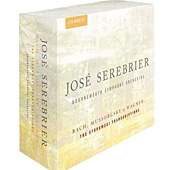 Naxos bietet jetzt einen Einstieg in die faszinierende Welt des Dirigenten Leopold Stokowski: Die bisherigen Aufnahmen seiner Bearbeitungen mit José Serebrier und dem Bournemouth Symphony Orchestra sind jetzt in einer 5-CD-Box erhältlich.
Hemmungslos subjektiv
Leopold Stokowski war eine der umstrittensten Figuren des Musiklebens im 20. Jahrhundert. Sein Kollege Arturo Toscanini schrieb ihm einen Brief, den er jedoch nie abschickte: "Glauben Sie mir, Sie sind reif für's Irrenhaus oder Gefängnis!". Warum war der Maestro so wütend, nachdem er erlebt hatte, wie Stokowski Francks d-Moll-Symphonie "vergiftet" hatte? Hemmungslos subjektiv war Stokowskis Blick auf die Musik. Den Dirigenten sah er auf einer Stufe mit dem Komponisten, erst durch die Person des Dirigenten wäre schließlich das musikalische Erleben des Notentextes möglich. Und überhaupt: Die Notenschrift hielt er für veraltet, unmöglich, damit Musik wirklich auszudrücken. Den Komponisten unterstellte er, sie hätten ihre Ideen mit ihren Mitteln bloß nicht recht umsetzen können - er, Stokowski, jedoch wüsste, was sie wirklich gemeint hätten. Und wenn sie erst sein Orchester gehört hätten, dann ...Der "Phili-Sound"
1909 übernimmt Stokowski das Cincinnati Symphony Orchestra, 1912 wird er Chef in Philadelphia. Das Orchester hier wird er für Jahrzehnte prägen. Er arbeitet mit dem Orchester vor allem an einem: Am perfekten Klang. Er unternimmt Experimente mit der Sitzordnung, ist ganz vorne mit dabei, als es um erste Schallplattenaufnahmen und Rundfunkübertragungen geht. Die Menschen will er erreichen, mit alten Meisterwerken genauso wie mit zeitgenössischen amerikanischen Komponisten. Stokowski dirigiert zahlreiche Ur- und amerikanische Erstaufführungen - und dies zu einer Zeit, als den Menschen noch nicht einmal die Musik von Bach vertraut ist. Als man kaum je eine Chance hat, eine Wagner-Oper ganz zu sehen.Opulent
Stokowski aber liebt Musik in der Gesamtheit ihrer Ausprägungen. Und er will in den Konzertsaal bringen, was dort noch bislang nicht angekommen ist. Also bearbeitet er etwa Bach und Wagner so, dass ihre Musik zu seinem Publikum passt, zu seinem Orchester, so wie er dessen Klang im Ohr hat, und letztlich so, wie es zu ihm passt. Opulent, mit dem Gewicht auf dem Sound, manchmal ein bisschen drüber, vielleicht auch über die Grenze des guten Geschmacks. Wenn er Bach bearbeitet, dann ist das so, als würde Roland Emmerich Shakespeares "Macbeth" verfilmen. Aber auch die schiere Bildgewalt kann schließlich faszinierend sein.Alte Freunde
José Serebrier ist der perfekte Anwalt für Stokowski und sein Erbe. Die beiden haben fünf Jahre lang in New York zusammengearbeitet, zuvor hatte Stokowski bereits Werke des jungen Serebrier uraufgeführt. Denn der hatte zunächst als Komponist von sich reden gemacht. Die jetzt erschienene Fünf-CD-Box könnte man also als eine Art Revanche verstehen. Auf jeden Fall sind José Serebrier mit dem englischen Bournemouth Symphony Orchestra nach und nach tolle Einspielungen von Stokowskis Arbeiten gelungen. Effekte in Bläsern und Schlagwerk werden genüsslich ausgekostet, ein Streicherteppich breitet sich aus, auf den man sich wie auf einem Flokati herumfläzen möchte. Diese Musik braucht das.
José Serebrier Symphony No.1 (1956) - Nueve: Double Bass Concerto (1971) - Violin Concerto ‘Winter’ (1991); Tango en Azul (2001) -Casi un Tango (2002) - They Rode Into the Sunset – Music for an Imaginary Film (2009); Gary Karr – double bass; Simon Callow – narrator; Philippe Quint – violin; Bournemouth Symphony Chorus; Bournemouth Symphony Orchestra
José Serebrier, conductor
Naxos 8.559648
"Big and exciting showpieces, stunningly played."
Yorkshire Post
"The Bournemouth Symphony is in stunning form for Serebrier’s conducting. High impact sound."
David's Review Corner, Naxos
"Excellent performances throughout from the Bournemouth Symphony Orchestra.
I have always thought that they are an ensemble who need inspiring leadership to bring out their best, and Serebrier clearly has what it takes to get top quality music making from them."
Classical CD Review
Show/Hide reviews
 El compositor y director uruguayo José Serebrier, quien acaba de grabar
(también para Naxos) tres Sinfonías (2,
8 y 9) de Tomas Marco con la Orquesta Filarmónica de Málaga en esa
ciudad española, y dirigirá dos conciertos en Montevideo con la
Orquesta Sinfónica del SODRE, Servicio Oficial de Difusión
Radioeléctrica, OSSODRE (30 de octubre y 6 de noviembre), ha lanzado
un disco compacto que hace un amplio repaso de su vida como brillante
creador musical latinoamericano.
El compositor y director uruguayo José Serebrier, quien acaba de grabar
(también para Naxos) tres Sinfonías (2,
8 y 9) de Tomas Marco con la Orquesta Filarmónica de Málaga en esa
ciudad española, y dirigirá dos conciertos en Montevideo con la
Orquesta Sinfónica del SODRE, Servicio Oficial de Difusión
Radioeléctrica, OSSODRE (30 de octubre y 6 de noviembre), ha lanzado
un disco compacto que hace un amplio repaso de su vida como brillante
creador musical latinoamericano. Desde su Sinfonía nº 1, estrenada por Leopold Stokowski en 1957, pasando por su Concierto para contrabajo de 1971, así como su Concierto para violín de 1991, Tango en azul, de 2001, Casi un Tango(2002), y finalmente They Rode Into The Sunset - la música para una película jamás filmada (2009), este disco recopila algunas de sus obras más singulares y su evolución a través de diferentes estilos en una excelente interpretación de la Bournemouth Symphony Orchestra. La Sinfonía nº 1, en un único movimiento, impacta por su vitalidad, su energía y sus momentos de profunda reflexión. Entrar al universo de sonidos de Serebrier es una experiencia única.
Hijo de padre ruso y madre polaca, emigrados a comienzos del siglo XX a Uruguay, Serebrier, ganador de ocho premios Grammy, sintió desde muy niño vocación por la música. En 1953 ganó un concurso de la OSSODRE precisamente con su primera obra orquestal, la obertura-fantasía de 24 minutos La leyenda de Fausto, inspirada en Doctor Fausto. La vida del compositor alemán Adrian Leverkühn contada por un amigo, publicada en 1947 por el premio Nobel de Literatura Thomas Mann (1875-1955), que había fascinado entonces al joven músico uruguayo.
La leyenda de Fausto, obra que hubiera querido dirigir ya entonces el compositor, fue estrenada en 1954 por la orquesta sinfónica de la radio oficial uruguaya bajo la batuta del compositor y director brasileño Eleazar de Carvalho (1912-1996), de quien poco tiempo después -¡qué destino!- sería Serebrier su alumno en Tanglewood (Estados Unidos), donde también recibió clases de Aaron Copland, antes de trabajar en el Curtis Institute con Vittorio Giannini.
El Concierto para contrabajo (1971) fue compuesto nada menos que para el virtuoso Gary Karr. La pieza, de 13 minutos, sumamente exigente, contiene elementos aleatorios, al igual que Colores mágicos, el concierto para arpa escrito también por Serebrier en aquel período, y fue encargada por la Plainfield Symphony Orchestra, la más antigua de Nueva Jersey (donde vivía entonces Karr) que celebraba en ese momento el 50 aniversario de su fundación.
Una mirada poético-melancólica es la del Concierto para violín - Invierno (1991), de Serebrier, compuesta originalmente para el violinista Michael Guttman, sobre un concepto que el músico uruguayo desarrolló -¡vaya contraste!- caminando por las blancas playas de Key Biscayne (en Florida) en la Navidad de 1991. Algunos pasajes de la obra se inspiran en visiones invernales de Haydn (oratorio Las estaciones, Glazunov (ballet Las estaciones) y de Chaicovski (‘Sueños de un viaje de invierno’ de la Sinfonia nº 1), así como de la Sonata para solo de violín op. 1, compuesta por Serebrier cuando tenía 9 años.
Durante un largo vuelo de Nueva York a Montevideo para tocar en un concierto aniversario de la OSSODRE en 2001, Serebrier compuso su Tango en azul, una obra en la que parecen fluir vibrantes, emotivos y entrañables recuerdos de su ciudad natal.Casi un tango para corno inglés y cuerdas, en cambio, es de un estilo marcadamente diferente, más nostálgico y más clásico, menos íntimo que el primero.
Finalmente, They Rode Into the Sunset - Music for an Imaginary Film (2009) de 13 minutos, una de las más recientes obras de Serebrier, fue creada para un filme indio que debía rodarse en Bollywood y requería música occidental en las tres o cuatro escenas finales. Por esas cosas del destino la película no se hizo y uno de los sueños del músico uruguayo, hacer obras para cine, se vio momentáneamente truncado. La pieza relata con enorme fuerza los dramáticos momentos finales de un joven compositor indio que estudió en Londres y fue víctima de un síndrome desconocido que dejó paralizado su cuerpo impidiéndole escribir.
Pero Serebrier sigue muy activo componiendo (su penúltima obra fue Flute concerto with Tango, en cinco movimientos, encargada por BIS Records para la solista Sharon Bezali, quien la grabó con la Orquesta de Cámara de Australia), grabando y dirigiendo conciertos. Con la Orquesta Sinfónica del SODRE, Serebrier interpreta el día 30 de octubre la Sinfonía nº 8 de Beethoven y la Sinfonía nº 3 de Camille Saint-Saens, y el 6 de noviembre Synched (estreno mundial), de la joven compositora estadounidense Cristina Spinei, así como Aconcagua, de Astor Piazzolla, con el excelente bandoneonista uruguayo Enrique Tellería, y la Sinfonia nº 8 de Antonín Dvorak.
Read Article
Juan Carlos Tellechea
The Double Bass Concerto (1971) was written for the admirable Gary Karr. It lasts only 13 minutes, but makes lavish demands. There are spoken quotes from Shelley, intended for the soloist but here delivered by Simon Callow; two clarinets placed incognito in the audience but later contributing to a kind of jazz combo; and finally an offstage choir. The Violin Concerto (1991) is on the subject of winter so it quotes similarly seasonal music from Haydn, Glazunov and—more dangerously—Tchaikovsky, because he tends to take over. The most recent piece is They Rode Into the Sunset, a score for a film that was never made. Like the Double Bass Concerto it contains a lengthy orchestral crescendo on a single note B—why? Does it come from Wozzeck? Serebrier gets back to his roots in a couple of agreeable tangos, but the First Symphony is a fascinating document from a teenage composer.
Peter Dickinson

David Denton
One of the most recorded classical artists of our day, the conductor and composer, José Serebrier, had his First Symphony performed in a high-profile concert at the age of seventeen.
Born in Uruguay of Russian/Polish parentage, Serebrier made his American conducting debut with the National Symphony Orchestra in Washington at the age of nineteen, and between a hectic international conducting commitment has written a sizeable portfolio of works. Many have won major awards, and though he writes that ‘in my music, while the style changed in the 1960’s and 70’s, the ‘message’ has remained the same’. Well that might be his view, but I see a composer fascinated by sonorities who continues to experiment in the most interesting way. The First Symphony was tonal, often highly charged with youthfully exuberance and very easy to enjoy. Fifteen years later he was stretching the technical limits of the double bass with the help of the great virtuoso, Gary Karr. Putting the instrument through many guises, including a jazz combo, it is an exhibition score, Karr demonstrating that time does not diminish his brilliance. Twenty years later Serebrier was looking for a modernFour Seasons for solo violin and orchestra. He could not find ‘Winter’, and so in desperation wrote one, the work becoming his Violin Concerto. A picture of a turbulent season, in which the solo instrument—in an incredibly difficult role—is tossed around by a violent orchestra. Two Tangos from the beginning of this century have a sensual and immediate attraction, the final track being given to a short ‘symphony’, They Rode into the Sunset. For a film never made, and here as a ‘stand alone’ work it is receiving it’s recording debut. Karr and Philippe Quint—the soloist in the Violin Concerto—are fabulous, with the Bournemouth Symphony in stunning form for Serebrier’s conducting. High impact sound.
David Denton

Mussorgsky-Stokowski: Symphonic Transcriptions - Pictures at an Exhibition, A Night on Bare Mountain, Entr’acte to Act 4 of Khovantchina, Boris Godunov: Symphonic Synthesis / Tchaikovsky: Humoresque, Solitude / Stokowski: Traditional Slavic Christmas Music
Bournemouth Symphony Orchestra / José Serebrier
Naxos 8.557645
"José Serebrier leads the Bournemouth Symphony Orchestra in thrill-a-minute performances...Serebrier's vivid portrayal will no doubt provide the standard by which all future recordings are judged".
TimeOut New York
“This sounded fresher and more intriguing than any I can recall - even Fritz Reiner's.”
Audiophile Audition
“Serebrier delivers an inspired reading that reaches such a glorious climax, it should leave you breathless. Sheer magnificence”
MusicWeb International
Show/Hide reviews

As a public figure, Leopold Stokowski was known for flashy moves such as shaking hands with Mickey Mouse in Fantasia. As an orchestrator famous for applying his idiosyncratic touch to music composed by others, Stokowski made similar choices. The maestro's musical personality --- old-fashioned gentleman cum media-savvy huckster, not to mention tireless champion of the music of his day --- is apparent in every bar of his fascinating transcriptions of two masterpieces by the "musical primitive" Mussorgsky. Reworking such strong stuff as A Night on Bare Mountain and Pictures at an Exhibition, Stokowski was paradoxically both wholly original and true to the composer's spirit.
Take the famous opening "Promenade" movement from Pictures: Ravel's familiar orchestration opens with a brilliant but obvious trumpet Fanfare. Stokowski scores the same passage for violas leading the low strings, creating a sound that is both regal and ambrosial. A peculiar choice that a more radical composer such as Stravinsky might have made, it's just the sort of thing that makes Stokowski's version one of the few that can stand up to Ravel's.
José Serebrier leads the Bournemouth Symphony Orchestra in thrill-a-minute performances that finally do justice to Stoki's transcriptions, in terms of both sonics and performance. His valuable program offers further Mussorgky (including a sustantial suite from Boris Godunov), as well as two miniatures by Tchaikovsky and an original setting of traditional Slavic Christmas music. Since Stokowski's own recordings are currently out of print, Serebrier's vivid portrayal will no doubt provide the standard by which all future recordings are judged.
Daniel Felsenfeld
From the hundreds of classical CDs Gramophone reviews each month, editor James Jolly selects 10 outstanding recordings.
This disc is in some ways an homage: José Serebrier's tribute to an important influence on his musical life, Leopold Stokowski. At the centre of this programme is Stokowski's transcription of Mussorgsky's Pictures at an Exhibition, a striking variant on Ravel's now virtually standard arrangement. It's well worth hearing and might herald a newcomer to concert programmes (though copyright issues probably rule against it). Almost more intriguing is Stokowski's 'Symphonic Synthesis' on Boris Godunov, a 25-minute tone-poem drawing on the opera, a work that Stokowski clearly adored and whose US premiere he gave in 1929 in the original version. The other works are equally fascinating - I particularly like the Tchaikovsky Solitude in Stokowski's version.
James Jolly

Leopold Stokowski's transcriptions have been getting a lot of attention on disc lately. Most particularly, DG reluctantly released an excellent disc of Mussorgsky pieces featuring Oliver Knussen and the Cleveland Orchestra, magnificently played and very different in conception from Stokowski's own. That disc vindicated his work by showing convincingly that these arrangements can have a successful existence independently of the great old wizard himself. José Serebrier's interpretations, while not quite so radical in their emphasis on laser-like clarity of texture, achieve much the same sort of validation while preserving more of the physical excitement and cinematic flamboyance of the original recordings.
This isn't just a question of the exceptionally splashy and colorful use of heavy percussion at the end of A Night on Bare Mountain or Pictures at an Exhibition, impressive (and necessary) though that is. Serebrier, who worked as Stoki's assistant conductor at the American Symphony Orchestra for about five years, brings a keen ear for those luscious string sonorities that also give these editions much of their magic at lower dynamic levels. I'm thinking, for example, of the shimmering closing pages of the Boris Godunov Symphonic Synthesis, among other places. Serebrier also captures the tragic intensity of the Khovanshchina Entr'acte as well as Stokowski ever did: he's slower, darker, and heavier than Knussen, more raw and "Russian" sounding, as he also is in the terrifying Catacombs section of Pictures at an Exhibition.
There's further icing on the cake that you won't find on the Knussen disc: the two lovely Tchaikovsky transcriptions (the Humoresque will be familiar to knowledgeable listeners from its use in Stravinsky's The Fairy's Kiss), and Stokowski's own Traditional Slavic Christmas Music, a setting where once again Serebrier shows himself able to conjure a truly authentic "Stokowski sound". Mind you, these aren't mere imitations. Serebrier's flexible approach to tempo and willingness to inject a jolt of extra electricity make something quite special out of the climaxes in A Night on Bare Mountain, and it's very clear that the Bournemouth Symphony Orchestra is having as much fun playing this music as you will have listening to it. The engineering stands among the best from this source as well. Spectacular, sensational, skirting the boundaries of "good taste"--this is the real deal!. [6/17/2005]
David Hurwitz
MUSSORGSKY-STOKOWSKI: Pictures at an Exhibition; Entr'acte from Khovanshchina; Night on Bare Mountain; Symphonic Synthesis of Boris Godunov; TCHAIKOVSKY-STOKOWSKI: Humoresque; Solitude - Bournemouth Symphony/ José Serebrier - Naxos
Another of the many Naxos CDs with multiple Grammy Award nominations - what else would you expect from José Serebrier, one of the world's leading conductors?
Leopold Stokowski was not just the only famous conductor who shook Mickey Mouse's large hand, he was also the most audiophile-oriented conductor ever - ceaselessly exploring ways to achieve more enhanced sound in his recordings (going back to 1917!) and programming works full of orchestral color and strong dynamics. Tied in with these interests was that of transcribing music for symphony orchestra. He made over 200 orchestral arrangements, and this terrific CD presents several of them in spectacular performances and equally good standard CD sonics. Surely Naxos has this one on their list for future release as either SACD or DVD-A or both!
Stokowski was about the only conductor using his arrangements during his lifetime. He made a London Phase 4 recording in LP days of the Mussorgsky, but I found this new recording superior for a cleaner and more transparent sound, without the absurd instrumental spotlighting endemic to the Phase 4 multiple-mike process. Now conductors are showing more interest in the Stoky re-imaginings of works, and with the assistance of the Stokowski Society, José Serebrier and his Bournemouth musicians are making them part of their repertory. Serebrier is approaching them however with a "fresh perspective," dropping exaggerations that may not work for today's musical ears, rather than slavishly copying Stokowski's own recordings.
Focusing on releases of interest to the audiophile, I have certainly auditioned my share of Pictures by now! This one sounded fresher and more intriguing than any I can recall - even Reiner's. The Boris Godunov instrumental suite is only four minutes shorter than Pictures, and a most welcome listening experience for those who prefer opera without words. (I'm one of 'em, and I'll never forget - since Boris is one of my few favorite operas - falling asleep at a performance and only awakening when Boris had fallen all the way to the bottom of the staircase at the end of his final death aria!) Night on Bare (or Bald) Mountain is another Stoky audiophile hit, and opens this CD with some prodigious prestidigitation of musical witches and demons. Easily recommended - especially at the price!
John Sunier

Un nuevo disco compacto que merece la mayor consideracion y un comentario especial, es el recientemente lanzado por la firma Naxos of America, no solo por la calidad de su interpretación, a cargo del director uruguayo José Serebrier, al frente de la Sinfónica de Bournemouth; sino especialmente por su originalidad, agrupando las orquestaciones de Leopoldo Stokowski de dos obras muy importantes: “Cuadros de una Exposición” y “Una Noche en la Monte Pelado”.
La grabación de “Cuadros de una Exposición”, instrumentada por Stokowsky, y extraordinariamente bien ejecutada por la Sinfonica de “Bournemouth”, es una obra de arte de por se, por la forma en que la dirige José Serebrier, en adición de tecnologia digital moderna.
Sin embargo de que Stokowski demuestra aqui lo que es capaz de hacer con una orquesta –en la interpretacion de su protegido y asistente en vida, José Serebrier--, lo que mas sobresale de su arreglo es el caracter ruso que imprime a ciertos temas concedidos a las cuerdas, que tal vez hayan escapado a Maurice Ravel, pero entre una y otra composición, el oyente promedio no sabria distinguir estas cosas al extremo. Y antes de terminar, merece que consignemos como el maestro Serebrier asocia a esta recopilación, grabada con igual suerte, el “Entre Acto” de “Khovanschina”, y la “Sintesis Sinfónica de Boris Godunov”, tocadas con gran dramatismo; asi como un par de piezas poco escuchadas de Tchaikovsky –“Solitude” y “Humoresque”--; y la “Musica Tradicional Eslava de la Navidad”, del mimso Stokowski, compuesta en 1933. Pero de lo que no cabe duda es que este CD es uno de los mejores de los producidos en esta década, digno de figurar en la mejor colección y de escucharse con gusto y valor didactico.
Luis Felipe Marsans

Stokowski’s colourful and idiosyncratic transcriptions of Mussorgsky’s music are wonderfully realised here. Serebrier’s performances, and the Naxos recording, put the almost identical programme by Matthias Bamert on Chandos RBCD in the shade. This is the real thing. Deep bells, crashing tam-tams and col legno string effects all make a tremendous impact from the opening of Night on a Bare Mountain to the end of Pictures at an Exhibition. Serebrier told the Bournemouth SO that he was not intent on copying Stokowski’s own recordings of these pieces but wished to approach them from a fresh perspective. This is exactly what he has done and the results are electrifying!.
Stokowski’s orchestration of Pictures at an Exhibition will never overtake in popularity that done by Ravel, not least because Stokowski omits two movements of the original (Tuileries and The Market place at Limoges) as being possibly too French, but it has a character of its own and I can’t imagine it being better done than here.
The transcriptions of the two Tchaikovsky pieces and Stokowski’s own Traditional Christmas Slavic Music complete a most enjoyable program. The recording is rich, but very clear, with plenty of ambient information from the rear channels.
Graham Williams
Recordings like this are what consumers need to hear if SACD is ever going to succeed. It is stellar in every way.
Stokowski is a hard conductor to emulate because his personality is so large. Few conductors come close. Serebrier appears to be cut of the same cloth. Instead of trying to impersonate Stokowski, he appears to conduct from his own bravura, so there is no self-conciousness. It makes me wish we had him here in Chicago, as our low key Barenboim is near retirement. The recording succeeds for this reason alone.
But, wait, there's more...
The sound is nearly perfect. I can't think of another SACD that so fulfills the medium's promise. The sound is huge! The bass whacks hit you in the gut, just like they would in concert. The strings, already sweetened by the free bowing and lush writing, are sweeter than you've ever heard in redbook. The dynamic range is awesome. The bells and other novel instruments Stokowski arranged in this Russian music are all nicely recorded. I can think of no other medium, digital or analog, that would reproduce them as well.
Stokowski's own recordings are not this good.
The music is great. The performance is great. The sound it great.
If I wanted to convince a friend who doesn't like classical music to understand why I do, I'd play this disc for him.
C.K.

Leopold Stowkowski (1882-1977) transcribed 200 existing works into orchestral arrangements. Pictures at an Exhibition is best known in Ravel's transcription, but is presented here in alternative form. It has been said that Stowkowski wanted a more Russian reading. In fact, two of the paintings the work is based on are omitted because he felt they were perhaps not part of the original Mussorgsky composition, or at the very least they sounded too French. This Naxos-recorded performance is conducted here by Stowkowski’s close friend José Serebrier, and is a work of true great art. Some of Stowkowski’s personal notes to Serebrier are illustrated in the liner notes and give a hint at the older artist’s respect and great admiration for his young friend. A nice touch.
The sound on this disc is some of the best I have ever heard. Whether the playful "Battle of the Chickens in their Shells" or the foreboding and effectual "Catacombs -- Sepulchrum Romanum; Con Mortuis in lingua mortua," I marveled at how the Bournemouth Symphony Orchestra was completely sorted out and individual sections were delineated. The basses are simply stunning in their clarity. The high frequencies can blare just ever so slightly, but the lack of dynamic compression is so welcome that it can be overlooked. The 5.0-channel surround sound is not distracting, though I found this release effective in straight stereo as well. It is a large but still present sound that is balanced just perfectly in either format. You’ll really enjoy this one no matter how many channels you’re running.
Jeff Fritz

"José Serebrier captures the roaring maelstrom of those climaxes more vividly than any digital rival."
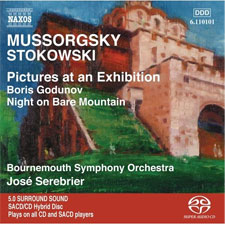 Amazing, the differences between Leopold Stokowski's orchestration of Mussorgsky's Pictures at an Exhibition and the better-known version concocted by Ravel. Stokowski is well-nigh Spielbergian in his exuberant imagination, Ravel every note the gentlemanly genius, smoky-cool even when poised before the climactic 'Great Gate at Kiev'. Stokowski's foray has been well documented on disc, with at least three versions under the maestro himself, but a new 'surround sound' recording by the Bournemouth Symphony under José Serebrier captures the roaring maelstrom of those climaxes more vividly than any digital rival.
And there's so much to hear — the imperious full-strings opening 'Promenade' (Ravel gives us a measly trumpet), the gnarled spectre of the gnome, malevolent and shifty, the cartoon-strip polarisation of the two Polish Jews, Goldenberg rich and portly, towering above the shivering, impoverished Schmuyle. The 'hut on fowl's legs' and the Great Gate segue into each other more naturally, the majestic d?nouement sounding more like an 'arrival' after the Disney-like comings and goings of the old witch. Shimmering tremolando 'promenades' ferry us from one picture to the next, albeit minus 'Tuileries' and 'The Marketplace of Limoges', which Stokowski thought sounded too French. (He also thought they were written by Rimsky-Korsakov.)
Amazing, the differences between Leopold Stokowski's orchestration of Mussorgsky's Pictures at an Exhibition and the better-known version concocted by Ravel. Stokowski is well-nigh Spielbergian in his exuberant imagination, Ravel every note the gentlemanly genius, smoky-cool even when poised before the climactic 'Great Gate at Kiev'. Stokowski's foray has been well documented on disc, with at least three versions under the maestro himself, but a new 'surround sound' recording by the Bournemouth Symphony under José Serebrier captures the roaring maelstrom of those climaxes more vividly than any digital rival.
And there's so much to hear — the imperious full-strings opening 'Promenade' (Ravel gives us a measly trumpet), the gnarled spectre of the gnome, malevolent and shifty, the cartoon-strip polarisation of the two Polish Jews, Goldenberg rich and portly, towering above the shivering, impoverished Schmuyle. The 'hut on fowl's legs' and the Great Gate segue into each other more naturally, the majestic d?nouement sounding more like an 'arrival' after the Disney-like comings and goings of the old witch. Shimmering tremolando 'promenades' ferry us from one picture to the next, albeit minus 'Tuileries' and 'The Marketplace of Limoges', which Stokowski thought sounded too French. (He also thought they were written by Rimsky-Korsakov.)
The CD also includes similarly regal visits to Night on Bare Mountain and Khovanshchina, plus a 24-minute tone picture of Boris Godunov, whose spectacular coronation and death are kept well within the Stokowskian frame, and some encores.
Rob Cowan

Anthony Holden
This release is also available as a hybrid, CD(2)/SACD(2/5.0) album, which contains a stereo track playable on conventional machines, as well as super audio stereo and multi-channel tracks playable on super audio machines.
This recording was "CD of the Month" in Gramophone Magazine (Awards/05) and it's a sound spectacular of major proportions. Some of Leopold Stokowski's Johann Sebastian Bach retreads may be sticky wickets, but when it came to Russian music, he was right on the rubles. These brilliant orchestral transcriptions are full of Slavic sole and conductor José Serebrier furthers the cause with exceptionally sensitive performances. In fact, many may find they prefer this version of "Pictures at an Exhibition" to the better known one by Maurice Ravel. There's also a symphonic synthesis of "Boris Godunov" that's a knockout - operaphobes take note! Two other Modest Mussorgsky delights, "A Night on Bare Mountain," which is one you'll never forget, and the entr'acte from the fourth act of "Khovanschina" are also included. The program closes with arrangements of Peter Ilyich Tchaikovsky's piano piece, "Humoresque," (shades of Igor Stravinsky) and song, Again, as Before, Alone (entitled "Solitude" here), plus Stokie's own, moving "Traditional Slavic Christmas Music." This release is also available in hybrid, CD(2)/SACD(2/5.0) format. By the way, do try some of the other arrangements of "Pictures" by Ashkenazy, Bekova, Boyashov, Crabb/Draugsvoll, Funtek, Gortchakov, Guillou and Leonard; and, of course, the original for solo piano.
Bob McQuiston

During his apprenticeship with Stokowski, Serebrier had an opportunity to get to know many of the more than 200 symphonic transcriptions the old maestro had made of works that had begun life in a different form. The most famous of these orchestrations is almost certainly Mussorgsky’s Night on Bare Mountain. Wilder and “more Russian” than Rimsky-Korsakov’s westernized version, Stokowski’s “Night” was the musical highlight of Walt Disney’s classic Fantasia and for many kids of that generation—me included—a thrilling introduction to the world of “classical” music. Stokowski’s versions of The Sorcerer's Apprentice and Toccata and Fugue in D Minor were also magical parts of that film.
I relived those goosebumps again last week when I put on the new recording of Stokowski’s versions of A Night on Bare Mountain, Pictures at an Exhibition and several other orchestral transcriptions which Naxos is releasing next week with his one-time protege Serebrier at the helm of the Bournemouth Symphony Orchestra. Nobody conducting today holds a tighter grip on the musical reins and under his hands these tired old war horses come storming out of the barn like frisky young colts. You may prefer Ravel's orchestration of "Pictures" but you won't find much fault with Stokowski's more muscular approach. It would take a real cynic to dislike a big wet horsey kiss like this one.
The Bournemouth musicians show they can play in the first division beside their big city cousins. The recording quality is vivid and consistently excellent. Pay particular attention to the drop-dead gorgeous strings in the Entre’acte of Khovanschina.
The idea for this new Naxos disc originated from the Leopold Stokowski Society, which approached Serebrier in 2003 to bring the transcriptions into his repertoire and record them. We are lucky he agreed to repay the favor that Stokowski had bestowed upon him many years ago.
Jerry Bowles
There have been an increasing number of new recordings of Stokowski’s Mussorgsky symphonic transcriptions but this must be one of the best yet to be encountered. It’s superbly recorded – my set up is not wired for SACD but it sounds sumptuous enough without it – and encompasses prodigious orchestral detail. At the helm is Serebrier, for five years Stokowski’s associate conductor (three letters from the older man to the young Serebrier are reprinted in the booklet and they reveal his laconic wit as well as professional
A Night on Bare Mountain is characteristically bold and dramatic though the extrovert flourishes are balanced but incisive lyricism and it’s this duality that gives the piece its tensile strength. Serebrier’s sonorities and editorial decisions are his own, not Stokowski’s – he makes no overt attempt to replicate the Stokowski recording. The famous Symphonic Synthesis of Boris Godunov dates from 1936. The Bournemouth orchestra reveal real flair and finesse and they seem to relish the drama and passion of the score. It’s useful to be reminded of Stokowski’s own transcription of Pictures at an Exhibition. It was completed in 1939 and involves the removal of Tuileries and The Market Place at Limoges. In his notes Serebrier speculates that they sounded too French for Stokowski who, whilst he greatly admired Ravel’s work, felt it nevertheless insufficiently Russian.
Stokowski’s elegant string cantilena is certainly removed from Ravel’s more cosmopolitan sound and he tends to strip away Ravel’s effects, preferring instead a strongly glowering, darker patina. The darker textures are part of the conductor’s conception , but he also indulges plenty of wit in the Ballet of the Unhatched Chicks or Ballet of the Chickens in their Shells to give it its presumably echt Stokowskian title. The Catacombs by contrast is truly sepulchral and in the Great Gate of Kiev there are some astounding trombone figures, chattering winds, braying trumpets and lower brass and a powerful climax. Splendid to hear all this, and so well played too.
The Humoresque makes a charming pendant, as indeed does Solitude but there is also Stokowski’s own Traditional Slavic Christmas Music (1933), based on Ippolitov-Ivanov’s In a Manger which was itself derived from a Christmas hymn. This is the kind of transcription at which Stokowski was so much a master – it bears some comparison with the Philadelphia Two Ancient Liturgical Melodies transcription and is almost as compelling.
A warm welcome to this disc, made possible through grants from the Stokowski Society and the BSO Endowment Trust, for presenting Stokowski’s transcriptions with such finesse, power and elegance, and such persuasive intelligence.
Jonathan Woolf
"Serebrier understands as no-one else...the aesthetic basis of this music"
Stokowski's urge to transcribe was insatiable: over 200 works in total. To a large degree one's reaction is personal – either they are great fun or distasteful. Take the Night on a Bare Mountain that opens this disc – the opening is spectral, almost hallucinogenic here. Some effects are clearly over-the-top: trombone whoops, a slithery descent to the depths – 7'15; or orchestral 'screaming' - 5'35 etc. One thing soon becomes apparent – this release is a gift if one wishes to demonstrate top-class recording quality. That is pretty much what we have here - courtesy of Neil Paker and Phil Rowlands, both names new to me. The Bournemouth Symphony Orchestra, too, relishes every mouth-watering opportunity.
The Entr'acte to Act IV of Khovanshchina is both dark and imposing. Serebrier brings a feeling of space (almost 'stretching') to the musical fabric. This is wonderful.
Symphonic syntheses were a Stokowski 'thing'. The Boris example here is a case in point, and it is difficult to imagine a more loving performance than this one. Slow passages are lovingly shaped, while the Coronation music has a sense of space as well as celebration about it. In contrast, there are real pianissimi around the 13 minute mark, a true oasis of peace. As one listens, it becomes increasingly apparent that Serebrier understands as no-one else apart from the transcriber himself the aesthetic basis of this music. From this comes a sense of significance as the music unfolds, seemingly inevitably - Stokowski is wonderful at 'stitching bits together'. Oh, and if you want to show off your hi-fi, the almighty crescendo preceding 22'38 is the place to do it.
Pictures begins in the smoothest of fashions with single-line strings soon fleshed out into the full section. There are almost frightening brass crescendos in 'Gnomus' to ensure fullest contrast to the pppp second Promenade. A sax-less 'Old Castle' leads to a fast-paced 'Bydlo' (Polish Ox-Wagon), with a real tramp to the lower strings. The 'Ballet of the Chicks in their Shells' is rather slow and careful, however; better is 'Goldberg and Schmuyle', with its well-recorded lower strings. But the crowning glories of this Pictures are the final two movements. 'The Hut on Fowl's Legs' is certainly exciting, and the recording is so analytical it leaves you breathless. It sounds like fun was had by all, too. The 'Great Gate' is massively impressive because Serebrier does not play up the cushion of sound effects. Mysterious passages verge, once more, on the fantastical. The huge crescendo at the end is the icing on the cake.
The Tchaikovsky transcriptions are little worlds in their own right, delivered here with great affection. The 'Humoresque' is rather jolly, while 'Solitude' reaches the status of mini-Symphonic Poem. The Traditional Slavic Christmas Music is based on Ippolitov-Ivanov's In a Manger - itself based on a Christmas Hymn. Scored for brass and strings only, there is a certain mesmeric aspect that lends the work a depth of expression.
Detailed notes by the conductor and by Edward Johnson of The Stokowski Society round out a superb release. No wonder this is Naxos's self-appointed CD of the Month for September.
Colin Clarke
Leopold Stokowski has transcended "cult figure" status to be remembered as one of the greatest orchestral conductors in history. Born in London of Polish-Irish ancestry, Stokowski found considerable success in the United States, where he was naturalised as an American citizen. In addition to his sixty-year legacy of making studio recordings Stokowski was an inveterate transcriber of music for the symphony orchestra. He made some two hundred orchestral arrangements of works which had started life in other forms, such as piano solos, songs, organ music, chamber works. Stokowski’s status has suffered a decline since his death in 1977, some of which was due to a bad press and a change in fashion. There is currently a resurgence of interest in his transcriptions with several high quality recordings available in the catalogues.
The Naxos SACD sound quality, which I played on my standard CD Player, is quite superb. The booklet notes by José Serebrier and Edward Johnson of the Leopold Stokowski Society are interesting and highly informative. On this form the talented Bournemouth Symphony Orchestra display their credentials as one of Britain’s premier orchestras and show how excellent their partnership is with inspirational conductor José Serebrier.


Christophe Huss
Wagner: Symphonic Syntheses by Stokowski - Das Rheingold: Entrance of the Gods into Walhalla, Tristan und Isolde: Symphonic Synthesis, Parsifal: Symphonic Synthesis, Die Walkure: Magic Fire Music, Ride of the Valkyries
Bournemouth Symphony Orchestra / José Serebrier
Naxos 8.570293
"Ravishing performances"
Music Web International CD of the Month
“It would be hard to imagine a more sumptuous disc. Thrilling performances, passionate and treated to orchestral sound of demonstration quality.”
Gramophone
Show/Hide reviews

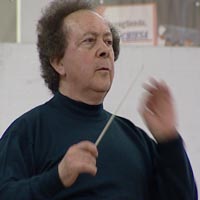 If this is Wagner at one removed, which Leopold Stokowski himself recorded, there’s no doubting the sonorous sound or the narrative power that is created.
From the thunder and glowing arrival of the “Das Rheingold” opener to the athletic vitality of “Ride of the Valkyries” (which closes the disc), there is a very particular sonority to the music-making here – faithful to both Wagner and Stokowski – and which is captured in demonstration-worthy sound by the Bournemouth Symphony, Naxos’s recording team and conjured by José Serebrier, a one-time assistant to and colleague of Stokowski (a couple of letters from Stokowski to Serebrier are reproduced in the booklet). The ‘humanity’ of ‘Wotan’s Farewell’ (not listed but a moving entr?e to the ‘Magic Fire Music’) is also well attended to.
The most substantial selection (36 minutes) is from “Tristan und Isolde”, the ‘Prelude’ (given with molten flow) and ‘Liebestod’ as we know them in concert performances separated if co-joined by the 20-minute ‘Love Music’ (darkly illicit) from Act Two as the centrepiece; voice-less, of course, but full of suspense and fluctuation and with a ‘join’ to the ‘Liebestod very well effected. Serebrier conducts with theatrical impulse, the BSO responding with ardour and conviction. Something more spiritual informs the sequence from Act Three of “Parsifal”, the music’s hefty recesses and magical happenings sonorously portrayed and never static.
With sumptuous recording, even if some of the treble is just slightly too ambient and ‘remote’, this is an impressive ‘take’ on Wagner’s creativity by a conductor (Stokowski) who was a lifelong devotee of Wagner’s music, the baton passed with certainty to Serebrier who has a similar and ‘living’ conviction to the cause.
Colin Anderson
Ravishing performances of Stokowski’s sumptuous take on Wagner. His view of Das Rheingold’s final scene is gutsy and spectacular – out-Wagnering Wagner; and Stokowski’s expressive Tristan symphonic synthesis accents all the lovers’ despair and ecstasy. The Liebesnacht is a lovely nocturnal evocation of trees swaying gently in the sylvan woodlands underlining the lovers’ awakening and mounting passion. Serebrier invests a fragrant and voluptuous sensuality to match the unbridled passion of the celebrated Liebestod that follows where its mounting excitement is literally edge-of-the-seat stuff.
RECORDING OF THE MONTH
"Ravishing performances"
This new release follows on last year’s brilliant album of Stokowski Bach transcriptions (Naxos 8.557883) produced by the same team.
The opening track sets the tone of the album. It will come as no surprise that Stokowski’s view of Das Rheingold’s final scene is gutsy and spectacular – out-Wagnering Wagner. The conductor’s enriched brass and percussion heighten Wagner’s colouring. The Bournemouth players must have had so much fun recording its sweep and grandeur, and the vivid evocations of the rainbow bridge across the valley of the Rhine. Throughout this album, they are backed by excellent engineered sound.
Tristan was one of Stokowski’s favourite works. His expressive symphonic synthesis accents all the lovers’ despair and ecstasy. The symphonic synthesis consists of Wagner’s own concert version of the Prelude and Liebestod interpolating between them the music of the Liebesnacht from the second act; Stokowski’s intent to create an extended seamless symphonic poem. He did not alter Wagner’s scoring but limited his input to transferring the vocal lines to instrumentation: cellos for Tristan and violins for Isolde. The Liebesnacht occupies some 21 minutes of the 36½-minute whole and embraces music of the hunt nicely caught in distant perspective and a lovely nocturnal evocation of trees swaying gently in the sylvan woodlands underlining the lovers’ awakening and mounting passion. Serebrier invests a fragrant and voluptuous sensuality to match the unbridled passion of the celebrated Liebestod that follows and where its mounting excitement is literally edge-of-the-seat stuff; little wonder that this music is so often regarded as the sexiest in all the classical repertoire.
In spite of his life-long championship of the music of Wagner, Stokowski conducted only one Wagner opera in its entirety, a concert performance of Parsifal during Easter 1933. He spoke of his synthesis of Act 3 thus: “I have tried to [communicate] the idea of [the] profound perception on Parsifal’s part of the mysteries of which the Holy Grail is a symbol and of which the outward manifestations are, first, Parsifal’s initiation, and then his acceptance by the Knights, and finally the acknowledgement of him as their leader.” The synthesis excludes the Good Friday Spell music - Wagner had already made a concert version of it - but includes the transformation music from the conclusion of the final moments when Parsifal heals Amfortas’s wound by touching it with his spear. This is a spellbinding and uplifting treatment.
From Die Walkure comes familiar music, magnified in colour and thrills. Need I say more!
José Serebrier, who contributes the concise, readable and erudite notes, was, for five years, Stokowski’s Associate Conductor at New York’s Carnegie Hall and was hailed by Stokowski as “the greatest master of orchestral balance”. Serebrier’s readings are studied: meticulous attention paid to orchestral colour, detail, perspectives, clarity, transparency, dynamics, accents and phrasing.
Repeating the assertion in my review of Serebrier’s recording of the Stokowski Bach transcriptions, this album is one of the best packaged of Naxos’s releases mostly, I suspect, because the recording was “made possible through generous grants from the Leopold Stokowski Society and the Bournemouth Symphony Orchestra Endowment Trust”. In addition to Serebrier’s notes, there is a contribution, “Stokowski and Wagner” by Edward Johnson of the Leopold Stokowski Society, and reproductions of three letters, dating from 1964/65, from Stokowski to Serebrier, one of which includes this cheeky remark: “Thank you also for sending a very pretty flute girl. More please!”
Ravishing performances of Stokowski’s sumptuous take on Wagner. This album will undoubtedly figure in my list of outstanding releases for 2007. Don’t miss this one.
Ian Lace
José Serebrier conducts the BSO in thrilling performances
It would be hard to imagine a more sumptuous disc. Stokowski, in these "symphonic syntheses", enhances Wagner's already opulent orchestration with shrewdly added instrumental lines and with the vocal parts usually given to the strings. Then at times he thins the orchestration down for more transparent textures. José Serebrier conducts the Bournemouth Symphony Orchestra in thrilling performances, passionate in a genuinely Stokowskian manner and treated to orchestral sound of demonstration quality.
Stokowski's aim was to provide more satisfying orchestral items in concerts than the popular "bleeding chunks". So in the most ambitious item, on Tristan und Isolde, we have between the Prelude and Liebestod a rich orchestral version of the 2nd Act Love Duet. Where the end of the duet builds up to that chilling interruption from King Marke, Stokowski has it lead seamlessly into the equivalent passage in the Liebestod. It works superbly.
The selection starts excitingly with the Entry of the Gods into Valhalla and it is good to find Serebrier splendidly adding an anvil when Donner brings his hammer down. The Parsifal synthesis is limited to music from Act 3, thus ignoring the Good Friday Music. From Die Walkure comes the Magic Fire Music and, most excitingly, the Ride of the Valkyries. This is Naxos third Stokowski orchestrations disc and is the finest yet.
Edward Greenfield

Por Adolfo del Brezo
Wagner / Leopold Stokowski: Symphonic Syntheses (Tristan und Isolde / Parsifal / Der Ring des Nibelungen). Bournemouth Symphony Orchestra, dir.: José Serebrier. Naxos, 8.570293. Duración: 74'28''.
A pesar de que Richard Wagner concibió sus dramas musicales como una unión indisoluble de música, palabra y acción dramática, su música ha ejercido siempre una intensa fascinación sobre todo tipo de oyentes, incluidos aquellos más ajenos al complejo universo teatral planteado por el genio de Leipzig. Además, Wagner ha pasado a la historia como impulsor de la renovación del lenguaje tonal, como un eslabón entre éste y la música del siglo XX, como favorecedor de la disolución de la tonalidad, precisamente por haberla llevado al extremo en sus dramas musicales. Existe también quien ha querido ver en Wagner a un dramaturgo de peso en la historia de la literatura, pero esta posición no deja de ser marginal, frente a su unánime valoración como uno de los más grandes y relevantes compositores de la historia de la música. Por eso es comprensible la tentación de condensar lo mejor de la música de los dramas wagnerianos para ofrecerla como ejemplos de música pura: una especie de "Píldoras wagnerianas" en las que el oyente puede disfrutar de lo mejor de la música de Wagner sin tener que sufrir pasajes tediosos ni largos monólogos que explican la acción de sus interminables dramas musicales.
Y esto es lo que hizo el célebre director de orquesta inglés Leopold Stokowski (1882-1977), afamado wagneriano que creó varias "Symphonic Synthesis" (síntesis sinfónicas) a partir de música perteneciente a la óperas de Wagner. En el disco del sello Naxos que aquí se comenta, la Bournemouth Symphony Orchestra bajo la batuta del director y compositor uruguayo —precisamente en sus inicios protegido de Stokowski— José Serebrier, se ofrecen siete de estos arreglos procedentes de cuatro óperas: Das Rheingold, Die Walküre, Tristan und Isolde y Parsifal. Los arreglos de Stokowsky, como explica Serebrier en las notas del cuadernillo que acompaña este cd, están más cerca del Poema sinfónico que de la Suite sinfónica, y nos llegan en esta grabación con un soberbio sonido orquestal y una dirección arrebatada de Serebrier que convierten este magnífico cd en un auténtico disfrute, más aún cuando la toma de sonido está a la altura de la excelente interpretación.
José Serebrier y Neeme Järvi son muy posiblemente dos de los directores de orquesta más pródigos en grabaciones discográficas. Sus grabaciones permiten disfrutar en las mejores condiciones posibles de la mejor música —y sólo de la música— de un compositor que presentado así en estas prácticas

Stokowski was famed for his remarkable orchestral sound, so it seems fitting that José Serebrier - hailed by Stokowski as a 'great master of orchestral balance' at the age of only 21 - should conduct Stokowski's work.
Stokowski's 'symphonic syntheses' - described as 'extended symphonic poems' - brought works by composers such as Wagner to the concert repertoire without detracting from the wealth of imagery and emotion present in Wagnerian compositions. This particular recording contains a mixture of Wagner's own concert versions of works like the Prelude and Leibestod from Tristan and Isolde seamlessly incorporating Stokowski's synthesis of Liebesnacht.
The atmospheric opening from Das Rheingold - the entrance of the Gods into Valhalla - sets the tone beautifully with glorious brass lines and an ever-present sense of balance and subtlety, for which both Wagner and Serebrier are famous. Throughout the recording the sense of emotion and, more importantly, the story are not lost for the lack of words, with each scene performed fantastically by the Bournemouth Symphony Orchestra. Of particular merit is act III from Parsifal, in which the story is conveyed particularly well. The journey is rounded off with the ever-popular Die Walk?re: Ride of the Valkyries, glorious as ever and a perfect ending to a fantastic CD.
A definite must for all fans of both Wagner and orchestral performance at its best.
Marie Frances Hopkins
The two "symphonic syntheses" here (the term was coined by Charles O’Connell, himself a legendary figure in the recording industry, who produced Stokowski’s Philadelphia recordings for Victor) are those of Tristan und Isolde and Act III of Parsifal. These are framed by the "Entrance of the Gods into Valhalla," from Das Rheingold and the two orchestral numbers from Act III of Die Walk?re. The "Magic Fire Music" is in Stokowski’s own arrangement, while the Rheingold excerpt and the "Ride of the Valkyries" are his editions of the old Hermann Zumpe arrangements.
The spacious sound (Naxos has come a long way in this respect) conveys the full splendor of these performances, and Serebrier’s annotation is, as always in this series, valuable in its own right. Here he specifies exactly which portions of the respective operas went into the "syntheses," where Stokowski assigned a vocal line to an instrument and where he simply left it out, and various other details on how Stokowski achieved his remarkable sound -- summing up, "Some of it can be explained, but much of it can only be called magic." That about covers what happens here, too.
Richard Freed

Paul Driver
Stokowski – Bach Transcriptions 2
Bournemouth Symphony Orchestra / José Serebrier
Naxos
8.572050
"One of the best and sexiest records of the year" TimeOut Chicago
"Stunningly successful recording. Superb and intensely musical, combining orchestral virtuosity and sensitivity. José Serebrier delivers superb performances"
International Record Review
Show/Hide reviews
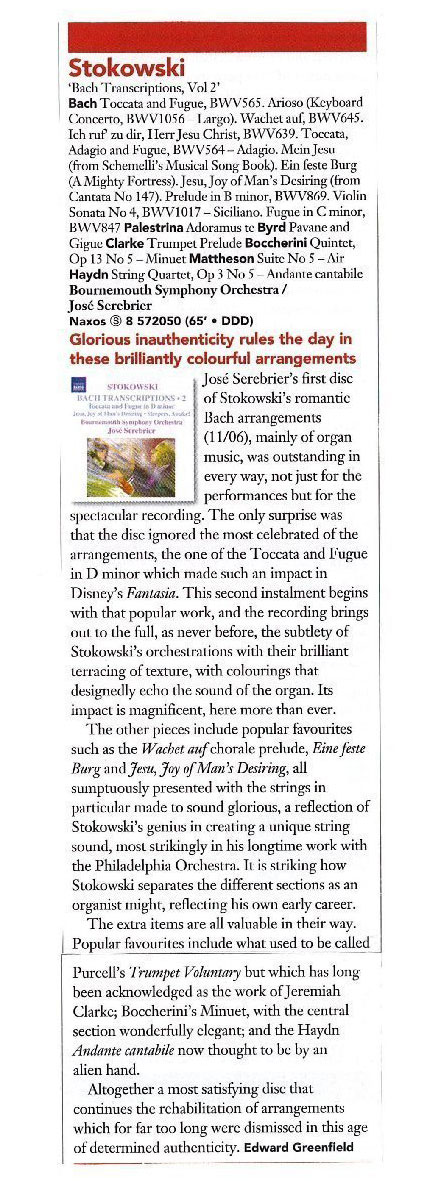

A Bach odyssey by way of a lonely organ or harpsichord can be a little exhausting sometimes; the unabashedly lush symphonic transcriptions from Leopold Stokowski trade in the old Edsel for a loaded Maserati. Whether it’s sacrilege to manipulate “Sleeper’s Wake” to sound like a Bruckner slow movement or to transform “Mein Jesu” into an English pastoral is up for debate. Still, piling the pathos onto Bach has made for one of the best and sexiest records of the year.
Bryant Manning
Serebrier begins with the immensely lauded Toccata and Fugue in D Minor (arr. 1926), which many of us know as the musical opener from Walt Disney’s Fantasia of 1940. Serebrier’s tempos occasionally deviate from those of Stokowski, even to more stunning, virtuoso effect. That Serebrier keeps his sound absolutely homogeneous itself testifies to a color will-power we tend to ascribe to Mengelberg and Stokowski himself. The plastic, streamlined character of the Bournemouth string section excels equally in Siciliano from the C Minor Sonata for Violin and Clavier, the chorale Mein Jesu, and again, with woodwinds, in the chorale-prelude, Ich ruf’zu dir, Herr Jesu Christ. The familiar Wachet Auf from Cantata 140 and Ein feste Burg achieve grand sonorities in strings and brass, often suggestive of Wagnerian ambitions, a suggestion made flesh in the C Minor Prelude from WTC I.
The six remaining selections from renaissance, baroque, early classical style indulge in the same lush orchestration that is no less capable of charming clarity, as in Boccherini’s perennial Minuet from the Quintet in E Minor, Op. 13, No. 5. I recall Stokowski’s own, devotional performance of the Palestrina Adoramus te for a United Artists LP two generations ago. What had been known as Purcell’s Trumpet Voluntary now gains political correctness in the name of Jeremy Clarke’s Trumpet Prelude, aka The Prince of Denmark’s March. The sleeper turns out to be the Air from the Suite No. 5 in C Minor by Johann Matheson (1681-1764), one of those Stokowski dreamy pieces that haunts the musical memory. Recorded 17-18 April 2008, the entire set of pieces rings with ennobled enthusiasm, a testament to Stokowski via the Leopold Stokowski Society and its most active disciple, José Serebrier.
Gary Lemco

There have been other recent recordings of Stokowski’s Bach transcriptions, but none are as good –or as thrilling- as this one and its predecessor (Naxos 8.557883). The recording quality is splendidly full and rich; for sheer delight in outstanding music-making, this recording deserves the widest success.
Robert Matthew-Walker

Musical purists, before you move on, consider how the times have changed. Decades ago we felt we had to hold arrangements like these in contempt, appalled by the over-indulgence of it all. Yet, while we were listening to soberly academic performances of these works (just as the composers would have wanted them, of course), ultra-Romantic transcriptions were gradually gaining respectability. The passage of the years granted them classic status of their own. They are sui generis, distinct from their sources. Without compromising our purist rectitude, we can now embrace the distinctive pleasures of Bach-Stokowski. Admit it: there always was something rather appealing about Stokowski’s uninhibited advocacy of this music, long before it was stylish. With authenticity no longer an issue, we can finally appreciate his dedication to the mighty architecture, to the sensual beauty of the melodies and to the glorious sonorities of the modern symphony orchestra.
Of course, most of Stokowski’s recordings of these works, some dating back 80 years, cannot do service to the latter, despite state-of-the-art engineering for their time. As purists, we could accept the sonic limitations for the authentic Stokowski experience. However, the sacrifice may not be necessary since, for this release, conductor José Serebrier, while avoiding mere mimicry, has assumed many of the Maestro’s signature qualities. The grand gesture, the saturated string sound, the indulgent rubato pulled back just at the point of over-ripeness, even the pious dignity and repose of the more reflective works: all these Serebrier—who worked for a number of years as Stokowski’s associate—has re-created better than any other conductor could. Matthias Bamert, himself a Stokowski assistant, tried on two CDs for Chandos. These are fine performances, but don’t demonstrate the same flair for the surging line, the shifting color, and the lingering release of a final cadence that makes Serebrier’s performances so immediately appealing. The smaller-scale works—and these make up the majority of the program- are particularly well done by Serebrier. The playing of the Bournemouth Symphony Orchestra can stand proudly with its best predecessors in this repertoire. There is but one letdown: the recording’s bottom octaves, which aren’t nearly as solid as they should be. Those pedal notes should rattle the windows. But never mind, one can always boost the bass a bit. (It’s that dusty knob next to the volume control. Don’t forget to turn off the tone control bypass.) Fellow purists, you should assert your newfound freedom. Indulge! Buy this CD, and while you are at it, get the first volume (8.557883) as well. It will be good for you. Ronald E. Grames

London-born Stokowski started his conducting career in Cincinnati, and after a few years, began his long and memorable association with the Philadelphia Orchestra as their conductor. He developed that orchestra into one of the world’s top ensembles—known for its distinct “Philadelphia sound.” In the late 1930s, he moved to New York to work with Toscanini and the NBC Symphony Orchestra, and there recorded the music to Disney’s Fantasia. Throughout his career he also premiered many works by contemporary composers, and began to appear frequently as a guest conductor throughout the world. Today he is remembered as one of the giants of classical music in the 20th century.
When Uruguayan-born José Serebrier was only 17 years old, his First Symphony had its première under Leopold Stokowski (who gave the first performances of several of his works). At the age of 22, Serebrier was hailed by Stokowski as “the greatest master of orchestral balance,” and spent five years as Stokowski’s Associate Conductor at New York’s Carnegie Hall. Serebrier has composed a number of instrumental works, including three symphonies, and Stokowski premiered a number of them. In recent years, he has received 32 Grammy nominations.
In 2006, Serebrier recorded Stokowski’s transcriptions of the music of J.S. Bach [8.557883], and in January 2009, this second volume was released. (Both volumes also contain a number of transcriptions of other composers.) This magnificent new CD begins with the famous Toccata and Fugue in D minor, and includes many of Bach’s most well-known pieces.
Some may consider these arrangements over-the-top or overly rich, while others may wax nostalgic for the days when conductors were influential leaders in the classical music world. But it must be agreed that these works, masterfully performed by the Bournemouth Symphony, form a welcome presence among the countless arrangements of Bach’s (and others’) music that exists today. Stokowski’s arrangements also serve as a testament to the everlasting glory of Bach’s music, and to its grandeur and sublimity, beautifully performed in this masterful new recording by José Serebrier and the Bournemouth Symphony Orchestra.
Orest Soltykevych
Best Classical Album of 2009!!!
These transcriptions are good, but it’s the Olympian grasp of ensemble that is what this disc is all about. This is amplified by the fact that José Serebrier knows the Bournemouth Symphony like the back of his hand, and he was mentored in his youth by Stokowski, himself. There is no new ground here, just a stunning and ravishing exercise in orchestral beauty, recorded and staged with excellence (thank you Naxos). These sounds are good enough to eat.
Hugo Munday
There have been other recent recordings of Stokowski’s Bach transcriptions, but none are as good—or as thrilling—as this one and its predecessor (Naxos 8.557883). The recording quality is splendidly full and rich; for sheer deilight in outstanding music-making, this recording deserves the widest success.
Robert Matthew-Walker

He saw and heard firsthand how Stokowski could change the sound of an orchestra instantly, not only by physically rearranging the musicians but also by merely having a certain sound in his inner ear, and expecting—demanding—that sound from the orchestra.
Serebrier isn't a Stokowski clone, however, and his Bournemouth Symphony Orchestra has its own elegant, polite, even careful vibe.
You can hear it in "Sleepers, Awake" by J.S. Bach. It's all about sustaining a long line of music, overlapping and weaving threads of melody and harmony and countermelody to create a seamless tapestry of sound. It's not hard to hear the choral and organ origins of these pieces, and how that informs the orchestral performances.
Stokowski came to music the way many do, through the church choir. But he didn't just fall in love with choral music. There in the choir loft, he was introduced to the King of Instruments—the pipe organ. It changed forever the way he heard and played and arranged music.
Although the organ that Bach played in the 18th century was simpler and sounded different from what Stokowski played in the 20th, the stops (sets of pipes) for both eras were named for instruments of the orchestra-- trumpet, violin, oboe, flute. An orchestra, right there at your fingertips.
Movie music composer Bernard Herrmann allowed that Bach never heard his Toccata and Fugue the way Stokiowski presented it. But, he said, Bach "must have imagined a great cosmic sound, and Stokowski's transcription is a metamorphosis of that sound."
Valerie Kahler
If, however, you want to hear full-blooded orchestral sound, sumptuous as a warm water-bed, and equally as satisfying, then stay with me, shout “Political correctness be damned!” and enjoy this disk.
Stokowski, as I have mentioned elsewhere, is still thought of by many as a charlatan, who was less of a musician than a self–serving showman. Nothing could be further from the truth. Stokowski was one of the great conductors whose every breathing thought was for music – forget Mickey Mouse, Deanna Durbin and the many women with whom he was associated—and for bringing unusual, unjustly neglected and new works to the public’s attention. As organist and director of the choir at St Bartholomew’s Church in New York City, from 1905, he would have known and played many of Bach’s organ works. His desire for them to be better known led to some of his transcriptions—and they were made by him, not by an anonymous hand with Stokowski simply signing the completed manuscripts. This was done in order to bring them into the concert halls, and to a larger music-loving public. The same applies to the many other transcriptions he made of other works by Bach and other composers. In light of this, his well known “touching-up” of acknowledged scores by later composers cannot be seen as mere tampering. His love of the music, and expertise in orchestral technique and sound, made him feel free to aid the composer who didn’t have at his disposal the resources that Stokowski had at his. Added to all this is the fact that as a conductor—and I admit that I have only ever heard recordings of the man’s work, I was never blessed with experiencing one of his performances in the flesh—his performances are quite electrifying. They always grab the listener with his sincerity and sheer enthusiasm.
Stokowski made many recordings of his transcriptions over the years. Some of his earliest Philadelphia recordings are now available on a four CD Music and Arts set (CD-1173). These are obviously the touchstone by which all other recordings must stand, or fall. This is a marvellously varied collection of well, and less well, known Stokowski transcriptions ranging from the gloriously technicoloured Toccata and Fugue in D minor to the delightful, and quite beautiful, “Boccherini Minuet”.
As recently as January this year I was privileged to hear a magnificent Tchaikovsky concert by the Royal Philharmonic Orchestra conducted by José Serebrier. The passion and depth he brought to the music-making on that occasion was intense and very exciting. He brings the same qualities to bear on these performances. Serebrier knew and worked with Stokowski—he was one of the two assistant conductors on Stokowski’s recording of Ives’s monumental 4th Symphony. Stokowski also conducted composer Serebrier’s 1st Symphony. His knowledge of Stokowski, the man and the musician shines through in these performances.
And what of this disk? It’s fantastic. Do not be without it. I can confirm, without hesitation, that these performances can stand comparison with Stokowski’s own recordings. Great orchestral playing, superb direction, fantastic sound and very good notes, by Edward Johnson, CEO of the Stokowski Society. What more could you want? Fabulous.
Edward Greenfield
Outstanding items among the latter include Palestrina’s Adoramus Te, Byrd’s Pavane and Galliard, and a really yummy (but never too droopy) Boccherini Minuet. Stokowski, as I mentioned in that earlier review, was not really a brilliant orchestrator in terms of timbral variety, but he was a very characteristic one. Key to any successful new recording of his arrangements is string sonority, that special, luminous sheen, especially in soft passages.
Serebrier understands this, as others who worked with Stokowski (such as Matthias Bamert for Chandos), do not. It doesn’t matter whether the sound is achieved naturally or through sonic manipulation—witness Stokowski’s own recordings with the Houston Symphony on Everest, for instance. The final sound is the only significant issue. Listen to the violins attack and sustain the opening of the Toccata and Fugue in D minor; to the rich tone of Sleepers Awake!; or to the amazingly sweet violins and oboe in Jesu, Joy of Man’s Desiring. This is undoubtedly the real deal, even if more than an hour of largely gentle, elegiac bonbons may be a bit much to take in at a sitting…It’s pretty wonderful nonetheless, and I recommend it highly.
David Hurwitz
While I am not the greatest advocate of “sequels,” popular response to José Serebrier’s first volume of selections from the Leopold Stokowski (1882-1977) fund of some forty of Bach’s works that he arranged for the modern orchestra’s realization [8.111297], has Serebrier and his very gifted Bournemouth players presenting us another eleven of the master’s Bach, which exploit the range—or more properly, diapason—of the orchestra’s palette to achieve what might be called organ sonority, even when the original incarnation had been a string or klavier piece. Fellow composer Bernard Hermann remarked that Stokowski released “the great cosmic sound” that Bach must have had in mind but could not be realized under the conditions which produced his original organ works.
Serebrier begins with the immensely lauded Toccata and Fugue in D Minor (arr. 1926), which many of us know as the musical opener from Walt Disney’s Fantasia of 1940. Serebrier’s tempos occasionally deviate from those of Stokowski, even to more stunning, virtuoso effect than Stokowski's. That Serebrier keeps his sound absolutely homogeneous itself testifies to a color will-power we tend to ascribe to Mengelberg and Stokowski himself. The plastic, streamlined character of the Bournemouth string section excels equally in Siciliano from the C Minor Sonata for Violin and Clavier, the chorale Mein Jesu, and again, with woodwinds, in the chorale-prelude, Ich ruf’zu dir, Herr Jesu Christ. The familiar Wachet Auf from Cantata 140 and Ein feste Burg achieve grand sonorities in strings and brass, often suggestive of Wagnerian ambitions, a suggestion made flesh in the C Minor Prelude from WTC I.
The six remaining selections from renaissance, baroque, early classical style indulge in the same lush orchestration that is no less capable of charming clarity, as in Boccherini’s perennial Minuet from the Quintet in E Minor, Op. 13, No. 5. I recall Stokowski’s own, devotional performance of the Palestrina Adoramus te for a United Artists LP two generations ago. What had been known as Purcell’s Trumpet Voluntary now gains political correctness in the name of Jeremy Clarke’s Trumpet Prelude, aka The Prince of Denmark’s March. The sleeper turns out to be the Air from the Suite No. 5 in C Minor by Johann Matheson (1681-1764), one of those Stokowski dreamy pieces that haunts the musical memory. Recorded 17-18 April 2008, the entire set of pieces rings with ennobled enthusiasm, a testament to Stokowski via the Leopold Stokowski Society and Stokowski's most active exponent, José Serebrier.
Gary Lemco

Giv Cornfield
Scott Morrison
During the same week they recorded eleven Bach/Stokowski transcriptions plus those of other composers from that era. I’ve just been listening to the whole CD twice, first on headphones and secondly on my surround system. If I’d never heard of Stokowski this recording of the Toccata and Fugue in D minor quite simply is, in my opinion, the most thrilling since the appearance of the very first recording from 1927 with Stokowski and the Philadelphia Orchestra on HMV D 1428 (a 78 of course). The whole CD is a continual ‘goose pimple’ affair throughout for me, the BSO playing their socks off (I wonder if the solo trumpet, in the Jeremiah Clarke Trumpet Prelude, was the section leader Peter Turnbull) all totally inspired by José Serebrier. The recording is nigh on perfect with a warm ambience combined with clarity and an example of this comes in Track 7, Bach’s Ein feste burg. Stokowski was, as most of us know, an organist first of all but he obviously loved to imitate the ‘king of instruments’ by using, amongst others, the contra bassoon, just listen to the entry, followed by some breath intake (close miking?) starting at 0’28”…In conclusion I urge all serious music lovers to treat themselves, albeit at the silly asking bargain price, to Naxos 8.572050 because it is worth three times and more in terms of sheer quality, this being very much endorsed by the responsible and musical critical fraternity.
John J. Davis
David Denton
Stokowski – Bach Transcriptions / Handel / Purcell
Bournemouth Symphony Orchestra / José Serebrier / Timothy Walden, cello
Naxos 8.557883
“Lusciously beautiful”
Gramophone
“It's a complete success. Serebrier recreates the Stokowski magic to perfection.”
Fanfare
“This is the true "Stokowski sound"--sensual, luminous, and warm, this new release is an unqualified triumph.”
ClassicsToday
Show/Hide reviews
Leopold Stokowski has been dead for almost 30 years. His heritage may be in danger of being forgotten or misunderstood by younger listeners who associate him – if they think of him at all – only with Walt Disney's Fantasia. I hope it's not as bad as all that, but I wonder what Fanfare readers born since his death in 1977 make of him. God forbid that those hearing Ruth Sherman in Leonard Bernstein's Wonderful Town! sing “What do you think of Stokowski's hands?” should need to have the reference explained to them!
I, for one, think a lot of Stokowski's hands, and love to listen to his recordings. Time marches on, though, and his recordings are showing signs of age – if not artistically, then at least in terms of engineering. There's no reason why his transcriptions, some of which he recorded multiple times, shouldn't be newly recorded as long as their original spirit is retained. José Serebrier is just the conductor to do it. Serebrier spent five years as associate conductor with the American Symphony Orchestra under Stokowski, and assisted the older maestro when he recorded Ives's Fourth Symphony for Columbia. Stokowski respected Serebrier not just as a conductor but also as a composer. That's not to say that Serebrier is “Stokowski II.” He has made his own way as a conductor, and is a major figure on the podium today with his own style. Still, if any living conductor understands what Stokowski is all about, and how he did what he did, it's Serebrier. That's why having him record a disc of Stokowski's transcriptions makes good sense.
No surprises here: it's a complete success. Serebrier recreates the Stokowski magic to perfection, and his orchestra is even fatter than the one Stokowski worked with (“his” symphony orchestra) for his Bach sessions with Capitol Records. The emphasis here is on the more introverted transcriptions. For example, the Toccata and Fugue in D Minor is conspicuous by its absence. 1 really don't mind, though, because in transcriptions such as Komm, süsser Tod, Stokowski combined sincerity and heavenly beauty with show business savvy; it's almost as if God has found the best public relations firm ever. If this CD is in danger of seeming too devout (albeit in Technicolor!), Serebrier and his orchestra bring it to a close with a bang up rendition of the Passacaglia and Fugue in C Minor. Lightning flashes across the sky, and Bach, looking down from the purple heavens, shakes his fist warningly at mankind. Purists will cringe, obviously, but this is good stuff. In fact, it's great. It is worth remembering that many people never would have found a doorway into the world of Bach (or other Baroque composers) had Stokowski not put one there for them. The Handel transcription is all candy cane shepherd's crooks and marshmallow sheep. The Purcell? Dido luxuriating in her grief for all the world to see. The Two Ancient Liturgical Melodies have not been recorded for more than 70 years, apparently. Restrained only in comparison to the other items, these are the conductor's eloquent transcriptions of the Veni Creator Spiritus and Veni Emmanuel.
Let's not be snobs about it: Stokowski's Bach is musical sorcery of the best sort. Serebrier's performances give it a new lease on life, and Naxos's engineering ensures that it will shake the foundations of the home, auto, or iPod of your choice, which is as it should be. For sheer entertainment, this CD receives my highest recommendation.
Raymond Tuttle

“This is the true "Stokowski sound"--sensual, luminous, and warm, this new release is an unqualified triumph.”
Listen to Serebrier summon that rich vibrato from the cellos, the shimmering texture of the seraphic violins, and the discreet touches of portamento: this is the true "Stokowski sound"--sensual, luminous, and warm. Like Serebrier's and Bournemouth's previous Stokowski project, dedicated to Mussorgsky, this new release is an unqualified triumph.
Stokowski's Bach transcriptions have received a great deal of attention on disc lately, but this is one of the very few recordings that has the genuine flavor that Stoki himself brought to them. The obvious first question is: How do these versions compare to the "originals"? Can they be as good? The answer, quite simply, is "Yes, they can." Serebrier doesn't try to duplicate every gesture that Stokowski made. That would be impossible in any case, given the wide range of tempos and other variations among his own numerous recordings of these pieces. Take the Passacaglia and Fugue in C minor: Stoki's own timings varied between about 12 minutes (in Philadelphia) to more than 14 in a later rendition. Serebrier takes about 13, which is similar to the tempo Stokowski adopted in his 1940s All-American Youth Orchestra reading (on Cala).
In general Serebrier is a bit swifter than his late mentor, particularly in such numbers as Komm süsser Tod and Nun komm' der Heiden Heiland, but speed isn't really the issue with Stokowski. What matters more is sonority, that special "Stokowski sound". The fact is, these orchestrations are not particularly original or imaginative. They are almost uniformly (indeed formulaically) based on strings as the principal voices, with woodwind and brass reinforcement as necessary. Heard in quantity, they risk sounding quite monochrome. Some, like the "Little" Fugue in G minor, use the winds in imitation of the organ, but there's nothing special in that. What makes them work is not how they are written, but rather how they are played. Take the famous Air from the Orchestral Suite No. 3. Listen to Serebrier summon that rich vibrato from the cellos, the shimmering texture of the seraphic violins, and the discreet touches of portamento: this is the true "Stokowski sound"--sensual, luminous, and warm.
Or take the almost apocalyptic entry of the full orchestra toward the end of the "Little" Fugue: Serebrier understands that theatrical flair, even bordering on vulgarity, makes these arrangements come to life. There's a sense of danger here--of almost, but never quite, crossing over the "bad taste" line--that makes listening so much more fun. The same sense of nearly garish drama characterizes this powerful performance of the Passacaglia and Fugue. It's worth pointing out, by the way, that it probably was a smart move to omit the Toccata and Fugue in D minor, for two reasons. First, it eliminates the temptation to make obvious and facile comparisons to Stokowski's half-dozen recordings of the most famous of all his Bach transcriptions; and second, it leaves hope that another disc may be forthcoming containing an equally rewarding mixture of the familiar and unfamiliar. Aside from Bach, Serebrier includes Stokowski's own Two Ancient Liturgical Melodies, a sexy conflation of Veni Creator Spiritus and Veni Emmanuel, as well as the Handel and Purcell items. Dido's Lament sounds particularly dark and tragic in this performance. It's clear that the Bournemouth Symphony is having a great time reproducing these ultra-rich, Golden Age sonorities, and my only quibble concerns the principal oboe, whose clicking valves decorate his solos with excessive prominence. But then Stokowski himself made magic with every kind of orchestra and caliber of player, so this isn't a big issue. The engineering supports the interpretations particularly well, giving the strings the necessary sheen and allowing the climaxes to expand hugely. Like Serebrier's and Bournemouth's previous Stokowski project, dedicated to Mussorgsky, this new release is an unqualified triumph.
David Hurwitz
Edward Greenfield

Although Stokowski orchestrated compositions as diverse as his extensive conducting repertoire, this album's content is centered on the music of J.S. Bach. Particularly, the album features the "Passacaglia and Fugue in C minor," a welcome alternative to the more omnipresent anchor of the "Toccata and Fugue in D minor." A number of Bach's chorale preludes are also featured, most notably a beautifully rich setting of "Komm s?sser Tod" and a poignant, woodwind-rich orchestration of the "Sheep may safely graze." Stokowski's own Ancient Liturgical Melodies are also included: somewhat similar to Respighi's Ancient Dances and Airs in their manner of composition, they radiate a more somber in tone thanks to Stokowski's characteristically deep string coloring which is especially rich with viola sound. Naxos has also included one of Stokowski's finest creations (that is ironically not always so easy to find): Purcell's "Dido's Lament." BSO solo cellist Timothy Walden brings a warm, inviting sound throughout that eventually canvasses through the rest of the string sections. The eerie octave passages that Stokowski later wrote for the upper strings at the end of this touching passacaglia are enough to send shivers down the spine of anyone listening with a compassionate ear.
The woodwind playing from the Bournemouth Symphony Orchestra is absolutely outstanding throughout: organ-like in sound quality, refined, and technically superb. Combined with the luxurious string sound and Naxos' superb audio quality, Serebrier's (mostly) good ideas are given good documentation. Stokowski's orchestrations, though certainly not Puritan by musicological standards, help give a present-day approach to these Baroque works that might otherwise fall by the wayside. If you've never heard any of these gems, this recording is an excellent place to start your journey.
C. Ryan Hill
Stokowski’s transcriptions - but not recorded by Stokowski?
Yes, but how brilliantly they sound on this marvellous new Naxos release conducted by José Serebrier who is served by excellent Naxos sound. Serebrier, who contributes the concise, readable and erudite notes, was, for five years, Stokowski’s Associate Conductor at New York’s Carnegie Hall and was hailed by Stokowski as “the greatest master of orchestral balance”.
Serebrier’s readings of Stokowski’s arrangements are studied: meticulous attention paid to orchestral colour, detail, perspectives, clarity and transparency, dynamics, accents and phrasing.
One of the most affecting selections is Stokowski’s arrangement of Two Ancient Liturgical Melodies: the ninth century Veni Creator Spiritus (‘Come Holy Ghost, Our Souls Inspire’) and the lovely medieval Veni Emmanuel, the tune familiar to us at Christmastide and used by Respighi in his Three Botticelli Pictures. The two melodies, Veni Emmanuel climaxing in a joyous outburst, are prefaced and separated by gently receding, tolling bells. The arrangement of Handel’s Pastoral Symphony continues in the same beauteous serenity. Even more affecting is Stokowski’s arrangement of Purcell’s Dido music; strings expressively layered and nuanced, and accents, and solo cello phrasing sensitively enhancing the sobbing pathos of this great Lament.
But the emphasis in this collection is rightly on Stokowski’s Bach transcriptions. The main work is the glorious Passacaglia and Fugue in C minor. For the first performance of his transcription, Stokowski wrote: “[It] is in music what a great Gothic Cathedral is in architecture – the same vast conception, the same soaring mysticism given eternal form. Whether played on the organ, or on the greatest of all instruments - the orchestra – it is one of the most divinely-inspired contrapuntal works ever conceived.” Indeed. Stokowski’s arrangement reflects the sonorous magnificence of a great cathedral organ and Serebrier delivers an inspired reading that reaches such a glorious tingling climax, it should leave you breathless.
The remaining items are winsome transcriptions of favourite Bach pieces, Stokowski cleverly changing the voicing, to maintain interest and attain an appealing freshness, of each repeat of the tune, that has attained pop-culture status, of Air on the G string; and employing minimal forces - strings and two flutes and two oboes - to tellingly underline the tender fragility of Sheep may safely graze. The contrapuntal magnificence of the ‘Giant’ and ‘Little’ fugues is wondrously magnified in the full colours of the large symphony orchestra and the deeply felt poignancy of Komm süsser Tod is nicely realised, lower woodwinds and brass affectingly emulating the gravitas of the organ pedal. Another sublime realisation is the Stokowski arrangement of Bach’s touching Nun komm’ der Heiden Heiland. (Come Thou Redeemer of our Race).
This album is one of the best packaged of Naxos’s releases mostly, I suspect, because the recording was “made possible through generous grants from the Leopold Stokowski Society and the Bournemouth Symphony Orchestra Endowment Trust”. In addition to Serebrier’s notes, there is a contribution, “Stokowski and Bach” by Edward Johnson of the Leopold Stokowski Society, and reproductions of three letters, dating from 1964/65, from Stokowski to Serebrier, one of which includes this rather enigmatic, cheeky assertion: “It is quite the contrary at Trivi where we need a strong man who plays soccer, and always brings a different girl.”
Sheer magnificence. Heartily recommended.
Ian Lace
"No surprises here: it’s a complete success. Serebrier recreates the Stokowski magic to perfection. "
Leopold Stokowski has been dead for almost 30 years. His heritage may be in danger of being forgotten or misunderstood by younger listeners who associate him—if they think of him at all—only with Walt Disney’s Fantasia. I hope it’s not as bad as all that, but I wonder what Fanfare readers born since his death in 1977 make of him. God forbid that those hearing Ruth Sherman in Leonard Bernstein’s Wonderful Town! sing “What do you think of Stokowski’s hands?” should need to have the reference explained to them!
I, for one, think a lot of Stokowski’s hands, and love to listen to his recordings. Time marches on, though, and his recordings are showing signs of age—if not artistically, then at least in terms of engineering. There’s no reason why his transcriptions, some of which he recorded multiple times, shouldn’t be newly recorded as long as their original spirit is retained. José Serebrier is just the conductor to do it. Serebrier spent five years as associate conductor with the American Symphony Orchestra under Stokowski, and assisted the older maestro when he recorded Ives’s Fourth Symphony for Columbia. Stokowski respected Serebrier not just as a conductor but also as a composer. That’s not to say that Serebrier is “Stokowski II.” He has made his own way as a conductor, and is a major figure on the podium today with his own style. Still, if any living conductor understands what Stokowski is all about, and how he did what he did, it’s Serebrier. That’s why having him record a disc of Stokowski’s transcriptions makes good sense.
No surprises here: it’s a complete success. Serebrier recreates the Stokowski magic to perfection, and his orchestra is even fatter than the one Stokowski worked with (“his” symphony orchestra) for his Bach sessions with Capitol Records. The emphasis here is on the more introverted transcriptions. For example, the Toccata and Fugue in D Minor is conspicuous by its absence. I really don’t mind, though, because in transcriptions such as Komm, süsser Tod, Stokowski combined sincerity and heavenly beauty with show-business savvy; it’s almost as if God has found the best public relations firm ever. If this CD is in danger of seeming too devout (albeit in Technicolor!), Serebrier and his orchestra bring it to a close with a bang-up rendition of the Passacaglia and Fugue in C Minor. Lightning flashes across the sky, and Bach, looking down from the purple heavens, shakes his fist warningly at mankind. Purists will cringe, obviously, but this is good stuff. In fact, it’s great. It is worth remembering that many people never would have found a doorway into the world of Bach (or other Baroque composers) had Stokowski not put one there for them. The Handel transcription is all candy-cane shepherd’s crooks and marshmallow sheep. The Purcell? Dido luxuriating in her grief for all the world to see. The Two Ancient Liturgical Melodies have not been recorded for more than 70 years, apparently. Restrained only in comparison to the other items, these are the conductor’s eloquent transcriptions of the Veni Creator Spiritus and Veni Emmanuel.
Let’s not be snobs about it: Stokowski’s Bach is musical sorcery of the best sort. Serebrier’s performances give it a new lease on life, and Naxos’s engineering ensures that it will shake the foundations of the home, auto, or iPod of your choice, which is as it should be. This CD receives my highest recommendation.
Raymond Tuttle
Glazunov: Symphonies 1, 2, 3 & 9
Royal Scottish National Orchestra / José Serebrier
Warner Classics 68904 (2 CDs: 136:36)
""The RSNO in full throttle celebrates a festival of triumphant colors" "
"This series has already become required listening for every music lover"
Audiophile Audition
"The most impressive thing about these performances is the conductor’s understanding of Romantic musical theatricality. There are no conductors as well suited to this music nowadays as Serebrier."
"
Fanfare
"As on the previous recordings in the series, the Royal Scottish National Orchestra plays gloriously, with exceptional ensemble...you’ll fall in love."
Fanfare
Show/Hide reviews
Tristan hues the C-sharp Minor Andante, the large heart of the piece, the flute and oboe once more introducing a Russian folk-air to the suave mix from the divided strings. Tchaikovsky criticized this movement for its “longevities,” but the lyrical procession possesses undeniable pastoral beauty; and recall, the slow movement from Balakirev’s C Major Symphony has that same tendency to over-milk its sweet tune to excess. That Serebrier clarifies the thick tissue, often adding tempo rubato to the written score, makes this movement musically instructive, as well as innately compelling. The spirit of Rimsky-Korsakov motivates the last movement, Allegro moderato, a combination of percolating marches and Russian folk idioms. The RSO trumpets make their presence known, the music festive yet touched by the controlled, formal gravity we find in Brahms. The repetitive riffs in the woodwinds suggest Rimsky-Korsakov of the fairy-tale opera suites; then, in deference to Tchaikovsky, we have our obligatory, fugal development. The last pages, rife with pageantry, easily point to elements we will find in Gliere’s Ilya Mourametz Symphony. The elan vital of this realization--vibrant, enthusiastic, committed--provides exactly the stuff of what composers’ revivals are made.
At last, from Henry Wood Hall, Glasgow, an integral set of the Glazunov symphonies from interpreters who believe them all worthy of dissemination. Recorded 2-5 June 2009, with engineering by Phil Rowlands, this series has already become required listening for every music lover.
The conductor himself stops short of making unrealistic claims for Glazunov, acknowledging his reluctance to engage with the avant-garde, and choosing rather to emphasise, in his own booklet note, his works' many qualities. And listening to this final installment of the symphonies, along with previous releases in the series, Glazunov's consummate craftsmanship, his sturdy command of musical structure and his gift for melody, all mean there's always a lot to admire and enjoy. There's no doubt some truth in his describing him as a 'Russian Brahms'.
Unlike Brahms, though, Glazunov had no qualms about penning his First Symphony at an early age. Although somewhat revised in later life, it's an astonishing achievement for a sixteen year-old, its first performance, as David Winnower explains in his excellent note, persuading the businessman Mitrofan Belyayev to promote and publish several Russian composers (through Edition Balieff). Already Glazunov's enormous skill as a composer is in evidence in a work that brims with youthful exuberance and no shortage of melodic inspiration. As with a great deal of the symphonies, the influence of Tchaikovsky is never far away, but the more famous composer is never slavishly emulated, with Glazunov's ripe imagination providing its fair share of innovations. Serebrier's performance of the early symphony maybe takes a little while to get underway, but once he hits his stride, the first movement is lively and exciting. The rustic Scherzo is followed by a heart-felt Adagio, performed with delicacy and tenderness before a rip-roaring account of the finale.
By the time of the Second Symphony, composed four years later, Glazunov's mastery is unmistakable. The central Andante is particularly fine, and Serebrier turns in a beautifully tender account, his wind players reacting especially well to the composer's imaginative writing. Serebrier's aim to recapture the flexibility and passion of the works – removed by a performance tradition based on metronomic regularity of pulse – helps bring the expansive first movement to life, its opening fanfare arresting, while the Scherzo is remarkable for Glazunov's further experiments with orchestration.
Perhaps the finest performance is that of the grand Third symphony – a work that is little short of fifty minutes in length – where Serebrier's flexibility of approach fits the expanded palette of the music especially well. There are times between the moments of stirring rhetoric and Tchaikovskian lyricism in the first movement when Glazunov's writing seems to have lost some freshness, but the Scherzo sees him once again showing his experimental side with some interesting orchestration and the finale finds him again at his exuberant best, the RSNO rising fully to the challenge. The 'Unfinished' Ninth, one movement orchestrated by Gavriil Yudin, completes the release in a typically persuasive account.
In Serebrier's survey, however, we have fine modern recordings, performed with commitment and passion that give us a chance to enjoy these beautifully written works.
Hugo Shirley
Barry Brenesal
Peter J. Rabinowitz

El director y compositor uruguayo José Serebrier completa por todo lo alto su serie de sinfonías de Alexandr Glazunov (San Petersburgo 1865-París 1936) con el lanzamiento el 5 de septiembre de su nuevo álbum doble que incluye por primera vez la Sinfonía nro. 9 ‘Inconclusa’, obra que no aparece en ninguno de los ciclos grabados hasta ahora.
El ciclo dirigido por Serebrier con la Royal Scottish National Orchestra comenzó en 2004 con el CD de la Sinfonía nro. 5 op. 55 y el ballet Las Estaciones op. 67, y continuó en 2006 con la Sinfonía nro. 4 op. 48 y la Sinfonía nro. 7 op. 77 ‘Pastoral’, también editados por el sello Warner. Toda la serie es muy recomendable.
Precisamente la Sinfonía nro. 4 de Glazunov será dirigida por el maestro uruguayo el 8 de marzo de 2010 en el Auditorio Nacional de Música de la capital española con la Orquesta y Coro de la Comunidad de Madrid.
El nuevo álbum comienza de forma vibrante, con la Sinfonía nro. 3 en re mayor, dedicada a Piotr Chaicovsqui. Compuesta en 1890, esta obra rinde homenaje y supera a muchos de sus predecesores rusos, como Balakirev, Borodin y Rimski Korsakov. Ya en su primer movimiento (Allegro) la orquesta muestra la vivacidad, fluidez y alegría que la ha llevado a redescubrir a este compositor romántico ruso de la mano de Serebrier.
El segundo, Scherzo: Vivace, un diálogo juguetón entre cuerdas y vientos, precede a un movimiento muy lento y sintomático de la crisis que experimentó el compositor ruso en su búsqueda de una mayor profundidad en la expresión. En el Final: Allegro moderato, la orquesta se entrega totalmente a esa fuerza y energía que Glazunov ha transmitido en todas sus obras.
La 'inconclusa' Sinfonía nro. 9 en re mayor comenzada en 1910 por Glazunov, es un movimiento sinfónico (Adagio - Allegro moderato - Adagio) que se asemeja un poco en el estilo a la Sinfonía en la menor de Borodin y cuya orquestación fue concluida por el director Gavril Yudin en 1948, aunque Glazunov ya había marcado claramente en la particella los instrumentos requeridos. El movimiento busca en su núcleo esa monumentalidad que destaca a los compositores rusos, pero concluye de una forma muy suave, muy sensible invitando a la meditación.
El album de Warner Classic, sobresaliente desde el punto vista musical y técnico, responde perfectamente al alto nivel que se han impuesto a sí mismos los músicos de la Royal Scottisch National Orchestra, una orquesta tímbricamente muy europea, muy equilibrada entre sus cuerdas y vientos.
La Sinfonía nro. 2 op. 16, en fa sostenido menor, dedicada precisamente a Liszt, y presentada por Glazunov en la Exposición Mundial de París en 1889, evoca por momentos la atmósfera oriental creada 37 años después por Puccini en Turandot. Comienza de forma solemne y sus motivos, muchas veces heroicos, se van desarrollando en el primer movimiento hasta convertirse en su tema principal.
Más adelante estas figuras se van transformando en los oscuros pasajes del segundo movimiento y en el impresionante tercer movimiento con algunos momentos que parecen evocar danzas orientales. El "Brahms ruso", como se le consideraba a Glazunov con 24 años, constituyó un puente entre oriente y occidente, unió contenidos tradicionales de su país con formas clásicas, con gran virtuosismo y brillantes orquestaciones. El final es también ambicioso, con los tres temas contrastados y combinados de forma tan intensa y vertiginosa que incluso al oído musical más experimentado le resulta muy dificil identificar la transformación.
Alexandr Konstantínovich Glazunov, director del conservatorio de San Petersburgo (1905-1928) compuso con 16 años su Sinfonía nro. 1 op. 5 ‘Slavyanskaya’ que dedicó a Nicolai Rimski Korsakov. El Allegro, en el movimiento inicial, maneja con gran maestría los medios rítmicos que dieron vida a la Sinfonía ‘Renana’ de Robert Schumann, explora hábilmente las relaciones entre los temas dinámicos y líricos, pone en juego ocasionalmente armonías fascinantes y vela por una cuidada incorporación de la repetición principal.
El Scherzo (segundo movimiento) permite presumir una relación con las Danzas Polovsianas de Borodin que orquestó Rimski Korsakov en 1879. El trío, basado en un tema polaco según la partitura, está ejecutado de forma tan universal que bien podría ser de Edvard Grieg, Antonín Dvorák o incluso de Frederick Delius.
El Adagio consigue crear posteriormente esa atmósfera sobria, discreta que más tarde caracterizó a los movimientos lentos de Glazunov. El final comienza con un tema polaco. También este movimiento, al igual que el Scherzo, se consagra a varios ritmos contrastados antes de llegar a la calma, la quietud e incluso en ese momento se tiene más la impresión de que se está ante una fantasía más que ante un intento grandioso por lograr una síntesis.
En la época en que se compuso la Sinfonía nro. 1 (bajo el zar Alejandro II) florecía el mecenazgo de ricos empresarios. Uno de ellos fue el comerciante maderero Mitrofan Beliaiev, quien contribuyó financieramente con el concierto que organizó el 17 de marzo de 1882 en la Escuela Libre de Música de San Petersburgo.
Dirigido por Miliy Balakirev, en el concierto se estrenó esta Primera sinfonía del joven Glazunov, que llegó incluso a despertar la atención de Franz Liszt, cuando la escuchó por primera vez en Weimar (este de Alemania) dos años más tarde, en 1884. Desde entonces Beliaiev decidió promover con su patrimonio la difusión y ejecución de música rusa, así como respaldar a este joven talento, a la sazón de 16 años de edad.
Juan Carlos Tellechea
Glazunov: Symphony No. 6, Introduction and Dance from Salome
GRAMMY nomination: "Best orchestral recording of the Year"
Royal Scottish National Orchestra /José Serebrier
Warner Classics 2564 69627-0
"The performance of the Sixth Symphony is simply magnificent."
International Record Review
"A mind-altering series...one quality of Serebrier’s Glazunov series has been is its combination of the Stokowskian and Szellian...a riveting experience."
Fanfare
"Serebrier's incisive approach has the orchestra responding at every point with live-wire class"
BBC Music Magazine
Show/Hide reviews
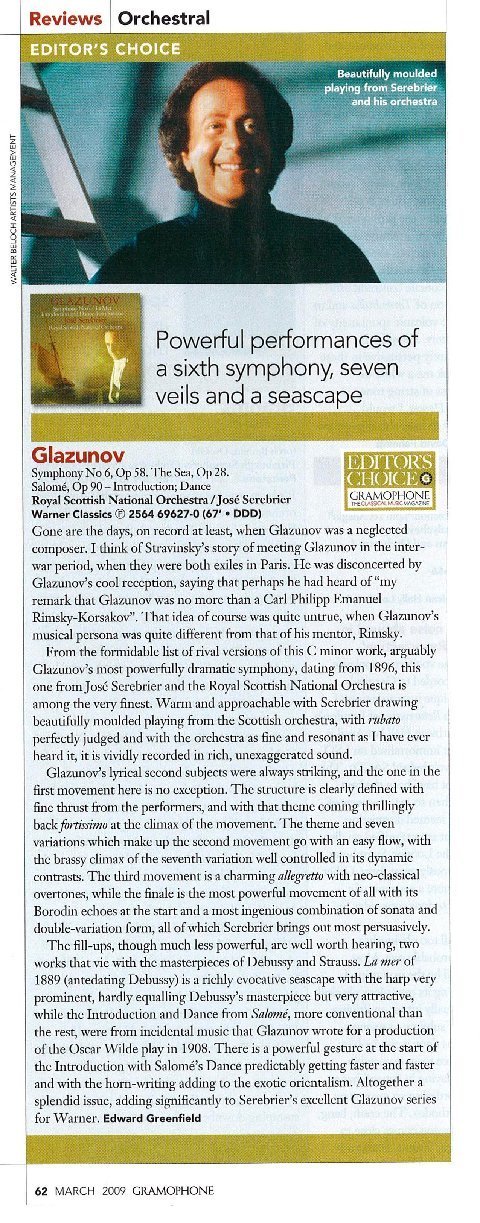 CLASSICAL MUSIC GUIDE
From the formidable list of rival versions of the Sixth, arguably Glauzunov's most powerfully dramatic symphony, dating from 1896, this one from José Serebrier and the Royal Scottish National Orchestra is the very finest, warm and approachable with Serebrier drawing beautifully moulded playing from the Scottish orchestra, with rubato perfectly judged and with the orchestra fine and resonant in vividly recorded, rich, unexaggerated sound.
Glazunov's lyrical second subjects were always striking, and the one in the first movement here is no exception. The structure is clearly defined with fine thrust from the performers, and with that theme coming thrillingly back fortissimo at the climax of the movement. The theme and seven variations which make up the second movement go with an easy flow, with the brassy climax of the seventh variation well controlled in its dynamic contrasts. The third movement is a charming allegretto with neo-classical overtones, while the finale is the most powerful movement of all with its Borodin echoes at the start and a most ingenious combination of sonata and double-variation form, all of which Serebrier brings out most persuasively.
The fill-ups, though much less powerful, are well worth hearing, two works that vie with the masterpieces of Debussy and Strauss. La mer of 1889 (antedating Debussy) is a richly evocative seascape with the harp prominent, hardly equalling Debussy's masterpiece but very attractive, while the Introduction and Dance from Salome, more conventional than the rest, were from incidental music that Glazunov wrote for a production of the Oscar Wilde play in 1908. There is a powerful gesture at the start of the Introduction with Salome's Dance predictably getting faster and faster and with the horn-writing adding to the exotic orientalism. Altogether a splendid issue.

In the past, Glazunov and early Russians were often played by leaden Soviet era orchestras, dutifully earnest and plodding. So I was completely taken by surprise when I started listening to the series of Glazunov symphonies recorded over the last few years by José Serebrier and the Royal Scottish National Orchestra. Not my thing, I thought, but listened, and discovered how much fun they could be. Serebrier thinks the symphonies anew. It’s like scrubbing stale varnish off a piece of furniture, to find the rich wood beneath.
This Glazunov is vivacious, fluid and witty! Currently I’m listening to Symphony No 6, a recording which has been nominated for the 2009 Grammy awards, and raved about by lots of different people, some of whom don’t usually agree. It isn’t easy for me to write about repertoire I don’t know well, but this is great fun. These recordings prove yet again how important thoughtful performance can be, not "going through the motions" but expressing genuine enthusiasm for the music. I love listening to these recordings because they fill my heart, which is a good recommendation!
Doundou Tchil
"The performance of the Sixth Symphony is simply magnificent."
 This is the fourth single album to be issued in what I very much hope will become a complete series of the Symphonies of Alexander Glazunov (please, including the first movement of the unfinished Ninth) by the Royal Scottish National under José Serebrier on the Warner label. Earlier issues in this series have been released over the past few years, each one of them absolutely outstanding from all musical and technical points of view, and this new record is fully up to the very high standard the musicians have set themselves. It would appear that the relationship between José Serebrier and the RSNO is an extremely happy one – this most gifted musician has the ability to draw some of the best playing from them I have heard for a long time, and one gets the distinct impression that all concerned are giving of their best.
The performance of the Sixth Symphony is simply magnificent; the work has long been under-rated, which is manifestly unjust. I have always found it to be a noble score, so beautifully written and orchestrated, and possessing that spontaneous fund of melodic invention, especially in the first two movements, that marks out the genius of this Russian master. Glazunov’s Sixth dates from 1897 – Rachmaninov made the published version for piano duet of the work. The extended first movement is most beautifully shaped in this performance, especially the lyrical, growing, opening paragraph – it is quite superbly done here. The opening of the second movement is another case in point, and in the hands of this masterly conductor this music is supremely well-shaped throughout, with notably fine orchestral playing – in this second movement the tonal phrasing of the RSNO woodwinds, around 2’30” et seq, and the long clarinet solo from about 5’22”– a gentle presentiment of Rachmaninov’s Second Symphony of ten years later - is most beautifully played. The most entrancing aspect of this movement is the faster section which begins around 7’20” and which is winningly conveyed here, after an account of the brilliant first movement that is at times extremely exciting and very Russian – an account which completely disabuses those who have claimed the music to be somewhat Wagnerian. The rest of this sadly neglected score is equally well performed and I admire José Serebrier’s refusal to rush the finale. Although the composer’s inspiration does not burn as consistently brightly here, the conductor lets the music speak for itself, and the result raises the stature of the finale to a higher level than has previously been accorded it on disc.
The other works are rarer still, and whilst one can understand why Glazunov’s La mer (a ‘Fantasy in E major’ from 1889) has tended to be hidden in the shade of Debussy’s masterpiece, the earlier work is still well worth resuscitation, not least for its historical importance: it is remarkable to consider that the opening music dates from fifteen years before Debussy and is virtually contemporaneous with Richard Strauss’s Don Juan;Glazunov was 24 when it appeared. The rest of the piece is not as original as tone-painting, but it is quite striking and consistently inventive, and it evinces an orchestral mastery that is as rare as it is admirable – the extended ‘storm’ sequence, beginning around 6’10”, is very impressive, and this fascinating score is brilliantly performed throughout. The other items, from incidental music for a production of Wilde’s Salome in St Petersburg in 1908 (including a naturally colourful, suitably oriental, Salome’s Dance), are also worth hearing, especially in such committed accounts as these.
José Serebrier, born in Uruguay, is himself of Russian extraction; he has this style of music in his cardio-vascular system and I have no hesitation in saying that, if an integral set of the Glazunov Symphonies is completed to this standard (as I began by saying I very much hope it will be) the result will sweep the board, outclassing – for example - the BIS set by the BBC National Orchestra of Wales under Tadaaki Otaka by a wide margin. The recording is first-class; this is a highly recommendable CD.
Robert Matthew-Walker
"A mind-altering series...one quality of Serebrier’s Glazunov series has been is its combination of the Stokowskian and Szellian...a riveting experience."
So how is this new recording? I’ve already tipped my hand here: this is a worthy installment in what has turned out to be, for me, a mind-altering series, one that has converted me to a composer who was, formerly, far beneath my horizon of interest. Most immediately engaging is La Mer. From its snarling opening measures, with its low-brass growls and its percussion roars, it’s darker, grittier, and more intense than most of Glazunov’s output; in terms of its sheer sonority, too, it stands out for its moment-to-moment orchestral ingenuity. Granted, it’s nowhere near as radical as Debussy’s La Mer—Glazunov’s remains heavily indebted to its Lisztian forebears (not only the Dante Symphony but the symphonic poems as well). Nor, for that matter, does the score flaunt any formal elegance: it’s the kind of music that can seem garrulous in lesser hands. But one quality of Serebrier’s Glazunov series has been is its combination of the Stokowskian and Szellian—and his special ability to bring out the colors of La Mer’s glorious, sonic surface while shoring up the wobbly structure makes for a riveting experience. Serebrier insists that being a composer helps him “get inside a score, inside the music, and make some sense of it, some logic, so that it communicates”—and that skill certainly pays high dividends here. Reviewing Lan Shui’s recent recording with the Singapore Symphony, Michael Fine lamented the lack of “salt, brine, and winds” in the work (31:2)—but it’s a criticism one would hardly level after hearing Serebrier’s seething performance.
The Sixth is nearly as impressive. What to praise most? The flexibility of phrasing and dynamics in the first movement’s introduction? The striving impulse of the first theme, which grows out of it? The pastoral sweetness in the second movement—succulent but never sappy? The celebratory vigor of the finale, with its blazing brass and, in spots, its almost jazzy syncopations? The canny weighting of the harmonies throughout? From first note to last, it’s a splendid experience. Serebrier’s performance of the Glazunov has a great deal more conviction—and a great deal more sensual appeal—than Polyanski’s competing recording for Chandos.
The orchestra plays very well for Serebrier—and the sound on my pre-production CDs is exemplary. If you’ve been following this series, of course, you won’t need my encouragement to add this to your collection; but if you’ve yet to join in, this is as good a place as any to start.
Peter J. Rabinowitz

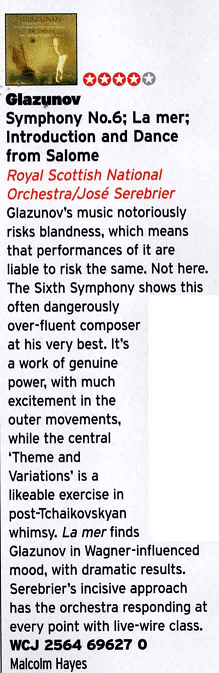

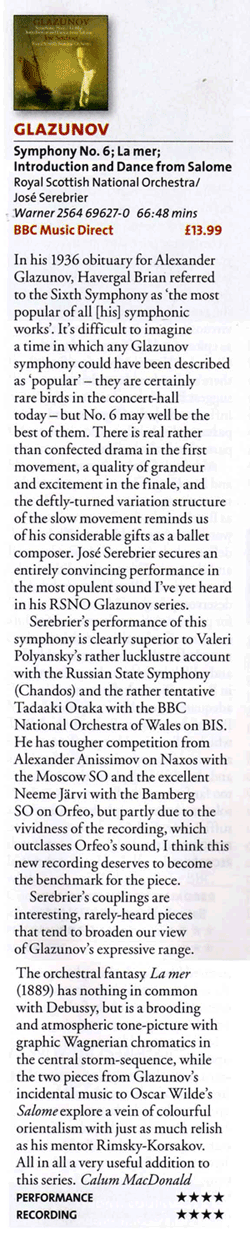

On the whole Glazunov looked west. The earliest work on this CD is La mer of 1889; yet that was also the year he and Rimsky-Korsakov were much occupied with completion of Borodin's Prince Igor, in which the Polovtsian Dances are a glorification of eastern tribal vitality. Either way it is excellent to have a young Russian's anticipation of Debussy. If the Frenchman observed the English Channel from Eastbourne, one presumes Glazunov was scanning the grey waters that filled the Gulf of Finland. The many moods of that unpredictable element are well captured, none more effectively than the rising storm.
La mer
In the case of Salome it is probably best to shut one's eyes and look nowhere. On this occasion Strauss's 1905 shocker preceded by four years Glazunov's incidental music to a production of Wilde's play. Quite the worst part of the Strauss opera is the Dance of the Seven Veils. I do not now suggest substituting Glazunov for Strauss, but it is instructive to see how effectively Glazunov coped with the delicate situation. I dare not speculate how many veils had been shed by the lascivious princess in the first two minutes of her performance, as it is now the holy month of Ramadan in Cairo.
Salome's Dance
José Serebrier and this Scottish orchestra have staked quite a corner in Glazunov symphonies. This is the fifth they have recorded, and it proves a very worthwhile project. No 6 is the first symphony Glazunov wrote after reaching the age of thirty. It is a powerful piece, but has room for a playful Intermezzo as third movement.
Intermezzo: Allegretto (Symphony No 6)
The outer movements, though, propound cogent musical arguments, as in the opening Allegro appassionato.
Allegro appassionato (Symphony No 6)
On the evidence of this fine disc, one can but wish the team a successful conclusion to the complete series.
Robert Anderson
The First Movement is very direct and the structure is held quite well with the transition from Adagio to Allegro passionate superbly handled. The same goes for the "Tema con variazioni" whilst the Finale is a rip-roaring piece with all guns coming out blazing. Comparisons with Polyansky (Chandos) and Anissimov (Naxos) are instructive but I feel that Serebrier is superior in this work.
Both "The Sea" and the "Salome" excerpts receive carefully attentive treatment with the former particularly atmospheric and picturesque. Recordings are top notch with just the right balance between strings and woodwind although the Scottish acoustic does appear to cloud sometimes. However, if you have waited patiently for Serebrier to continue his cycle then you will certainly not be disappointed.
Gerald Fenech
José Serebrier, the gifted conductor-composer, continues his excellent Glazounov cycle with his 2008 reading of the Sixth Symphony (1897), recorded at the Henry Wood Hall, Glasgow. Structurally reminiscent of one of Tchaikovsky’s larger symphonies, like the Third or Fifth, Glazounov’s Sixth presents us two outer movement of serious, German-based form, complemented by internal movements that owe debts to the divertimento or divertissement. While entirely melodic and tonally conservative, the music does not generate an immediate sense of character nor color, not having been particularly influenced by Russian themes. The G Major Tema con variazioni bears a distant carriage to Arensky’s Variations on a Theme of Tchaikovsky. Its seven variants embrace an Allegretto, Scherzino, Andante mistico fugato, and Notturno. Once or twice the melody swells up and reminds me of moments from Goldmark. Glazounov’s orchestral technique, always effective, has some pungent brass riffs and punctuations for the tympani.
The E-flat Major Intermezzo plays as mock-militant jaunt that combines courtliness and balletic grace. Warbles in the woodwinds and triplet figures do not add much depth, but the music trips lightly without ruffling any emotional feathers. The Finale returns to C Minor with contrapuntal vengeance, proffering a double-variation form that pays debts both to Balakirev’s composition classes and German formality. The Scottish Orchestra trumpets and woodwinds keep busy, alternating a skittishly martial nationalism and buoyantly lyrical impulses. The tempo picks up, making the various, polyphonic choirs virtuosos; the last pages pull up the reins and thin out the texture, only to renew its fervent energies for the presto coda, where the trumpets throw out Tchaikovsky’s sparks.
Glazounov's tone-poem or concert-fantasy in E Major, La Mer (1889), is dedicated to Wagner, and it possesses many of the ingredients that Hollywood composers would likewise employ in seascape evocations. The sea grumbles, whistles, and shimmers, with strings, horns, and a particularly active harp part. A well-wrought color piece, the music assumes a deft variation-technique to advance its ululations and surges, topped by aerial whitecaps. The poetic sentiment that provides the “program” for the score hints at Shelley’s “Ode to the West Wind” in several respects, not the least as serving witness to a trombone-driven, violent storm. As the maelstrom progresses, we might detect a faint nod to Wagner’s Dutchman. The quiet ending pays homage to Borodin’s color palette.
Composed for a 1908 production of Oscar Wilde’s decadent play Salome, Glazounov’s music invokes oriental exoticism where Richard Strauss painted the decor with drops of purple blood. Only momentarily does Glazounov grant Salome a convulsive gesture, the chromatic harmonies suggestive of her Byzantine desires. At one point, the brass chorale hints at a more exotic version of Humperdinck, maybe later Gliere. The sinuous Dance pays homage to Rimsky-Korsakov, touches Balakirev’s Islamey, paints the languor of Borodin. Cecil B. DeMille music Russian style. The Serebrier formulas all apply: plenty of verve, sympathy for all parts, a colossal sense of pageantry, all of which hearken back to his mentor Stokowski.
Gary Lemco

The material is robustly worked in the passionate first movement and finale, or given a wistful hue in parts of the second. There is plenty of activity and variety, and the whole is clothed in those luminous orchestral colours that were Glazunov's forte.
The RSNO under José Serebrier makes a persuasive case both for the symphony and for the two extras, an evocation of the sea that has a touch of Wagner's Ride of the Walkyries in its storm-tossed imagery, and two excerpts from incidental music to Wilde's Salome, an ominous introduction and an exotically tinged dance.
Goeffrey Norris
Glazunov: Symphony No. 5, The Seasons
GRAMMY nomination: "Best orchestral recording of the Year"
Royal Scottish National Orchestra /José Serebrier
Warner Classics 2564 61434-2
"Serebrier beats all of the currently available recordings."
Fanfare
Show/Hide reviews
The Fifth has fared well on compact disc, at least in comparison to Glazunov's other symphonies. Unfortunately, current releases of the work are lacking in one way or another. Polyansky (Chandos 9739) concentrates on creating a polished orchestral surface, and seems completely unconcerned about what other opportunities the music may provide. Anissimov (Naxos 8.553660) is routine, while Butt (ASV 1051) afflicts his first and final movements with the slows in a search for profundity. The Fifth of Järvi (Orfeo C 093101) is the best performance in his series, but it still lacks some of the rhythmic flexibility and most of the strong accents that are very much a part of this composer's major orchestral scores. Mravinsky (EMI Classics 75953) is perhaps the biggest disappointment of them all, in a sloppy, matter-of-fact reading.
I'll state right away that Serebrier beats all of the currently available recordings. He does this through energy, a confident sense of style, a sure hand at bringing out inner voices, and an orchestra that has become the equal of any in the UK—and that's saying something. The Scottish orchestra has it all over its Soviet counterparts.
The slow movement belongs to Serebrier. He provides the most convincing version of the andante that I've ever heard, rhapsodic yet perfectly controlled, with melting strings that bring to mind his one-time mentor, Stokowski. The final movement is a toss-up. Serebrier's vigorous tempos (the fastest on record) smooth over the awkward, sudden transitions between the slower, rather bland main theme, and the faster “bear dance” second theme: here, the pacing in these versions is roughly on a par, allowing the conductor to focus on those contrapuntal details Glazunov so loved to place in his finales. Fedoseyev suddenly slows to a moderate tempo in the coda, where the bear dance turns into a parade march; you can almost hear the soldiers and their mounts gallop gracefully past the admiring crowd and into a Russian sunset. By contrast, Serebrier's horses continue straining at a breakneck pace. It's more exciting, and it leaves me gasping for air.
As the Symphony No. 5 was the most popular of these works in Glazunov's auvre, The Seasons became his celebrated ballet score. Serebrier gives it a symphonic treatment, with an emphasis on virtuosity and detail. The snarling brass in the third Winter variation are finely delineated, while the upper strings in the waltz from Summer have an open-hearted warmth that surely came to these Glasgow Scots by way of Leningrad. I find Spring too brisk, but Autumn's Bacchanale has all the brilliance one could desire, and its Petit Adagio provides just the right sense of suppleness and repose.
The liner notes are good (if a little hard on the composer, who's described as a hard drinker rather than the alcoholic he demonstrably was), and the sound quality is exceptionally spacious and well defined. Dare we hope for a Glazunov cycle from Serebrier?
Barry Brenesal
This Warner recording certainly has a lot to commend it. Despite the absence of any Russian input, the score has been read with keen attention to detail by both conductor and orchestra.
In the Fifth Symphony an interesting warmth from the violas and cellos prevails in the first movement. The trumpets and horns blend nicely as the first movement gathers momentum before the graceful woodwind section starts. Glazunov seems to have been influenced by the German school in the use of horns and woodwind in the early movements.
The lively second movement has fine atmosphere with the piccolo/flute and pizzicato strings adding a magical touch. The opening of the third movement gives that feeling of mystery that is not as mechanically portrayed as in the Russian recording with Rozhdestvensky; instead a dreamy elegance pervades the movement. Serebrier lengthens the phrasing to good effect.
The military splendour of the last movement expends considerable energy and pomp. The notes tell us that ‘this energetic rondo recalls Borodin’s rough epic manner, but which is transformed by Glazunov into an epitome of a grand Russian style’. The charm of this score is certainly brought out by this competent conductor.
The Seasons is set against considerable competition from other labels. I continue to enjoy my Jarvi version with the Scottish National Orchestra (Chandos, coupled with Concerto for violin and orchestra, Op.82) even though its 1988 performance might now be considered by others as ‘slightly dated’.
Again, I detect an overall sensitivity in the playing that is very appealing. In this recording, Spring runs into Summer (which is not always the case) giving an abrupt start to tr.12, Summer’s opening. Only if listening on a track-by-track basis will the clipped start be of any concern, but this is quickly overlooked when one settles into the majesty of the movement. In the coda of Summer, the syncopated horn chords are more evenly spaced than those found in the Jarvi performance, yet the whistling strings tend to be over-recessed. Perhaps the best known part of the score is the opening movement of Autumn (tr.17) where the first strings and piccolo carry the theme and need to be forward placed. Here the impact may not be as vibrant as the heavy Jarvi version because the timpani are not as prominent, but for me the strings are right and my enjoyment is not muted.
The notes are written in English, French and German and carry more detail than some of those found elsewhere.
The clear recording and slightly reverberant surroundings are ideal for maximising the textures and appeal of these works and make them worthy of consideration as benchmark recordings.
Raymond Walker

Alexander Glazunov’s Fifth Symphony and his charming one-act ballet, The Seasons, make an ideal coupling of late 19th century Russian music.
Although he was beginning to distance himself from the strong nationalism of The Five (the influential Establishment of Russian composition) Glazunov retains the exotic orchestration, modal harmonies and folk themes of his predecessors, while consciously introducing a more cultivated, sophisticated style. The result brims with creativity and imagination.
José Serebrier and the RSNO play the slow, opening bars of the Fifth Symphony with a luxuriant, rich sound, before moving on through the maestoso-allegro with great vigour and exhilaration to a marvellously light and transparent scherzo. Featherweight flutes, strings and percussion catch the delicacy of Glazunov’s writing.
Serebrier’s pacing keeps the music pulsating and alive, but simultaneously gives the spacious melodies and rich harmonies time to breathe and expand. The RSNO responds superbly to his precise direction with brilliantly incisive playing and as the orchestra moves into the very exciting last movement, it is impossible not to revel in the surging energy and grand sonority Serebrier gathers from his players in the symphony’s driving finale.
The RSNO is equally scintillating in Serebrier’s account of the rarely-seen ballet, The Seasons. The playing is warm and elegant in these beautifully constructed musical pictures. The zest and thrust of the famous Bacchanale Of Autumn could even tempt you to retrieve those long forgotten dancing shoes. Very enjoyable performances.

The Fifth Symphony, dating from five years earlier, opens with a bouncing Allegro in triple-time, here given an exhilarating performance. That is followed by a Scherzo that echoes Mendelssohn's fairy music, a lyrical slow movement, lovingly done, and an energetic finale full of vigorous syncopations. With outstanding recorded sound giving clarity and weight, the refinement and power of the performance is superbly caught.
Edward Greenfield
Anthony Holden

Blumige Idyllik
José Serebrier, der 1938 in Uruguay geborene, in New York lebende Spitzenmaestro unter den Reisedirigenten und fantasiebegabte Komponist, hat das Image des „Erben Stokowskis“ – mit guten Gründen, wenn man seine vortrefflichen Aufnahmen hört, sei’s nun Mendelssohn, Janácek, französische und amerikanische oder – ganz besonders – slawische Musik, die ihm so überhaupt nicht sklavisch von der Hand geht. Man höre seine Scheherazade (Reference Recordings) oder seinen Tschaikowsky (BIS), oder eben, als leuchtendes Beispiel herausragender Verwirklichung bislang kaum vorbildlich zu hörender Musik, den ersten Baustein seines Zyklus’ der Glasunov- Sinfonien, der unüberhörbar der bei weitem gelungenste Zyklus dieser von Tschaikowskys, Borodins und den Sowjetgenies Gattungsbeiträgen überschatteten Meisterwerke zu werden verspricht. Die 1894 vollendete Fünfte Symphonie ist wohl zusammen mit der Achten (aus welcher der großartige Mesto-Satz besondere Aufmerksamkeit verdient) Glasunovs wesentlichstes Orchesterwerk. Sie ist die Schöpfung eines durchaus jungen Mannes im Zenit seiner Schaffenskraft, voll freudiger Strahlkraft, anschaulicher Poesie, handfester Verve und verliebter Anmut. Und Serebrier kann das ganze Spektrum tänzerischer Eleganz, atmender Phrasierung, gepfefferten Zugriffs, veredelnder Balancierung, behutsamer Sentimentalität und absichtslos scheinender Übergangskunst entfalten, das ihm in so natürlicher Weise zur Verfügung steht. Am meisten nimmt das Andante, gehaltvollster Teil des Werkes, ein. Aber auch die bei aller Vitalität etwas routinierten Abschnitte der Ecksätze stehen plötzlich sinnerfüllt da. Das Pendant bildet die leichtere Muse in der Nachfolge Tschaikowskys, mit welcher Glasunov seine Zeitgenossen beeindrucken konnte: das wenige Jahre später entstandene einaktige Ballett „Les Saisons“, in welchem alle kurzweilige Episodik, alle blumige Idyllik, die belebenden Aufschwünge und zärtlichen Nostalgien, jedes Kleinod seinen Platz zum Leben hat. Serebrier hat eine geradezu untrügliche Intuition für die Charaktere der Situationen und Stationen und deren einander zur Form ergänzendes Wechselspiel. Ausgezeichnetes Orchesterspiel, farbträchtiger Nachhall – eine bessere Werbung für Glasunov hat es nicht gegeben, und nun warten wir gespannt auf die Achte Symphonie.
Christoph Schlüren
"This is pure Glazunov plain and simple under the great Maestro's hands."
It seems as though Glazunov is getting a good deal of attention as of late, with a multiple of new recordings of his music that were issued in the past year (believe me, the surge is most welcome, for like other reviewers of this disc, its neglect is baffling). Truth to tell, it has been quite a while since accounts of his works, particularly the Fifth Symphony, are given with such flair and freshness as they are here. Not that Serebrier's approach is entirely unadorned, but that's to its advantages. Take the climax (at 7'20") of the Symphony's first movement, how grand the approach is without being undercharged. Although Borodin's influence is noticeable throughout, Serebrier would have you think twice. This is pure Glazunov plain and simple under the great Maestro's hands. And how sweet the lyricism is particularly in the Scherzo. The andante is well played also, though not emotionally as heartwarming as in Svetlanov's and Fedoseyev's recordings (the brass interceptions are especially poignant and tragic in these fine vintage Melodiya albums). But Serebrier held his ground well, as in the case in the Finale, which is superbly done and very much reminds me of Jarvi and Svetlanov in their overall takes. Exemplary, particularly at the climaxes and the finising bars of the work (though I'm still finding myself thrilled of how emphatic Jarvi is in the six-note Tchaikovskian closing).
The same amount of praises are warranted in Serebrier's take of "Vremena Goda" ("The Seasons"). This is Glazunov at his best (and those who deem the score as an equal to "The Nutcracker" are not insane). It is, as typical with the composer's music, a very demanding work and treating it too straightforwardly would rob some of its delicate yet highly imaginative qualities. Most conductors, particularly Jarvi in Chandos, succeed in bringing out the intricate details of the piece to full effects. There are no exceptions of it here, where Serebrier allows the music to flow, very much like what Svetlanov did in his 1978 EMI recording. Jarvi's rendition have more excitability and brisk (the Bacchanal and the Scene III's coda leading up to it are the best on record). But there are plenty of virtures to be found here, as this recording may well set new standards. As in the Chandos disc, the Royal Scottish National Orchestra responds with plenty of warmth and exuberance for Serebrier. The recording sound is first class and the album is well indexed and presented. My only hope is for the same team to record Glazunov's other works like, say, his Sixth Symphony and perhaps even "Raymonda."
David A. Hollingsworth
A well-upholstered orchestra, a conductor much given to grand gestures in the Stokowski tradition and a composer who sometimes needs the creative touch, have found each other in this outstanding issue. Only last month I welcomed Tadaaki Otaka’s BIS recording of the Fifth, Glazunov’s ultimate symphony-by-numbers, as the clear front runner; José Serebrier is even better, much better, giving the characterful RSNO wind Romantic room to manoeuvre in their lyrical first-movement theme and finding even more panache than usual in the state-festival finale, with a spine-tingling sprint to bring down the plush-velvet curtain. As I felt when last listening to the Fifth, Glazunov’s substance is especially evasive in the slow movement, but how well this orchestra’s various departments, starting with the horns, set the indolent mood with their shifting harmonies.
Serebrier’s accomplished gear-changing comes in useful for the most through-composed divertissements of The Seasons. Clearly Glazunov was out to emulate high balletic style in 1900 after the glories of the then- recently deceased Tchaikovsky’s Nutracker, and the elaborate orchestration registers beautifully in the open acoustic of Glasgow’s Henry Wood Hall. Yet there are dangers, too, in the endless succession of lush, expansive melodies; Serebrier keeps these even more in focus than all the previous late-Romantic masters like Svetlanov and Jarvi, while giving the music space to billow at key points; the Petit adagio of “Autumn” is a consummate example. Superb solos from the RSNO harpist and principal clarinet (still John Cushing, I presume, from the distinctive if discreet vibrato) gild the lily, and Andrew Huth’s neatly spiced introductory notes help to make this a perfect introduction to Glazunov’s sweet-toothed pleasures.
David Nice

"La version de Serebrier es sensacional"
El academicismo caracteristico en Glazunov y el afecto que el autor tenia por la música de Borodin, Rimsky-Korsakov y Wagner confluyen en su sinfonia mas justamente celebre, la Quinta, en la que algun eco de Chaikovski tambien apunta de vez en cuando. De hecho es, una sintesis entre la tradición nacionalista rusa y “los refinamientos de la tecnica occidental”. La maestría de Glazunov en lo formal y en la orquestación resultan evidentes. Lo cierto es que en esta sinfonía el resultado es mucho mas brillante que en otras obras del autor y este consigue aqui ir mucho mas alla de lo previsible.
La versión de José Serebrier es sensacional y el director extrae todo el potencial expresivo e incluso dramatico de la obra, tal como queda de manifiesto en la suave tensión con que comienza el tercer movimiento. Completa la grabación otra de las obras mas celebradas de Glazunov, el ballet Las Estaciones que sigue la tradición de los grandes ballets de Chaikovski. Glazunov sabia como escribir maravillosamente para orquesta. Excelente tambien en el ballet la labor de José Serebrier, brindandonos asi un compacto de esos que nos hacen un poco mas felices pasando un buen rato escuchando buena música. Vamos, un disco precioso, para no dejarlo escapar!.
Josép Pascual
José Serebrier: Tradition and Mastery
"Serebrier's version is sensational"
The characteristic academism of Glazunov, and his enthusiasm for the music of Borodin, Rimsky-Korsakov and Wagner come together in his rightfully most famous symphony, the Fifth, in which one can also hear echoes of Tchaikovsky from time to time. It is indeed a synthesis of Russian tradition and the refinements of occidental tradition. The mastery of Glazunov is in the structure and form, as well as the orchestration. The truth is that in this symphony the results are much more brilliant than in some of his other works, and he really manages to go further ahead of our expectations. Serebrier’s version is sensational. The conductor extracts all the potential expressiveness and the dramatic explosions of the work. The tension at the start of the third movement, even in such a quiet moment, reflects the intensity of his interpretation throughout.
The recording is completed with one of Glazunov’s most celebrated works, the ballet The Seasons. Serebrier’s performance is excellent here as well, providing us with a CD which gives us so much listening pleasure. A very beautiful recording, not to be missed!
Josep Pascual
Gary Lemco
Raymond S. Tuttle
Glazunov: Symphonies No. 4 and 7
GRAMMY nomination: "Best orchestral recording of the Year"
Royal Scottish National Orchestra / José Serebrier
Warner Classics 2564 63236-2
“The performances are polished, rich, exciting and seamless.”
The New York Sun
“A winner, in every sense of the word”
Fanfare
Show/Hide reviews

The relevant label — Warner Classics — has now come out with a third album, containing Glazunov's Symphony No.4 and Symphony No.7.These are not exactly immortal works, but they are certainly worth knowing, and Mr. Serebrier and his forces make a wonderful case for them. The performances are polished, rich, exciting and seamless. They are admirable in detail and compelling in overall conception. A must have recording. Russian Romanticism is not to be neglected, and Glazunov was a prime exponent of it.
The relevant label — Warner Classics — has now come out with a second album, containing Glazunov's Symphony No.4 and Symphony No.7.These are not exactly immortal works, but they are certainly worth knowing, and Mr. Serebrier and his forces make a wonderful case for them. The performances are polished, rich, and seamless. They are admirable in detail and compelling in overall conception.
Russian Romanticism is not to be neglected, and Glazunov was a prime exponent of it. But if you acquire only one of these albums — make it the first one. That finale is a glorious shot of adrenalin.
Jay Nordlinger
Nowhere is that requirement greater than in the Symphony No. 4. It is another experimental piece: an unusual three-movement structure, two movements with lengthy slow introductions, no independent slow movement, and a host of subtle cross references that make the transformed reappearance of one theme in all movements of the Second Symphony look primitive by comparison. Not everything in the Fourth works, despite the inspiration of so much. The transition of emotional weight between the first movement introduction and the allegro moderato is too abrupt, for example, nor is the new material thematically distinguished enough—especially when compared to the beauty of the theme that informs the andante introduction. But all in all, there is a new mastery to the handling of development in this piece, and an openness to whimsical exploration that recalls the composer’s glorious scherzos. After this, and until the Symphony No. 8, there would be a de-emphasis on Glazunov’s endless drive to improve, and attention paid instead to capitalizing on what he had already achieved.
Andrew Huth remarks in his liner notes to this release that the Symphony No. 7 (1901) applies the cyclical principle in a radical fashion: its finale incorporates an original, Borodin-like melody as binder, while its other themes are either quotes or transformations of themes from other movements. But Huth may be forgetting that Kalinnikov’s pair of symphonies, especially his Second (1897), used an identical technique. Granted, Kalinnikov’s finales are the least successful part of his symphonies, as his technique was not up to the challenge; still, it’s possible they furnished the idea for Glazunov. In any case, the Symphony No. 7 is notable for its poetry and charm, as well as for the unique coloration and character the composer provides to each of its first three movements. His finale does succeed, in spades. but if that shows Glazunov’s skill at its best, it is in the symphony’s Andante that we glimpse the powerful emotional core of the work.
I’ve had high praise for Serebrier and the Royal Scottish SO in the previous releases of this series. That isn’t about to change in this release. It presents a felicity of phrasing that quite escapes most versions of both symphonies. Compare, for instance, the delicate shaping of the bucolic opening theme in the Seventh Symphony, or the sharply accented repetition of the brass theme in the same symphony’s Scherzo. Listen to the way Serebrier’s careful rubato allows him to linger over the thematic notes defining the chords of the introductory theme in the Symphony No. 4 without losing the pulse. The character of each instrument is discerningly caught in a way I normally associate with Beecham and with few other conductors. Very well done, indeed.
Among conductors who have recorded both works, Anisimov/Moscow SO (Naxos 8.553561, 8.553769) is crude, eschewing all detail. Otaka/BBC National Orchestra of Wales (BIS 1378, 1388), as I wrote in Fanfare 27:5 and 29:1, lacks color and sustained energy, though he wakes up for persuasive slow movements. Jarvi (Orfeo 148201) is good in both pieces, but he doesn’t achieve the distinction of Serebrier; and the Bamberg SO is a fine orchestra, while the Royal Scottish National Orchestra is a great one. For the rest, Polyansky/Russian State Symphony (Chandos 9739) in the Fourth offers a swamp of sound, with no other distinction, while Weller/Basel SO (Ars Musici 1153) is relatively colorless.
The sound is excellent, with subtle orchestral spotlighting that doesn’t sound artificial. A winner, in every sense of the word.
Barry Brenesal
In purely sonic terms, these are succulent performances—rich woodwinds, burnished brass, full cello- and bass-weighted strings. It’s not that he gives both works—or even each movement in a given work—the same generically Romantic tonal balance: as is clear, say, from comparing the fat woodwind sound in the opening of the Fourth with the more chastely Classical sonorities at the opening of the Seventh, Serebrier is fully attuned to the specificity of the moment. Still, even his chirpy winds at the beginning of the Fourth’s second movement are far less edgy and acidic than Mravinsky’s. Serebrier obviously shares his mentor Stokowski’s delight in sound for the sake of sound, and he shares Stokowski’s uncanny sensitivity to the timbral implications of harmonic changes; and those looking for sheer sybaritic transport—at least, that special Glazunovian transport that steers clear of danger and stops short of ecstasy—should find this recording at the top of the list.
Yet Serebrier miraculously manages to bring us that hedonistic pleasure without gumming up the music, either vertically or horizontally. No matter how rich the sound, the weave of the textures is always clearly audible—a special virtue in the contrapuntal play of the finale of the Fourth and, even more, in the intricate mosaic of the finale of the Seventh. And while Serebrier always gives the sonorities plenty of time to register (I was particularly taken with the patient nobility of the Seventh’s Andante, about as close as Glazunov ever came to true sublimity), there’s a consistent sense of progress to these performances, partly fueled by Serebrier’s control of rhythmic flow, partly fueled by his refusal to lose sight of the music’s large-scale design, even in the most ravishing effusions.
As regular readers know, I’ve always been something of a Glazunov skeptic. Serebrier has—at least, while I’m listening—managed to convert me. I can’t think of anything more I could ask of a recording. Highest recommendation.
Peter J. Rabinowitz
Glazunov: Symphony No. 8, Raymonda
GRAMMY nomination: "Best orchestral recording of the Year"
LATIN GRAMMY nomiation: "Best Classical Album of the Year"
Royal Scottish National Orchestra /José Serebrier
Warner Classics 2564 61939-2
"no one has ever conducted Glazunov's music with more color and verve"
The New Yorker
Show/Hide reviews
The Eighth Symphony reflects a growing chromaticism and harmonic tension in Glazunov’s style. Thematic integration occurs across all four movements, something that he hadn’t tried since the Symphony No. 2; and there’s no comparison between the two works in respect to the subtlety of its application. The slow movement is the finest and longest of its kind that the composer ever wrote, while the equally lengthy finale shows an unusual breadth and mastery of concentration.
The symphony has been recorded repeatedly in recent years, but the results have been lackluster overall. Otaka (BIS CD 1378) lumbers along, seemingly disinterested in anything but the slow movement, while Anissimov (Naxos 8.553660) hamstrings some good ideas with monochromatic, enervated playing. Jarvi (Orfeo C 093201) is in one of his “I can’t slow down for mere music” moods during this work, and Polyansky (Chandos 9961) turns it into something you would expect to find on a Russian easy-listening radio station. The field is Serebrier’s, and he wins it not by default, but through what I referred to in a review of Glazunov’s Fifth Symphony as “energy, a confident sense of style, a sure hand at bringing out inner voices, and an orchestra that has become the equal of any in the UK.”
The Eighth Symphony is tougher fare than the Fifth, though. Glazunov’s movement structures are more complex and drawn out, with a resemblance to tone poems rather than his usual preference for the sonata-allegro and theme-and-variation forms. Serebrier handles the expansive opening movement with an attentiveness to detail that never gets in the way of its majestic sweep. The Scherzo is lovingly delineated, and the slow movement attains real profundity without sacrificing an ounce of its lyricism. Serebrier has the clear lead, and his Raymonda selections (drawn from the three-act ballet) have all the elegance, color, and movement that one could desire of this work.
When Serebrier’s recording of the Glazunov Symphony No. 5 first appeared on my desk in October 2004, I asked the conductor if it presaged a symphonic cycle. At the time, he said it did, but nothing appeared after that—until now. Serebrier’s cycle is moving forward slowly when compared to the haste with which BIS, Naxos, and Chandos have developed their respective series under Otaka, Anissimov, and Polyansky; but it is definitely worth the wait. Strongly recommended.
Barry Brenesal
Both here and in the more familiar Raymonda, Serebrier conducts with just the right combination of tact and passion. Where Glazunov, in lesser hands, sounds pale, Serebrier makes him sound prismatic; where Glazunov, in lesser hands, sounds turgid and redundant, Serebrier gives him momentum and a strong sense of large-scale progress. The results are, quite simply, revelatory. What would I single out for praise? The superbly weighted colors of the first movement of the symphony? The sweet regret of the second? The lagurous rise and fall of Raymonda’s Entr’acte? The smile and lift of the following “Valse fantastique”? The ballet’s glorious conclusion? Actually, ason Serebrier’s earlier recording of the Fifth and The Seasons, you can pick almost any point at random, and you’ll soon find yourself seduced.
The orchestra plays superbly, with glowing colors, flexible phrasing, and exceptional balances. And Serebrier’s trust in the engineers has certainly paid off. Glasgow’s Henry Wood Hall is not a especially flattering recording venue, but you’d never know it from the recording sound here: vivid without glare, rich without heaviness. Strongly recommended!.
Peter J. Rabinowitz

The works of Alexander Glazunov (1865-1936) provided the perfect soundtrack for the late imperial Russia: a society that depended on brilliant surfaces could readily appreciate a kind of music that shone with the lustre of a ruby in a czar's crown. Glazunov's music doesn't have the emotional complexity of Tchaikovsky's, but it can be far more than a luxury item, as José Serebrier's new recording (Warner Classics) of the Symphony No. 8 proves. Serebrier, once Stokowski's protégé, has had an unusually serpentine career. His pacing of this symphony -which has at once Brahmsian economy and a radiantly Russian energy- is unerring; perhaps no one has ever conducted Glazunov's music with more color and verve. The Royal Scottish National Orchestra, normally a reliable second-tier band, turns here a very inspired performance.
Russell Platt
Rimsky-Korsakov: Scheherazade, Russian Easter Overture
London Philharmonic Orchestra/ José Serebrier
Reference Recordings RR-89CD
“Top-rate performances with stunning sonics” ClassicalNet
Show/Hide reviews
 For many of us who first started our love affair with large-scale classical music on our own, Rimsky-Korsakov’s Scheherazade was one of our first flings. What has made this piece such a beloved favorite is its blend of compelling melodies and orchestration. Unlike many works that catch your ear initially but become tiresome after repeated listenings, Scheherazade continues to entertain no matter how many I hear it. Reflecting this piece’s popularity is the numerous times it has been recorded since Thomas Edison got the ball rolling at the beginning of last century (that sounds weird, doesn’t it?). If you don’t believe me, take a peek at how many Scheherazade CDs are in your local music store’s Rimsky-Korsakov’s section. The venerable Penguin Guide to Classical CDs lists no less than 18 recommended recordings.
Despite this formidable competition, José Serebrier has thrown his hat into the ring with his recent recording with the LPO on Reference Recordings. A reading of the enclosed CD booklet shows that Serebrier has embarked on this undertaking with the seriousness of a John Elliot Gardener tackling a Beethoven score. Part of this approach shows how Serebrier is conscious of the performance history of this score, while trying to wring something both original and historically correct from this tried-and-true war-horse. Serebrier shows his determination to take a path less traveled with his willingness to delete some of the traditional notations to the LPO’s in-house score.
Knowing that this score has passed through the hands of many a great conductor, one has to be impressed with Serebrier’s confidence in his approach to this piece of music. The end result is a Mercurial reading that exudes assurance and commitment. I’ve deemed this recording Mercurial due to Serebrier’s dramatic use of changes in tempo and dynamics. While the fast sections of this work are played at breakneck speeds, the adagios are performed at a nearly languorous pace. The sudden changes from pp to fff and back are startling in their adroitness. Despite these difficult transitions, the LPO never loses its firm grip on the music. Additionally, Serebrier and the LPO strut their stuff when it comes to fine details of the score. A great example is about halfway through the last movement where the piccolos play at a blindingly fast pizzicato series of runs without any blurring of the notes. Overall, this is a virtuoso performance of a technically demanding work. Through many listenings, I enjoyed this performance on both an intellectual and emotional level.
Also on this disc is Rimsky-Korsakov’s Russian Easter Overture. Serebrier and the LPO’s account is up-tempo, which propels the music forward. As with Scheherazade, dynamics are used with great flair, which is necessary for this melodically challenged piece. This makes a nice desert that is worth listening to after the main course is done.
As I mentioned, Serebrier’s recording of Scheherazade enters what is already a crowded field of contenders, and I’ll be the first to admit that I haven’t listened to them all. Many audiophiles will tell you that one to own is Fritz Reiner’s and the Chicago Symphony Orchestra’s performance, recorded during the height of RCA’s Living Stereo days. I’m embarrassed to admit that I’ve never purchased this recording in any of its various releases. Fortunately, I was able to borrow from a fellow audiophile the Chesky Records pressing of this revered performance (thanks Marc). Once I dropped the needle, it didn’t take long to understand what the hubbub was about. This recording of Scheherazade by the CSO shows an orchestra at a rarely attained level. It’s as if all the members of the CSO were of one mind and body for this session. No matter how fast Reiner pushes the tempo, this amazing coherence never falters. An addition, the interplay of the voices is so keenly brought out (thanks in a large part to the brilliance of the recording) that I quickly gained a greater understanding of the complex orchestration of this work. I could go on, but this album measures up to the praise heaped upon it.
As an added bonus, my friend also lent me his shaded-dog pressing of Pierre Montex conducting Scheherazade with the London Symphony Orchestra [RCA LSC-2208]. Montex’s reading of this score is mannered, favoring steady rhythms and delicate tonal relationships. It’s not that the LSO doesn’t hit the fortes when needed. It’s just that they never really cut loose in the louder passages. This performance really does (as Serebrier notes) play up the dance aspects of this piece. While not as exciting as the Reiner and Serebrier interpretations, it is an interesting performance nonetheless.
Like many great pieces of music, Scheherazade can be played a myriad of ways, all of them valid. The recordings I listened to for this review represent different approaches. If I had to pick one, I would be hard-pressed to decide between the Serebrier and the Reiner. Both combine top-rate performances with stunning sonics. The fact that I consider Serebrier’s and the LPO’s performance on equal footing with the other is high praise indeed.
Paul Schumann
This is an unsurprising coupling of two of the most popular works in the orchestral literature. Their impact as display pieces is often stressed as if this quality militates against or cancels out their musical value. In fact the two qualities are perfectly complementary.
What is so attractive about these two works is the excellence and memorability of the musical ideas and the sense of fantasy which imbues every bar. Would that Serebrier would now turn to the similarly ecstatic and exotic (though even finer) Antar another 'Symphonic Suite' although finally dubbed 'Symphony No. 2'.
José Serebrier knows the LPO well having conducted them in his own meticulously prepared recoridng of Charles Ives's Symphony No. 4 back in the 1970s for RCA (now BMG). His own extensive notes recount his mission to cleanse the orchestral parts of Scheherazade from decades of conductors' accretions and elisions. He also gives his own overview of conductors' styles taking in names such as Reiner, Monteux, Ormandy, Ansermet, Bernstein, Beecham and a conductor with whom Serebrier worked as assistant in old age, Stokowski.
As a showcase Scheherazade is well served by RR's technical know-how and accomplishment although frankly the listener very soon loses all preoccupation with such matters as the music speaks freely and with lively command. The Colosseum seems a reverberant acoustic and must have taken some mastering. As it is bloom and space are not lacking yet detail is nicely preserved and communicated to the listener. The big moments are spectacularly caught as in the quick crescendo at the end of The Young Prince and the Princess. The helter-skelter piccolo solo at 6.53 in the Bronze Warrior finale is staggering; but then much of the playing here is possessed. The mixture of early Christian mysticism and pagan debauch that stalk the Russian Easter Festival Overture are conveyed with similar fervour. For all of Serebrier's concern for authenticity the performances have no trace of pedantry. Instead they flow with life and dramatic poetry.
Film music fans who may not otherwise know the work would do well to hear this disc for Scheherazade in particular is a work much quarried for inspiration when deadlines press and bank accounts gasp.
All in all a refreshing and surprising event for those who thought they knew their Rimsky.
Rob Barnett
For some reason there has always been suspicion cast on a conductor who performs or records his own compositions. There is a lingering shadow of self-nepotism in the air surrounding such events. In contrast, nobody blinks an eye when a composer directs one his own works. All the abuse Leonard Bernstein suffered for conducting his own compositions is a classic example of this, while when Copland recorded his own works, no one batted an eye (never mind that Bernstein was better at conducting Copland than Copland was). It seems that once the labels are applied, certain stigmas and expectations come with them, for better or worse.
I have to admit that my interest was piqued when I received this new CD in the mail. For the past couple of years I have enjoyed a collection of works by Chadwick on References Recordings [Reference Recordings RR-64CD] performed by Serebrier and the Czech State Philharmonic. As those of you who have already read one of my recent reviews know, I found Serebrier’s reading with the LPO of Scheherazade nothing short of breathtaking [Reference Recordings RR-89CD]. Since I have a good gauge of Serebrier’s incredible talent as a conductor, I was curious to see what sort of composer he is.
I’ll give you fair warning about this album. If you don’t enjoy most modern classical music, then this CD is not for you. Now I have to confess that modern classical music isn’t really my cup of tea either, so I won’t pretend to be an expert where I am not. All of these compositions have a cool objectivity to them that reminds me of Bella Bartok’s highly influential Concerto for Orchestra. Serebrier uses a mixture of melodic and semi-melodic motifs as the basic building-blocks for these pieces. Consequently, these pieces constantly drift in and out of atonality. I found this effect to be quite unsettling. This is not a disc to listen to just before bedtime.
A good example of this is the first piece on this album. It is a four-movement composition entitled "Partita." The most gripping of the movements is the funeral march, with crashing crescendos and disturbing string-section parts. If this doesn’t make the hair on the back of your neck stand up, I don’t know what will.
As always from a Reference Recordings disc, the sound is demonstration quality. The wide dynamic swings in this music are truthfully rendered, giving them great impact. If you want to impress/terrorize your friends with your audio system, this is the disc for you.
This disc definitely grew on me over time. I am happy to see that Reference Recordings is able to mix in some interesting music such as this with the standard repertoire. Definitely a disc worth exploring, if you dare.
Paul Schumann
As so often happens in the classical music business, a work may go unrecorded for years, and then suddenly show up in multiple versions. In this case, Reference Recordings' new Rimsky-Korsakov collection appears in tandem with Teldec's featuring the New York Philharmonic and Kurt Masur. Both discs have one thing in common: the performance of Scheherazade is better than its coupling, though the couplings do differ. José Serebrier directs the most exciting performance, spectacularly recorded in typical RR style. The London Philharmonic plays with greater discipline. Purely as sound, this is a hugely enjoyable disc and certainly a great presentation of the music. If it's great sound and incredible clarity and excitement you're after, Serebrier's Scheherazade may be just the ticket.
David Hurwitz
BEST AUDIOPHILE RECORDING
"Serebrier and the LPO strut their stuff when it comes to fine details of the score. Overall, this is a virtuoso performance of a technically demanding work. Through many listenings, I enjoyed this performance on both an intellectual and emotional level. The fact that I consider Serebrier’s and the LPO’s performance on equal footing with [Reiner's] is high praise indeed."
Paul Schumann
"Keith Johnson has achieved a high-definition recording of extraordinary detail and dynamic impact, without compromising the timbral accuracy of the orchestra."
Peter Burwasser
"RR continues to put out, more consistently than anyone else, great-sounding symphonic compact discs. Keith Johnson sets up his mikes as no one else can, in front of first-rate ensembles playing repertoire that plenty of people care about. This 'Sheherazade' begs comparison to that audiophile icon, Fritz Reiner's 1960 RCA recording with the Chicago Sympony. The reading of 'Russian Easter,' too, is among the most satisfying I know, full of ecstatic exultation and drive. The performances were taped in Watford Colosseum and an enormous sense of space is reproduced."
Andrew Quint
"These people really know how to record an orchestra."
Richard Freed
Shostakovich: Film Music Suits
Belgian Radio Symphony Orchestra / José Serebrier
Warner Classics 3CD 2564-69070-2
Show/Hide reviews
Featuring one of the world’s finest conductors
Shostakovich is best known for his many concert works, but earlier in his career he created many dramatic works and scored over three dozen Soviet films between 1929 and 1971. He started out with a score for the 1929 silent film New Babylon, and most of his film music was connected with Soviet political events. It’s a pleasure to have these excellent recordings of music from the eight films for two main reasons: Soviet films had terrible audio quality on their soundtracks, and most of the Soviet-era recordings of film music are not much better, but these are not only high-quality Belgian recordings from the 80s and 90s, but featuring one of the world’s finest conductors who has previously demonstrated his love of Russian music with an acclaimed series of Glazunov symphony recordings for WCJ.
The Gadfly score has Mediterranean warmth for a film about Italy’s late 19th-century political struggles. The “Romance” from the score later became the theme music for the BBC’s series Reilly, Ace of Spies. The two Shakespearian films show how the composer handled music for the Bard. Hamlet is the more orchestral, with the later King Lear having more pared-down scoring and the use of some music from Shostakovich’s abstract compositions. Five Days and Five Nights was about how Soviet soldier’s saved artworks that had been put into storage by the Dresden Museum. The composer quoted from Beethoven’s Ninth Symphony in the score. The highly Soviet-propagandist The Fall of Berlin tries to show how Stalin’s genius saved the world from Nazism.
But it’s good to have the war music and contrasting romantic cues now in good sound—I only had a poor-sounding mono LP of the music previously. The final film here, The Golden Mountains, was also very propagandistic, but is a striking score to conclude the series. The second movement of the suite is a huge baroque fugue for organ and orchestra which is most impressive.
John Sunier, Chief Editor

Magic and the Magician
The true many-sided Shostakovich symphonic giant reveals himself in his music for many stage works and films, where he shows his fantastic level of subtle nuances, irresistible invention and complete control of stylistic means. José Serebrier, the master of grace, orchestral singing and breathing and transparent balance, obtains melodious sounds from the Belgian Radio Symphony Orchestra. They have undertaken eight film music suites and released them in a 3 CD Box set on Warner Classics. What awaits the listener is complete grace, intensity and deep expression--whether in the tragic world of King Lear or Hamlet, the wildly dissonant escapades of Golden Mountain or the richly magical tone poems of the suite from The Gadfly. No one will ever forget how the elegant Prelude is played; the playing here is unforgettable!
Christoph Schlüren
####
Interpretation & Klang: jeweils Bestnote
Zeitlose Größe
In seiner ‚Gebrauchsmusik’, zu welcher die Filmmusik zweifellos gehört, ist Schostakowitsch nicht weniger Genie als im symphonischen, kammermusikalischen oder Opern-Schaffen. Er bedient die Kleinformen vorhandener Genres mit einer Virtuosität, Fantasie, Kraft, Vielseitig- und Ernsthaftigkeit, wie sonst höchstens noch Prokofieffs. ‚Die goldenen Berge’ von 1931 überraschen mit aggressiv dissonanter Schärfe auf der Höhe der Zeit. In zeitlos nobler Größe, fesselnder Tragik und teilweise äußerster Einfachheit ziehen die Shakespeare-Szenenbilder aus ‚Hamlet’ und ‚King Lear’ vorüber, mit einer inneren Intensität, die den Hörer mitten ins Geschehen nimmt. Die ‚Stechfliege’ und ‚Pirogov’ beinhalten einige der innigsten populären Stücke von Schostakowitsch, wobei das ‚Prélude’ aus der ‚Stechfliege’ in seiner ergreifenden Melancholie besonders herausragt – was ebenso dem Dirigenten José Serebrier zu verdanken ist, der das Symphonieorchester des Belgischen Rundfunks zu höchstem Niveau angeleitet hat: alles singt, atmet, ist voller Reichtum und zugleich balanciert und transparent, hat Schwung und Ruhe, Leichtigkeit und Tiefe im selben Atemzug. Rundum grandios!
Christoph Schlüren
Sin duda, Dimitri Shostácovich fue uno de los más geniales compositores sinfónicos del siglo XX, un prolífico creador nato, cuyas obras ocupan ya un merecido lugar en el gran repertorio musical universal.
En su patria, Rusia, Shostácovich tuvo gran reconocimiento, pero también -al igual que Procofiev y otros músicos rusos- debió soportar el castigo, los infundios y la censura del entonces régimen comunista de la Unión Soviética por una supuesta "decadencia occidental" o presuntas "desviaciones burguesas" en sus obras.
Sin embargo, Shostácovich, nacido en San Petersburgo en 1906 y formado en el Conservatorio de esa ciudad por el yerno de Nikolai Rimski-Korsakov, Maximilian Steinberg, seguía fielmente la gran tradición musical rusa, al igual que Piotr Chaicovsqu.
Cuando falleció en 1975 en Moscú, Shostácovich dejaba un inconmensurable legado musical, del cual sus sinfonías, cuartetos de cuerdas, conciertos, música de cámara y obras para piano son, habitualmente, las composiciones más ejecutadas en conciertos y grabadas en discos.
El director y compositor uruguayo José Serebrier, nacido en Montevideo en el seno de una familia de inmigrantes rusos, acaba de rescatar del olvido una selección de la música compuesta entre 1931 y 1964 por Shostácovich para películas soviéticas, sobre un total de casi cuarenta obras creadas por él con ese propósito entre 1929 y 1971. La colección de tres CDs recién editada por Warner Classics es magnífica y la interpretación sobresaliente.
"Son obras que merecen ser escuchadas", afirma Serebrier. "Shostácovich compuso más música para filmes que la mayoría de los compositores de Hollywood".
Grabadas con la Orquesta de la Radio Belga (RTBF, Radio y Televisión Belga Francesa) Serebrier ha dirigido para el sello Warner Classics & Jazz las músicas de los filmes El tábano, Pirogov, Hamlet, El rey Lear, Cinco días, cinco noches, Michurin, La caída de Berlín y Montañas doradas.
Esta edición de Warner Classics es una reedición de los tres discos compactos lanzados originalmente por RCA con enorme éxito internacional y todavía en la época de la Unión Soviética, "lo cual hizo muy dificil obtener la música", explica Serebrier. Warner edita ahora los tres discos compactos juntos en un album-caja.
El maestro uruguayo presenta estas piezas en sus conciertos con bastante regularidad. En diciembre próximo dirigirá en Ankara (Turquía) El tábano, como ya lo hizo en el Carnegie Hall de Nueva York, en el Teatro Nacional de San José de Costa Rica y en muchas otras ciudades.
El Tábano, filme producido en 1955 con gran éxito en su momento, relata la historia de la lucha revolucionaria en pos de la unidad de Italia en el siglo XIX, pero refleja la propia situación de la Unión Soviética, mientras la Iglesia Católica italiana era condenada por su supuesto respaldo al dominio austríaco.
Serebrier logra a la perfección transmitir en esta pieza esa calidez mediterránea que quiso plasmar Shostácovich en su composición, inspirada en temas musicales y danzas populares. El tercer movimiento (‘Fiesta popular’) refleja el histórico influjo recíproco hispano-napolitano, en particular, e ítalo-español, en general.
Pirogov (1947) responde a la tendencia del cine soviético en aquella década a presentar biografías de personalidades rusas liberales o revolucionarias que desempeñaron un papel decisivo en la formación del nuevo Estado.
Nikolai Pirogov (1810-1881) fue un pionero en el campo de la anatomía y en la cirugía de guerra (amputaciones y estabilización de fracturas óseas), especialmente en relación con el conflicto bélico de Crimea así como en los conflictos armados entre Alemania y Francia, y Rusia y Turquia.
Incluso la biografía cinematográfica del botánico Iván Michurin (1855-1935) tenía una perspectiva política, porque el científico creía entonces que los rasgos podían ser heredados y que los cambios genéticos más importantes se efectuaban sólo en el lapso de algunas generaciones.
En Cinco días y cinco noches, cuarta cooperación en la que trabajaron juntos Shostácovich y su amigo y compañero del Conservatorio de San Petersburgo, Lev Arnschtam, una cooproducción realizada en 1960 con la entonces República Democrática Alemana, se relata cómo los soldados del Ejército Rojo ayudaron a salvar obras de arte del Museo de Dresde para ser restauradas en la Unión Soviética, donde -en opinión de políticos y expertos- permanecieron por más tiempo del necesario.
La caída de Berlín (1950) rehabilitó a Shostácvich y lo salvó de ir a la carcel en la era estalinista. La película fue un obsequio de los estudios Mosfilm a Stalin en su 70 cumpleaños y el compositor ruso no tuvo más opción que acceder a colaborar en esta grotesca "hagiografía" del dictador soviético.
Pese a la temática propagandística de Montañas doradas (1931) -un campesino que trabaja en una fábrica de San Petersburgo con el objetivo de ganar el dinero suficiente para comprarse un caballo y llevarlo a su granja, es sobornado por los directores de la industria para que rompa una huelga, pero se da cuenta a tiempo y apoya a sus camaradas- es ésta una de las obras más impresionantes de este creador musical ruso.
"Tengo una afinidad muy estrecha con estas obras y con Shostácovich en general", afirma Serebrier, quien grabó con la Royal Scottish National Orchestra la primera versión completa del ballet La edad de oro, que recibió dos ‘nominaciones’ para el Grammy 2008.
Las piezas creadas por el compositor ruso para las películas soviéticas tienen "enorme valor, pues Shostácovich utilizó (este género) como 'laboratorio' para experimentar elementos musicales que más tarde él usaria en sus obras para conciertos", señala el director y compositor uruguayo.
Serebrier puso especial esmero "no sólo en rescatar estas obras del olvido (aunque existen ya algunas otras versiones), sino en poner orden en esta música, porque como ocurre con muchas obras para filmes de esa época no fue ni bien copiada ni mantenida."
Conseguir las partituras fue una verdadera labor de investigación. Malcom Smith, encargado de la música de Shostácovich en la editorial Boosey & Hawkes, ayudó a Serebrier a "obtener los materiales orquestales y partituras de Rusia".
"Sin su ayuda hubiera sido imposible", dice el director uruguayo. "La idea de que yo grabara estas obras fue del musicólogo y crítico inglés Robert Matthew-Walker, quien escribió numerosos ensayos en la materia".
Matthew-Walker relató a Serebrier que "a Shostácovich le apasionaba el cine y uno de sus trabajos en su juventud (para mantener a su familia) era tocar el piano en la época de las películas mudas. Pero perdió el puesto, porque se distraía mirando las cintas y dejaba de tocar...!"
Con el éxito fenomenal de su Sinfonía nº 1 en 1926 pudo zafarse de esta situación, pero volvió al cine mudo en 1929 esta vez escribiendo la música para La nueva Babilonia, una amarga historia de la época de la Comuna de París. Los directores, Grigori Kosinzev y Leonid Trauberg, se convirtieron desde entonces en dos de los más importantes colaboradores en su carrera; con ellos participó en siete películas, además de otras cuatro sólo con Kosinzev.
Para la versión de Hamlet (de 1964) de Kosinzev, Shostácovich compuso totalmente una música nueva, al contrario de lo que hizo para el mismo realizador con su anterior producción (1954) de esta tragedia de Shakespeare, en la que utilizó elementos para la puesta en escena de El rey Lear de 1941.
En 1970 Kosinzev y Shostácovich volvieron a trabajar juntos, esta vez para su última película, El rey Lear, cuyos momentos culminantes son ‘La tempestad’ y (con el estallido de la guerra civil) el ‘Lamento’ (del cual utilizó la primera parte en su Cuarteto de Cuerdas nº 13).
Kosinzev falleció en 1971 antes de comenzar el rodaje de una obra de Nikolai Gogol, para el cual también Shostácovich debía componer la música. Ya enfermo y sin un proyecto cinematográfico atractivo, el compositor ruso se volc nuevamente a las salas de conciertos hasta su deceso en 1975, dejando Learcomo su último legado.
Juan Carlos Tellechea
Carmen Symphony /
Works by Bizet-Serebrier, Ginastera, Villa-Lobos, Revueltas and Serebrier
United States Marine Band / José Serebrier
Naxos 8.570727
“Vivid and powerful. Strongly recommended!” ClassicalNet
“Conductor José Serebrier is surely the hardest working man in show business” Wholenote
Show/Hide reviews
The "Carmen Symphony" was fashioned by Serebrier to follow the action in the opera chronologically, unlike the two famous orchestral suites drawn from Bizet's classic. The music, in Serebrier's version, is very imaginatively conceived and works quite well here. It was previously released in its orchestral version on BIS, with Serebrier conducting the Barcelona Symphony, and it won the 1964 Latin GRAMMY for "Best Recording of the Year". The Ginastera is colorful, with more than a hint of Stravinsky here and there, and with a wild, rhythmically-charged ending that's sure to get your adrenaline flowing. The Villa-L?bos, with its mostly chipper demeanor and cosmopolitan character, is colorful and brilliantly scored, once again with the voice of Stravinsky evident.
Serebrier's "Night Cry" is the most modern-sounding work and with its dark, slow character and gloomy atmosphere. The concluding piece, "The Stars and Stripes Forever" is a great Sousa favorite, of course, and on the night of this concert it drew enormously enthusiastic reaction from the large audience, deservedly so.
Everything here is very well played by the United States Marine Band and its talented soloists, especially in the Villa-Lobos work. The sound is vivid and very powerful. Strongly recommended!
Robert Cummings

Conductor José Serebrier is surely the hardest working man in show business, with over 250 recordings to his credit, and countless awards. On this occasion he teams up with the renowned United States Marine Band in a live performance (applause included) from 2007. The title track, the Carmen Symphony, is a series of excerpts from Bizet’s celebrated opera, re-scored for the band by Master Sergeant Donald Patterson. Unlike the traditional Suites from this work, Serebrier, with one exception, presents the dozen excerpts in an order which follows the course of the drama. The highlights of this album include a snappy rendition of the highly effective suite from the ballet Estancia by Alberto Ginastera and a rare recording of the 1959 Concerto Grosso for Wind Quartet and Wind Orchestra, one of the very last works by the unbelievably prolific Brazilian patriarch Heitor Villa-Lobos. Serebrier also presents two of his own concoctions, a rather ineffectual Mexican Dance, which appropriates and slightly extends a segment from music for the film Redes (Nets) by Silvestre Reveultas, and the much more ambitious Night Cry for brass ensemble, a thinly scored atonal rumination on the notorious painting by Edvard Munch. As if he weren’t busy enough, the unusually extensive programme notes are also authored by the conductor.
Previous releases in the Naxos Wind Band Classics series from this fearsomely expert ensemble were lifted directly from the USMB’s extensive back catalogue so it’s nice to see Naxos becoming more directly involved with this legendary band.
Daniel Foley
Bizet- Serebrier: Carmen Symphony, L'Arlesienne: Suites Nos. 1 & 2
Barcelona Symphony Orchestra and National Orchestra of Catalonia / José Serebrier
BIS CD-1305
LATIN GRAMMY AWARD FOR “BEST CLASSICAL ALBUM OF THE YEAR”
Show/Hide reviews
The novelty here is José Serebrier’s Carmen Symphony, an arrangement of the music from Bizet’s opera into a 33-minute suite. (He didn’t use the term “suite” in his title because there are already two existing Carmen suites; he makes no pretense that this is truly a symphony.) Basically, Serebrier uses Bizet’s orchestration but replaces the vocal lines with solo instruments. His choices are imaginative (I particularly like the haunting alto saxophone as Carmen’s voice in the card scene), and his conducting is sensitive and beautifully shaped, particularly in the sensual and lyrical passages. In some of the more energetic music, such as the “Toreador Song” and final “Gypsy Song,” I would have liked just a bit more of a feeling of abandon, a sense of the wildness that is inherent in this music. But overall, the performance is engaging and committed. Taken on its own terms, as a kind of “opera without words” synthesis, this is very enjoyable listening. Serebrier’s synthesis, it should be said, is more faithful to the sense and color of Bizet’s original than the two traditional Carmen suites, which were arranged by one Ernst Hoffmann.
The two L’arlésienne suites are given warm, loving performances—again just a tad more sparkle would make them even more special. Bis’ sound is typically rich, full, and extremely natural—it fairly consistently makes some of the best-sounding discs to be found anywhere. Serebrier has supplied excellent notes, giving his personal perspective on Bizet’s music and his own arrangement of it. The “Orquestra Sinfonica de Barcelona i Nacional de Catalunya” is, in fact, one orchestra, not two. It was for many years known as the Municipal Orchestra of Barcelona, but changed its name in 1994 to reflect joint funding by the Barcelona city and the Catalan state governments.
There is no question that this is a colorful and enjoyable recording, one that will give any purchaser much pleasure. But it has some competition. On Sony 63081, Leonard Bernstein conducts the New York Philharmonic in splashy, dramatic readings of the two L’arlésienne suites and the two standard Carmen suites, but my own favorite is on EMI’s “Great Recordings of the Century” series (67259), featuring Thomas Beecham’s colorful, elegant, rhythmically spiky performances of the L’arlésienne suites and Bizet’s early, delightful Symphony in C. In both of those cases, the sonics cannot compare with the openness and wide range of color found on Serebrier's BIS CD. So you pays your money and you takes your choice.
Henry Fogel

Composer and Conductor José Serebrier's spectacular new recording of the "Carmen Symphony", his own arrangements of the music by Georges Bizet, was named "Best Classical Album of the Year" at the 5th Annual Latin Grammy Awards ceremony, held in Los Angeles on September 1. On the disc, BIS-CD-1305, Serebrier conducts Orquestra Simfònica De Barcelona I Nacional De Catalunya (The Barcelona Symphony Orchestra) with results that have already been highly praised by the reviewers.
International Record Review's critic wrote: 'It's rare that a recording encourages you to listen more attentively to music you thought you knew backwards' while French magazine Classica-Répertoire stated that José Serebrier's creation was characterized by 'an exemplary musicality and intelligence'.
The two L'Arlesienne suites also have plenty of color and swagger, not to mention precision, in these renditions. Serebrier finds great character in the first suite's opening variations, and the Carillon really does evoke the peal of bells even if the violins could use a touch more richness of tone in their big tune. The second suite's opening Pastorale is sensitively done, both Menuets reek of the ballroom, and the closing Farandole benefits both from excellent orchestral balances when the two main tunes appear combined, as well as from a healthy accelerando into the final bars. Vivid and natural recorded sound with excellent bass and a bright, open top complete a very attractive package indeed, one that certainly justifies yet another version of this oft-recorded music.
David Hurwitz
Janacek: Sinfonietta, Lachian Dances, Taras Bulba, Cunning Little Vixen Suite, Jealousy, From The House of the Dead Prelude, The Makropulos Case (Symphonic Synthesis by José Serebrier)
Czech State Philharmonic, Brno /José Serebrier
Originally issued as Reference Recordings RR-65CD and RR-75CD
Reference Recordings RR-2103
Show/Hide reviews
 How admirable that Reference Recordings (a firm associated with high-end sound quality) have embraced the less obvious repertoire. While Janacek is hardly obscure he remains outside the mainstream of concert seasons. It is notable that RR and Serebrier have recorded two volumes of orchestral Janacek and two volumes of orchestral Chadwick (the latter also recently repackaged as a two for the price of one item). May they continue their pursuit of the highest standards of hi-fi using the best of neglected music. I rather hope that they look at some of the orchestral works of Bax. A disc coupling Bax's Sixth Symphony and Winter Legends for piano and orchestra could be an absolute knockout both as an audio exhibition and as an complete artistic experience. Taras and Sinfonietta have become a standard coupling ever since the LP days of Supraphon and Ancerl. So it has continued into the CD era, now approaching twenty years of age.
The competition in this sphere is hot. For those wishing to relive analogue splendours, Supraphon will soon have the original Ancerl coupling available in their Ancerl Golden Series and I am hoping to review that at some stage.
In addition there are creditable recordings from Naxos, Chandos (Belohlavek on CHAN 241-7), EMI Classics, DG, Decca (VPO/Mackerras) and a small host of alternatives from Supraphon including a historic coupling from Bakala and Jilek. From the momentous rolling Fanfares of Sinfonietta the sonorous trumpet choir are sharply placed on high in the aural landscape. The rest of the fruitily burred brass and the tetchily impatient woodwind also convey the impression of being recorded in a big space.
The Sinfonietta is one of those works that is a core 'must have' for any general classical collection. Slav without being Russian, exotic without being repugnant, optimistic without being puerile.
Janacek's Fanfares lodge firmly in the memory and are rivalled in his output only by those in the Glagolitic Mass. This recording, in particular, made me wonder whether Copland heard this work before writing Fanfare for the Common Man. The bass presence is remarkable but once again the great depth of the soundstage contributes to the poetics (track 3). This depth consolidates the sense of Martinu-like plangency. The brass are in resplendent form and their manic death-hunt whooping and barking at 3.51 (track 3) is an audio and musical highlight. This is amongst the finest of modern recordings and interpretations. The Lachian Dances are, as a work, a disappointment by contrast. My first impressions of this work, formed by hearing an LP (Decca, 1971) recording conducted by Francois Huybrechts (whatever happened to him? Didn't he record Nielsen's Espansiva as well?) are confirmed by the present disc. Low voltage stuff. The sound picture is just as impressive as for Sinfonietta but the music is so relaxed as to seem casual - almost ordinary. The dances are an addition to the Dvorak Slavonic Dances and Rhapsodies but truth to tell nowhere near as inspired. Highlights include a generous airborne horn section in the second dance and a sprinkling of rustic charm and jollity. Taras is interesting as a piece and is well advocated by the artists. I was struck for the first time by the presence of the harmonium and also by the debt Copland seems again to have owed to Taras.
The diffuse self-questioning of the first movement is followed by greater concentration in the second movement. Stabbing, angular, thrusting figures launch heroic contributions from the brass (notably trombones) in steady, deliberate, poised and pulsed heroism. The finale is resonates with the pealing of bells. In Sinfonietta and Taras Reference have two works (especially the former) that are natural 'spectaculars'. You will go a long way to find a better recorded or interpreted big-sound version of these pieces. Sinfonietta bids fair to be the best available version. Taras is impressive but as a piece lacks the compelling invention of the Sinfonietta. As for the Dances they remain a chummy and relaxed make-weight: nice to have but not in themselves the stuff of compulsive acquisition. For the second disc we get some 'pure' Janacek but the two big items are confections assembled by other hands: Talich/Smetacek and Serebrier. The Cunning Little Vixen opera is the most immediately beautiful of his works. The suite begins heavily with chattering and stabbing figures from the orchestra.
This is much more successful than Taras Bulba for example. At 4.10 a superb violin dance played with a cogently watery tone by the concertmaster of the Czech State PO. The atmosphere speaks of magic and woodland pools before the first section ends in crashing tragedy. The second and final part leaves the Lachian Dances way behind with all their inconsequential innocence. There is a projection of great emotive power here familiar perhaps from Rimsky's Antar but with much more steel. This is a work of high and refined romance. The two operatic suites sandwich two preludes however everything here derives from the operas. The atmosphere of the Jealousy prelude is of baying unrest as you might expect from the title. There are yelping horns (echoing Sinfonietta), a petulantly swirling violin solo, a trumpet section that is not just stratospheric but ionospheric, playfully complex eddies of romance and great clashing isobars of music. Do get to hear this music. The Prelude to In the House of the Dead is claustrophobically similar to Jealousy with the repeat Fanfare at the end rumbling and tumbling in Straussian hysterics. It ends with a reminiscence of Sinfonietta. Serebrier's synthesis(a typical project for a Stokowski pupil) includes a dance of the grotesques and positively seethes with aural interest. The squealing violins toss and turn like oiled quicksilver. Barking horns bring the work to a reeling and clawing climactic closure. Reference Recordings have a deserved reputation for big sound which conveys the poetry and subtlety of the quieter passages. That reputation is maintained and by this set. The selection of repertoire is slightly 'off-centre' and very welcome too. Eight pages of helpful booklet notes by Richard Freed in English only. The only competition I am aware of is the Chandos twofer. This is very good but I prefer the Serebrier Sinfonietta which for me remain a top recommendation. Repertoire across the two sets is not identical. If you missed the separate discs first time around then you have little excuse now when you can get both discs in a single width case for the price of one.
Rob Barnett This two-disc set of Janáček has a lot going for it and one drawback. The performances are uniformly excellent with playing by the orchestra of the composer’s hometown that is obviously idiomatic. The discs offer a really good selection of Janáček’s works that would make a nice introduction to his music for someone who does not know it well or is new to the composer. Serebrier’s interpretations are largely fine too, without distorting the composer’s unique idiom. Furthermore, the set is offered at budget price and thus is a real bargain. My reservation, though, concerns the recorded sound. Reference Recordings prides itself as an audiophile label, and I have heard some stunning things from them in the past. Not here. Perhaps the culprit is the recording venue, Stadion Hall. The very live acoustic really needs taming for the works to make their full impact. It seems that whenever the music reaches or exceeds forte, the sound becomes harsh. Because of this some detail gets obscured and the bass is often cloudy. The recordings are labelled as “high definition compatible digital”, so maybe you need special high-end equipment to gain full appreciation of the performances. I have listened to this set on high-quality headphones, on my car stereo, and on my home audio system both with Bose cube speakers and subwoofer, and with powerful B&W speakers, and the results are pretty much the same. I think the performances are worthy, however, especially at the price, but one should try to audition them first. Because of my affection for these particular works, I have a good number of recordings with which to compare, and Serebrier’s should still be given serious consideration.
There is no shortage of recordings of the Sinfonietta from which to choose, from such all-Czech accounts as Karel Ančerl’s classic on Supraphon to a plusher account by the Berlin Philharmonic under Claudio Abbado on DG. Both of these are favorites of mine, though, as with virtually all of the Janáček he recorded, those of the late Sir Charles Mackerras take pride of place with me. My favourite at the moment is the last he made, with the BBC Philharmonic, but that is available only as a BBC Music Magazine cover disc. He loosened up a bit more with that performance recorded at the 2007 London Proms and recaptured some of the excitement of his very first one with the Pro Arte Orchestra on EMI Classics, but with better sound and cleaner playing. Serebrier is definitely in the league with those mentioned. His exhilarating account is on the brisk side, with only Ančerl beating him by less than a minute. The orchestral balance is really good, too, with the important timpani making their presence known. With clearer sound, they would make the impact of those in the Mackerras accounts. The strings and winds, especially when playing at the lower dynamics, are beautifully warm, and the trumpets blaze forth in the fanfares, as they should. Taras Bulba, likewise, receives its due and is right up there with Mackerras (Decca and Supraphon), Ančerl (Supraphon, EMI), and Bĕlohlávek (Chandos). The English horn is particularly poignant as played by the Brno soloist, and the organ comes through well at the end of the third movement. Sandwiched between these two most popular of the composer’s orchestral works are the less frequently recorded Lachian Dances. The Brno musicians really know how to raise their heels in these earlier works that owe more than a little to Dvořák’s Slavonic Dances. Again clearer, tighter sound in the bass would have been beneficial, as the rhythms there do not make their full impact.
The second disc is devoted to music from Janáček’s operas. Only the overture Jealousy became a stand-alone work when the composer divorced it from Jenůfa and is likely the composer’s best-known orchestral work after the Sinfonietta and Taras Bulba. Serebrier’s account is fine, though both Mackerras and Bĕlohlávek find more in the piece. I have a greater problem accepting the other works on this disc, largely because I love the operas so much. They really lose a great deal without voices and the Czech language that is such an important part of Janáček’s writing. The Prelude to From the House of the Dead is in itself a complete overture - in fact, Janáček used it as the basis of his unfinished Violin Concerto. I guess it can be justified as an appetizer for one the greatest operas of the twentieth century. The so-called Cunning Little Vixen Suite is more problematic. First of all, as performed here, it is only ersatz Janáček, as the composer’s unique orchestration was thickened by the Czech conductors Talich and Smetáček. The added percussion volleys also seem misplaced. When Mackerras recorded it the second time, for Supraphon - his first recording with the Vienna Philharmonic on Decca accompanying the opera also used Talich - he reverted to Janáček’s own orchestration. The Suite contains music only from the opera’s first act and it works all right, I suppose, but it does recall the “bleeding chunks” accusations made against Wagner’s orchestral excerpts. Janáček’s operas are under two hours each, unlike the gargantuan Wagner works, so there is really no excuse to record only the orchestral portions. The last work on this disc is a first: Serebrier’s own symphonic synthesis of the Makropoulos Case. Richard Freed quotes Serebrier in his lucid and detailed booklet notes, as stating that he did not make a single change in the orchestration of his arrangement. That may be, and is laudable if true, but as interesting and well assembled as this symphonic work is, it shows only one side of the composer. It may be useful to students of orchestration, but give me the opera with voices any time.
To conclude, then, if one is coming to Janáček for the first time, this set should make an ideal introduction even with my reservations over the sound. With idiomatic performances, Richard Freed’s excellent notes, and a terrific drawing of the composer on the cover, this budget-priced set is a winner.
Leslie Wright

Janacek's ability to make an orchestra sing is on full display here, thanks to the resourceful José Serebrier and the composer's hometown band, the Czech State Philharmonic of Brno. Janacek rarely wrote for the orchestra alone, but Serebrier bolsters three favorites from among that small symphonic oeuvre with a set of suites and preludes from the operas Jenufa, The Cunning Little Vixen, The Makropoulos Case and From the House of the Dead. This unique collection is made possible via a two-CD reissue (priced as one disc) of a pair of late-'90s Reference albums, each of 24-bit, demonstration-standard recording quality.
Disc One features the tuneful, brass-accented Sinfonietta, the bucolic romp Lachian Dances and the volatile orchestral rhapsody Taras Bulba, which glosses Gogol's tale of the titular 17th-century Cossack hero. The cascading horns in "Fanfares" at the opening of the Sinfonietta cohere ideally under Serebrier, and he brings out the heart-teasing string melody of the slow "Queen's Monastery" section with relish; yet it's the grand peals and percussion of the final movement, "The Town," that show off the Czech players' natural brilliance in this piece — a veritable anthem for Brno. While the Lachian Dances make for sophisticated light music, Taras Bulba is a deeper, more evocative masterpiece, redolent of hard-driven emotions and full of echt-osteuropהisch color; here it is played with both strength but subtlety.
Yet Disc Two, with some of Janacek's key dramatic music in distilled form, is this set's real attraction. It opens with the highlight of the entire collection: the Talich/Smetacek suite from The Cunning Little Vixen, which condenses the 1924 opera down to a transcendent quarter-hour of animal-world atmospherics and sheer sunburst lyricism. The openhearted Brno strings make the music seem like it's as much of a joy to play as it is to hear. The emotions are more mixed in the tone poem Jealousy, which was the prelude to Jenufa before Janacek cut it in favor of a more abrupt opening just prior to the opera's 1904 premiere. Another brief, bittersweet item included is the prelude to Janacek's Dostoevskian opera From the House of the Dead; those familiar with the composer's unfinished Violin Concerto (subtitled "Pilgrimage of the Soul") will recognize the Dead prelude's strangely lyrical motifs, although it is this piece that makes the most direct use of them.
The new and most substantial work in this set is Disc Two's half-hour "symphonic synthesis" of themes from Janacek's 1926 opera The Makropoulos Case. Arranged by Serebrier (the Stokowski protégé is also a composer), the work condenses each of the three acts into an orchestral movement, even though there is far less "pure" orchestral music available in this opera than in, say, The Cunning Little Vixen. Serebrier "grafted" the opera's interwoven instrumental and vocal lines into an orchestral fabric, without changing any of the composer's original, extremely vivid orchestration. The result is an utterly engaging, even moving sequence of music. In another nod to authenticity, Serebrier worked on his orchestration at Janacek's home; in the liner notes, he describes the experience: "Sitting at his desk in Brno, passing by his house daily on the way to the recording sessions, absorbing the air and spirit of his beloved Moravia, I felt the humility that comes over one in the presence of a genius of genuine, striking originality."
Those who have cherished benchmark Janacek recordings by the likes of Rudolf Firkusny (a former student of the composer who recorded the complete piano music for Deutsche Grammophon) and Sir Charles Mackerras (who has conducted all the operas on record for Decca and Supraphon) would do themselves a favor by searching out this economical collection. The inevitable repeat listenings to The Makropoulos Case synthesis and the sublime Cunning Little Vixen suite alone will make the modest cost worthwhile.

Lachian Dances: Not from Janacek’s top drawer; basically Dvorak’s Slavonic Dances and water. One recording of it in the collection is enough. Serebrier does as much with them as anybody, and has more vigor and life than Jilek.
Taras Bulba: Despite the piece’s bombastic moments, Talich and Ancerl (Supraphon) still rule. But Serebrier blows away Blohlavek, Davis, Gardiner, Dohnanyi, Jilek, and Rattle, and has the best sound of anybody.
Makropoulos Case: Serebrier puts together a Stokowski-type symphonic synthesis (not surprising, since he served as Stokie’s associate conductor for a while) that gives us a good half-hour of this powerful opera’s music. Since Janacek’s late-career idiom does not make for ingratiating vocal lines (their purpose is to get the text across, not to be beautiful in themselves)., we’re basically getting the best part of the opera here: the rich orchestral score. Not available elsewhere.
Vixen: Shorter suite than Makropoulos, it has been recorded elsewhere but is probably not worth the effort of tracking down when Serebrier does it so well.
Jealousy & House: The former began life as the prelude to the opera Jenufa but was pulled before the premiere and turned into a self-standing work. These are gloomy, depressing operas; the preludes sum up the atmosphere of the full works. House of the Dead is rarely performed outside of the composer’s homeland (I remember Rafael Kubelik doing it in concert with the New York Philharmonic nearly 20 years ago; I found it unbearably bleak). Serebrier’s handling of the prelude sums up all the black hopelessness of the opera. If you’re looking for one-stop shopping for solid performances of Janacek’s orchestral music in superb sound, this is the deal for you. Good value!.
Hansen

Well, just to show you "Glass Ears" that even I listen to CDs, I started off with some rather good recordings. I like to start things out with orchestral performances, so I led in with Janacek’s The Makropulos Case (Reference Recordings RR-75CD HDCD), with the Czech State Philharmonic, Brno under the direction of José Serebrier.
This performance was spectacular with natural tones to the instruments. I wasn’t surprised to hear a beautiful orchestral sweetness, thanks to the triode mode of the 861. In "The Cunning Little Vixen Suite," soundstage definition was excellent. The pure power of the crescendo was stunning... make that shocking!
Just to verify how sturdy the 861’s power supply was, as the next crescendo came I listened for signs of weakness. Weakness? No way! The soundstage remained stable, and instrumental tones were true. No sagging in the volume was apparent, and there was certainly no sign of distortion. Maybe I should get out my Martin-Logan CLSes, though that would be just a little hard on this amplifier.
In The Makropulos Case, the tremendous detail and solid imaging led to definite ease in hearing the subtleties of the performance. The emotion of the music came through clearly and purely. Wonder led to conflict and anxiety. Confusion gave way to serenity and clarity. This is a very moving piece of music - a definite "must hear." The 861 did remarkably well in reproducing the music of this well-recorded CD. As involving and gorgeous as the music was, it didn’t become overly lush.
Paul A Bolin
Selected comparison: Vienna Philharmonic Orchestra, Mackerras
Let’s cut to the chase – this is a marvelous collection of Janacek’s major orchestral works, made even more appealing in this generous repackaging. Jose Serebrier is not a conductor one normally associates with Janacek, but these superbly characterised performances should help change that. The Czech State Philharmonic , Brno play as to the manner born, their pleasingly pungent tone quality ideally suited to this music.
Listen, for example, in the second movement of the Sinfonietta, to the wild whooping and chirping of the woodwinds and the ominous buzzing of the lower brass. Serebrier’s penchant for swift tempos help to create excitement, although velocity alone cannot explain why the final movement of Taras Bulba keeps you on the edge of your seat – even the silences seem electric (listen after the pounding timpani solo, beginning around 3’25”). Not since Ancerl’s classic Supraphon account has Gogol’s gruesome imagery been so vividly evoked.
Even Mackerras’s accalimed Decca recording of Taras Bulba and the Sinfonietta appears restrained in comparison with Serebrier’s wild abandon, and although the Vienna Philharmonic play magnificently, the boisterous Brno orchestra makes them seem a bit too polished. So, while Mackerras is still recommended –especially as part of a wide- ranging and inexspensive “Double-Decca” Janacek compilation – Serebrier’s deserves equal consideration. Serebrier makes a much stronger case for the Lachian Dances, for instance, than does Huybrechts on the same Decca album, finding a play of light and shade that is often overlooked in these folksy miniatures.
Most impressive of all, tough, is Serebrier’s “symphonic Synthesis” of The Makropulos Case which almost entirely preserved Janacek’s own orchestration, and his three-movements, 30-minute digest is dramatically coherent –a worthy companion to Talich’s suite from The Cunning Little Vixen and a welcome addition to the repertoire. Other conductors should take it up.
Reference Recordings, known for its engineering, does not disappoint here. Keith O. Johnson gives us a natural concert- hall perspective, though a bit more distant than usual, we seem to be seated in the first row of the balcony. Still, there is ample presence, and the climaxes are awesomely expansive.
Andrew Farah-Colton
Tchaikovsky: Symphony No. 4 in F minor, Francesca da Rimini
Bamberg Symphony Orchestra / José Serebrier
BIS CD-1273
“I would place Serebrier on top of a pedestal of great interpretations. This is an indispensable issue for any Tchaikovsky enthusiast.”
Gramophone
“That Serebrier gets fire in the blood of his Bambergers is obvious from the outset.”
Audiophile Audition
Show/Hide reviews
It is incidental to note that there have not been any recent recordings of Tchaikovsky symphony cycles in recent months so BIS have taken a bold step in issuing what appears to be a complete traversal of these oft recorded works under José' Serebrier. However, this lovingly recorded issue could well be a major symphonic cycle as first impressions are truly outstanding. The Fourth Symphony is one of Tchaikovsky's better works and here it receives a white-hot interpretation. The Bamberg Symphony is an alert and responsive band of players who are completely attuned to their conductor's idiom. The expansive First Movement is held together with an iron grip yet the tension is not allowed to fade and here, I would compare Serebrier with the magnificent Sanderling (coupled with Mravinsky in the 5th and 6th on a DG Originals double) who is the other outstanding advocate of this work. The Andantino is lovingly played with the BIS engineering particularly kind to the Bamberg strings. The hilarious Scherzo and titanic Finale are also well played with a huge amount of power and wit carefully harnessed to provide the right effect. The accompanying 'Francesca da Rimini' is also superb and here I would place Serebrier on top of a pedestal of great interpretations of this piece alongside Britten and the irrepressible Markevitch on BBC Legends. As I have already said, this is an indispensable issue for any Tchaikovsky enthusiast and I will follow the cycle with enthusiasm.
Gerald Fenech
 Serebrier continues his ambitious Tchaikovsky cycle, which involves recording all the orchestral and concerted works, with this muscular F Minor Symphony (taped in 2001) and Dantesque tone-poem Francesca da Rimini (taped February 2000) with the Bamberg Symphony. Serebrier's approach to Tchaikovsky's "Fate Symphony" is less Herculean and histrionic than some of the famed Romantic interpreters': Koussevitzky, Mravinsky, Lambert. Serebrier tries for degrees of calm and repose amidst the struggles, with touches a la Furtwaengler with winds and tympani. The interior movements have an especially clarity and tenderness: the Andante's extended oboe solo, the quasi-martial middle section, the resigned return of the main melody in the bassoon. The wonderful pizzicati of the Scherzo break in to a joyful peasants' dance. The folkish last movement makes some heroic points. The real whirlwind, literally and musically, is the Francesca. Serebrier, who does his own liner notes, quotes the lines from Inferno as a counterpart to the structure of this graphic tone-poem, wrought in the style of Liszt. That Serebrier gets fire in the blood of his Bambergers is obvious from the outset. The pleading clarinet theme of the central love-episode builds into a passionate frenzy worthy of anything in Stokowski and Koussevitzky. Definitely worth the price of admission.
 Gary Lemco
José Serebrier is nowhere near as well known on the musical scene in America as he ought to be. Reviewing a disc of four of his own works in 23:3,1 found the music itself impressive, yet it figures relatively rarely on American programs. "His cannot be called a household name," I commented then, "yet he appears regularly with many of the world's leading orchestras, and has more than 200 recordings to his credit." Actually, "more than 250" would be a more accurate number.
This coupling of the Fourth Symphony and Francesca da Rimini, the first in a projected Tchaikovsky series on the BIS label, serves as an excellent demonstration of Serebrier's great interpretative gifts, and of his ability to draw impressive- —indeed, thrilling—playing from an orchestra of less than front-rank international status. I asked for the opportunity to review it, though Tchaikovsky is off my regular reviewing beat, because about ten years ago, when I was in artistic charge of the Residentie Orkest in The Hague, I invited Serebrier to conduct the Fourth Symphony there, with illuminating results, and I thought it likely that the recording would be something special.
It certainly is. A striking feature of Serebrier's reading is the scrupulous attention he pays to Tchaikovsky's idiosyncratic and seductive phrasing marks for the slow movement's oboe theme, too often obscured in performance. If I suggest that it is the delicacy and subtlety of his interpretation that impresses most of all—indeed, in the Ben sostenuto section of the first movement's second subject group, the initial entry of the pianissimo timpani might be thought even a touch too delicate— this must not be thought to imply any lack of the drama and brilliance more often associated with Tchaikovsky. On the contrary, and perhaps by virtue of the very subtlety of the context they stand out from, the more forceful passages possess an almost frightening power, and the contributions of the heavy brass in particular are awesome alike for their clean focus and their sheer weight of tone.
Serebrier realizes the protean moods of Francesca da Rimini with an equally comprehensive vision, notable again for the clarity he brings to Tchaikovsky's often complex rhythms. The vividness of the timpani's offbeat interventions in measures 227 ff. is just one example among many of the skill with which producer Robert Suff has captured the Bambergers's playing. I cannot claim to have heard every one of the 40 or so competing versions of this much-recorded symphony, though I am acquainted with a wide variety of them. Particularly high on my own list of preferred recordings would figure such disparate interpretations as those of Mravinsky and (with the London Symphony Orchestra) Markevitch. Barenboim, Bernstein, and Mengelberg, too, offer their own compelling insights, as did Muti in a now seemingly unavailable Philadelphia Orchestra recording—notable, like Serebrier's, for the restraint and consequent overall cogency of its dynamics. But I do not think I have heard a recording of either work that more completely convinces and satisfies me than Serebrier does here. If the succeeding releases in the series come up to the standard of this beginning, his cycle will stand high in the annals of Tchaikovsky interpretation.
Bernard Jacobson
The Swedish BIS label is best known for recordings of rarities, but this is a very impressive foray into mainstream repertory. The textures of the music are consistently clear, helped by the thoughtful, finely-judged, exciting conducting of José Serebrier. The Bamberg Symphony Orchestra boasts an exceptional line-up of refined wind soloists, all phrasing subtly. Not that in this concern for detail there is any lack of excitement, for the incisive attack and Serebrier's preference for steady speeds brings a structural strength almost never achieved in Tchaikovsky. The coupling, Francesca da Rimini, inspired by Dante, is apt, being a work written at very much the same period as the symphony. Again, the orchestral outbursts have real biting impact, with the Bamberg wind soloists and the strings phrasing seductively.
Edward Greenfield

José Serebrier worked with the unique Leopold Stokowski, who would have appreciated the South American’s uninhibited approach to music making. Tchaikovsky, too, followed his instincts, although all too often allowed himself to be persuaded to revise scores which were at their best when first set down. An uncut original performance of Francesca da Rimini, played with such commitment and passionate fervor, is to be savored and this excellently recorded interpretation has already given me much pleasure.
Both works are reminders of Serebrier’s concept of a whole work. Musical architecture is a special art and too many conductors are unable to turn a number of movements into a single entity. The performance of the Fourth Symphony fulfills that function, the two inner movements bringing their own personalities to the tempestuous drama of the outer pair. By doing this the Fate fanfare motif’s return at the climax of the Finale becomes a natural interruption of the drama rather than a single moment of power. Can we hope that this team may do the whole cycle?
Denby Richards
The Bambergers have always been impressive – they played superbly for Karvi in Martinu and more recently Rickenbacher in Strauss – but have never quite sounded like the heavyweights into which Serebrier transforms them; the recordings is appropriately big and brash. Woodwind solos throughout are memorably phrased, even if the clarinet’s vibrato at the heart of Francesca da Rimini may not be to all tastes. Here, then, is the kind of monster Tchaikovsky that we thought Mravinsky’s example had laid to rest; it’s good to hear it once in a while executed as well as this.
David Nice
The Bamberg Symphony Orchestra has made many distinguished recordings, but I had not fully realized before just how fine the leading soloists are, not least the woodwind principals. It is characteristic of Serebrier how he gets the first oboe to play the folk-like opening theme of the slow movement with meticulous concern for the detailed phrasing, removing any blandness while never sounding fussy, helped by the soloist’s natural artistry. So, too, in the subtle pointing of the woodwind soloists in turn in the broad second subject of the first movement (track 1, 5’30”) when, following the lead of the clarinet, the oboes time their little demisemiquaver flurries of comment with a witty hint of hesitation. Equally felicitous are the exactly comparable flurries of comment in the slow movement when the main theme returns on the violins (track 2, 6’42”). It is thoughtful detail like that which has the music sounding refreshed, but more basic is the structural strength of Serebrier’s reading, with speeds generally kept steady at tempos a fraction broader than those of Jansons or Szell. Not that there is any lack of excitement, for though the body of strings is less opulent than that of the Vienna Philharmonic, the incisiveness of the playing is ample compensation for any lack of weight. Having Francesca da Rimini as a generous coupling is very apt, when this was a work written at very much the same period as the symphony, a point brought out in the conductor’s own thoughtful notes. This may not have the animal sensuousness of Stokowski’s classic version, but with full, clear sound the orchestral outbursts have real biting impact, and the clarity of focus helps to draw together a rhapsodic structure that can easily fall apart. It is worth noting that Serebrier was at the beginning of his career a protégé of Stokowski. Again the woodwind playing is superb, as in the refined pianissimo of the clarinet’s solo in the love music (track 5, 9’15”). I understand that some Tchaikovsky rarities will be included later in the series. This first installment is certainly most promising!.
Edward Greenfield
Tchaikovsky: Fatum, Elegy for Strings, Marche slave, Andante cantabile (orch. Serebrier from String Quartet No. 1), Capriccio italien, 1812 Overture
Bamberger Symphoniker / José Serebrier
BIS-CD-1283
“Serebrier is the master of this music”
La Scena Musicale, Canada
Show/Hide reviews
 This is the second release in this series which I have heard, and I must say at the outset: these releases go from strength to strength.
The present disc contains a clever mixture of popular and not so popular works of the Russian Master, and this time, the disc is better filled, playing for 74 minutes. As before we have performances which I would rate as almost the very best. They are recorded in first rate up-to-date sound, in a very life like acoustic, which gives one the idea of the orchestra in the room.
The orchestra need not worry about comparisons with the very best. It has a very attractive way of phrasing these works so that they seem to hang together somewhat better in competing interpretations. I haven’t enjoyed a Tchaikovsky concert as much as this for a long time.
Serebrier’s training by Leopold Stokowski, George Szell and the like shows quite clearly, with all of these works showing an ebb and flow which sounds quite natural and in no way contrived. The earliest work on the disc (if we ignore Tchaikovsky’s first efforts at Romeo and Juliet) is the symphonic fantasia "Fatum". If there is a somewhat under-developed lyrical technique displayed here, Tchaikovsky’s skills are clearly in evidence, showing good, if not totally inspired tunes plus brilliant orchestration. Perhaps lacking the ultimate effects of his later works, this fantasy is a superb example of Tchaikovsky’s art. Although it got off to a good start, conducted by Anton Rubinstein, the composer, conductor and audience were all well pleased by the result. A subsequent performance in St. Petersburg conducted by Balakirev, was a relative failure, based upon the reaction of audience and the detailed criticism of the conductor, who was also the dedicatee of the score. This caused Tchaikovsky to destroy the score, and Fatum was not performed again until it was resurrected from orchestral parts long after the composer’s death. The Bambergers play for all they are worth, with the biggest plus point being that their enthusiasm in playing counteracts any slight differences in tonal beauty and ultimate virtuosity when compared with the very best of a crowded market.
Capriccio italien receives a very good (middle of the road) performance, and the orchestra plays with much spirit. This confirms very clearly Tchaikovsky’s high spirits engendered by an Italian holiday during which he heard many of the themes used in the work. In the 1812, the question is usually – "how are the cannons dealt with." BIS has always been the label of good taste, and this shows in the 1812. There is no mention anywhere about which cannons and bells were used in this recording, unlike some others where pride of place is given to the cannonade. In this recording, cannons have been, but which cannons and where from, I am unable to say. Needless to say, BIS makes them contribute to the proceedings rather than to completely dominate them. I am sure that we don’t have any of the John Culshaw high jinks of slowing down a revolver shot to make for me the most realistic shots ever. That disc (LSO/Alwyn) is currently unavailable and has never been released on CD. Come on Decca where has this disc gone?
The remainder of the disc (The Elegy, and the famous Andante cantabile) is delectable. Well done BIS, Serebrier and the Bamberg Symphony Orchestra; to say nothing of Tchaikovsky. If you want this repertoire, this is a very, very, good disc.
John Phillips

W. S. Habington
Serebrier's light and balletic rendition of the rarely heard Fatum is in marked contrast to the heavier variety offered by Slatkin, yet it nonetheless doesn't shy away from the raucous percussion that makes this rather na?ve piece a real kick (just what does all that booming and crashing have to do with an inexorable "fate" anyway?).
Tchaikovsky's elegant and sweetly melancholy Elegy, and Serebrier's own arrangement of the Andante cantabile from the String Quartet No. 1, come as relaxingly gentle interludes between the noisier selections on the disc, all of which receive probing and polished performances by the Bamberg Symphony. Even if you think you've heard this music one too many times, you'll likely find this disc a rewarding listening experience.
Victor Carr Jr.
Te result is that the stature of the Capriccio italien and the Marche slave rise by several cubits: not only is the orchestral playing superb, but also the clear yet sensitive mind directing it has the music in his soul. Some may feel, conversely, that the 1812 Overture could do with a touch more violence at the end, but it is a salutary experience to hear it played as a solemn overture, as Tchaikovsky intended it to be heard, and as he titled it –nobly Imperial and quite fearless. The recordings are faultless.
Robert Matthew-Walker
Tchaikovsky: Shakespeare / Hamlet, The Tempest, Romeo and Juliet
Bamberger Symphoniker / José Serebrier
BIS-CD-1073
Show/Hide reviews
 "Sheer visceral thrill; the CD has the field to itself."
When the first CD of José Serebrier’s new Tchaikovsky orchestral cycle emerged—the Fourth Symphony and Francesca da Rimini on BIS-CD-1273— that recording turned out to feature musicianly, intelligently shaped performances.
We’re hardly short of accounts of these three scores. But they do make a sensible, Shakespeare-inspired package, and one that the catalog reveals, to my surprise, is not otherwise available. Moreover, Romeo and Juliet is the only one where we have a surfeit of alternative accounts—for Hamlet and The Tempest there’s only a dozen or so to choose from. Only two releases parcel all three works together, each as part of a low-priced, two-disc survey (Dor?ti with the Detroit and Washington orchestras, adding Fatum, Marche slave, Capriccio italien, “1812,” Voyevoda, and Francesca on Decca-London 443 003-2; Dudarova with the Symphony Orchestra of Russia on Olympia OCD 512, swapping the Marche slave and Voyevoda for the Festive Overture on the Danish National Anthem).
Lo and behear, this CD turns out to be very good indeed. Serebrier—who worked closely Stokowski and obviously learned a lot there—delivers readings that are expertly paced, with the rhythmic detail precisely observed and orchestral balance judged with a practiced ear. To be sure, among the 88 (count ’em: 88!) versions of Romeo and Juliet currently on the market, there are a few that outstrip this new recording for sheer visceral thrill, but take the CD as a whole and it has the field to itself. It has several other things going for it. The sound is of demonstration quality; it’s both spacious and oomphful (if I may invent the term), and alive with detail—Robert Suff, BIS’s chief producer, sits you right in front of the orchestra. Serebrier gets committed, gutsy playing from the Bambergers. And he writes his own well-informed booklet notes.
I normally steer clear of such central repertoire—life is too short, and there’s so much more music to discover. But it has done me good to be brought back to these scores and hear them anew in such urgent, articulate accounts. Nothing less than a hearty recommendation will do!.
Martin Anderson
Edward Greenfield
Finally we have 'Romeo and Juliet', this fairly leaps from the pages of the score with such unaffected beauty and passion that even the countless versions heard before by Bernstein, Maazel, Stokowski et al are quite superseded here. I advise all seasoned Tchaikovskians to immediately track down this disc!
Gerald Fenech
Shostakovich: The Golden Age, (complete Ballet) – 2-CD set
Royal Scottish National Orchestra / José Serebrier
Naxos 8.570217-18
“José Serebrier is a top rate conductor/composer with a sense of choice and judgement second to none. He gets the very best from a youthful RSNO”
MusicWeb
“This is a breathtaking recording”
MusicWeb
Show/Hide reviews
This has been something of a “Golden Age” for The Golden Age, with a gala, fully-staged new production at the Mariinsky Ballet, which was repeated a fortnight later in London. The Mariinsky was where the ballet was first produced, and where it has been revived in previous years, so it can claim a certain pedigree. However, if the St Petersburg was played as poorly as it was in London (see review) I doubt anyone would be enthused to listen to it as music.
This new recording, on the other hand, conducted by José Serebrier, makes a wonderful case for The Golden Age as stand-alone music, for its own sake. Serebrier gets straight into the exuberant spirit of the music, inspiring the RSNO so much so that they produce an incandescent performance which eclipses the Mariinsky, at least as heard at their London performance. Indeed, it’s executed with such panache that it even challenges the far more sophisticated LSO (with no less than Gergiev, at the 2006 Proms) and the Hall? (with Elder at Aldeburgh 2006). Music written for ballet is by nature episodic because it must allow for set-pieces for dance. It therefore needs an underlying thrust to convince as a musical whole, particularly if it is ever heard purely as music, as is the case with this recording.
Shostakovich had recently returned from a first visit abroad. He was fascinated by jazz, modern dance, agitprop cabaret, indeed the whole creative, chaotic buzz of 1920s Germany. Shostakovich could disguise his discoveries by working them into the plot of the ballet, pretending to be mocking them. That is perhaps why the music still rings true with a sense of enthusiastic commitment. A rapid succession of tableaux unfolds – a waltz, a polka, a tango, jerky, angular rhythms that evoke the spirit of social subversion that the “jazz age” represented, even in the decadent west. Shostakovich employs what were in 1920s Russia, daring, “modern” instruments, like the xylophone, woodblocks, and something known as a “flexitone”. He’s able to incorporate witty snatches of foxtrot and Charleston, and can’t resist a wicked variation on “Tea for Two” complete with saxophone.
This recording comes extremely well documented in that the booklet describes the ballet scene by scene, so you can follow the action while listening and use your own imagination to create visual images. It’s a rewarding exercise – try it ! On the other hand, you can also listen simply as music because it’s so expressive. Serebrier wisely realizes that, without the constraints of having to be in synch with dancers, the music is “freed” so to speak to take on a life of its own. Thus he uses fast tempi, which propel the music on at a heady pace. It’s exciting, because it challenges the orchestra, and they respond with enthusiasm. Dancers might have a problem keeping up, but Serebrier knows the orchestra can do so, and will. They respond with alacrity, as if they were enjoying themselves hugely.
The heady atmosphere and fast pace might conceivably unravel after two and a half hours of playing, but in Serebrier’s hands, the orchestral textures are never compromised. Everything is kept in sharp focus, clearly delineated and lucid. Even in a studio recording it’s not that easy to keep up such intensity, but Serebrier and his players don’t show any sign of flagging. Tiny details like the piccolo symbolizing the football coach’s whistle, remain clear above the tumult. There’s a real whistle, too, in the actual football match scene. Every note of the xylophone rings pure and clear. There’s so much in this music that Serebrier must have had to be very quick and minimal with his signals. Yet the orchestra sounds as if they were bristling with anticipation, executing each entry with extreme precision. There’s no margin for error at these tempi. Leopold Stokowski, Serebrier’s mentor, called the young conductor “the greatest master of orchestral balance”. This performance shows why.
Similar clarity illuminates the slower sections. The Entr’acte Tea for two is quite magical. In the Music Hall scenes, the transitions between different sections are deftly handed, changes of direction turning on a pivot with the grace of a prima ballerina twirling en pointe. Serebrier stretches the dissonances convincingly – just distorted enough to remind us of the undercurrent of serious thought that runs beneath the exuberance. This Can Can isn’t really as carefree as may seem. In the ballet, the final scene depicts the triumph of the Soviet system over its class enemies. Ostensibly the music celebrates too. But Serebrier notes the shrill wail of the flute that ends the swaggering march. It heralds a surprisingly disturbing interpretation of the sections that follow. Trumpets and trombones here subvert the ostensible imagery, and the crackling staccato tension that infuses the penultimate piece is perhaps closer to Shostakovich’s real feelings than the rictus grin he was forced to present to the official world. Serebrier has thought through his interpretation carefully and sensitively. He’s not restrained by the dangers the composer faced, so he can give voice to the darker, more despairing subtext. This Final Dance of Solidarity is far more equivocal and more questioning than would have been possible in Soviet times. Quite frankly I got infinitely more from this recording than from hearing it with ballet, or other performances. Serebrier makes a powerful case for The Golden Age as serious music on its own terms.
This is a breathtaking recording in many ways. It’s also complete and uncut and the notes are good. Don’t hesitate – this is one that needs to be listened to, even in this crowded year of Shostakovich revelations.
Anne Ozorio
This Naxos double has received a superb review from Anne Ozorio so mine will have a slightly different spin – in the cricket sense. For starters, José Serebrier is a top rate conductor/composer with a sense of choice and judgement second to none. He gets the very best from a youthful RSNO without a fluff.
I usually criticise engineers but Phil Rowlands and producer Tim Oldham deserve as much praise as the conductor and orchestra. The latter are on belting form in the superb acoustics of the Henry Wood Hall, Glasgow with an almost Russian reverb time which Serebrier uses well.
Anyone who appreciates what orchestral sound can offer at its best through even moderate hi-fi or mid-range headphones can expect a treat. Through up-market gear and/or top-end ‘cans’ I recommend this release to show what a full orchestra can do. Music teachers should rush out and buy this Naxos double to show students how orchestras are used and where instruments are placed, especially as the short movements allow plenty of picking and choosing.
The main drawback of full ballet music issues (even Tchaikovsky’s) is that some of it simply supports the action and can be less than engaging when standing alone. Parts of ‘The Age of Gold’ Op.22 certainly have this problem.
The 24 year-old Shostakovich was in good company as the entire Stravinsky ‘Firebird’ and Bartok’s ‘Miraculous Mandarin’ can cause a few yawns. That is why the composers made suites of the musically most interesting aspects. Ravel and Prokofiev did the same but young Dmitri S - advised by his mentor Prokofiev - published a suite of items 1, 2, 9, 11 and 30 ahead of the premiere in 1930. Just to be correct track 30 should be 31 in the otherwise excellent notes mentioned immediately below.
There were peculiarly Soviet reasons for this. The superb CD notes by Richard Whitehouse hint at this but do not offer a full explanation. Experimental music was just about tolerated in the early 1920s but Prokofiev had been ‘told off’ a few times for being what the Soviets called ‘formalist’. Then again, he was too famous to be shot down - and held dual nationality anyway. His prot?g? Shostakovich had no such protection and when Lenin died in 1924 Stalin took control. The concept of ‘Socialist Realism’ spread from the Kremlin and the influence Andrei Zhdanov began, even though he was not made Minister of Culture until 1934 after a few assassinations and purges of intellectuals.
Making a five movement suite was a clever way of ensuring that a modest edition would get outside the USSR – but listening to this amazing full score under Serebrier I wonder why Shostakovich stuck at five when so much else is both gorgeous and important! Okay he was young but a second suite could have been made after the Stalin era. But then there was the irony of Stalin and Prokofiev dying on the same day in 1953.
Ballet ‘plots’ are often even more far-fetched than opera ones. This one by Alexander Ivanovsky of film fame in the 1920s is so peculiar and particular to its time that I shall not get bogged down in its speciality. It’s a bit like watching a bunch of entomologists discussing the mating habits of a beetle only found on an acre of land in Upper Volta. Let us get down to the music.
As AO covers the work so well as a free-standing opus I recommend this marvellous Serebrier achievement in relation to what followed in the career of DSCH and especially in the symphonies.
I could list every dot ’n’ jot but this would make no sense unless listeners have experience of the symphonies in some detail or at least are becoming acquainted with them. There are however some aspects of ‘The Age of Gold’ which simply cannot be overlooked in this context. If the symphonies are the lock then this Op.22 is at the very least a rough-hewn key.
On CD1, Track 4 has percussion ‘clacks’ used by Shostakovich in the 4th, 14th and 15th symphonies and that skeletal device was clearly in the young composer’s subconscious.
Track 13 ‘Diva and the Fascist’ has deep unease which looks forward to the 4th symphony’s best cross-rhythmic sections in four separate places. We just know that something is wrong and sinister when Shostakovich uses this musical language. Serebrier’s supreme interpretation of the famous ‘Dance of the Diva’ (CD 1 Track 9) is a perfect case of compare and contrast.
By the way, the lovely Adagio for soprano saxophone and an economical orchestra has been rendered by many in the Suite version. Serebrier simply IS supreme in this prefiguring of the more gorgeous tunes Shostakovich used in the 5th, 6th, 7th and 10th symphonies in orchestral garb. The ‘Suicide’ movement of the 14th for soprano and chamber orchestra also uses very similar phrases. Serebrier is not a musician for ‘bleeding chunks’ but sees things as a whole. That’s why he makes this longest movement of Op.22 its understated glory.
CD 1 Track 13 has touches of the 4th symphony as well as the piano concertos, 17 has themes and harmonies we find in the 8th and Track 19 uses ‘chaotic’ phrases found in the 2nd and 3rd symphonies. Thus the composer was trying out ideas he could use later - without saxophones - in times of less freedom as Stalin tightened his grip. Stalin considered saxophones decadent.
Track 19 is brief but we learn so much from it about what came later. It is as if the composer was confused and excited simultaneously. There are even shades of a canonic ‘escape route’ (10th symphony) as if the way out of emotional turmoil is logic. This is human nature and Shostakovich appreciated it as a very young man.
CD 2 Track 12 introduces deep menace after a fair bit of orchestral merriment - yet always with a great big question mark shown by the use of clever minor inversions and oppositions to even simple themes. We never quite know if the pure soviets or the fascist capitalists are ‘right’ in what Shostakovich makes of Ivanovsky’s weird plot. That said, the music from Track 12 to the end is full of cheek but also reflects the serious side of the composer. Practically it serves to announce his lifelong musical menu.
The very strange opening of Track 13 only makes true sense if one knows the later music. Then Shostakovich follows up - in this second longest movement - with very large hints towards the seminal 4th symphony and Lady Macbeth of Mtsensk – both of which were banned by Stalin. Serebrier is the musician to present this highly compressed statement in a clear way, especially the composer’s return to the quiet opening before a cheeky Fanfare leading to track 14.
It’s all there in just over six minutes: the Shostakovich trademark of clever percussion with busy strings and a sub-text of woodwind and brass. He also uses, for the second time in this work, an exact quotation of the woodwind theme from Stravinsky’s ‘Petrushka’ denoting the hero puppet’s subversive and indestructible guile. This casts doubt on the last movement, ‘Dance of Solidarity’ which stays in what to my ears is a rather hollow major key.
Shostakovich loved his country and eschewed all chances to leave. On the other hand he disliked the leadership so occasionally was forced to compromise his art, yet never without sly digs lost on dim politicians. The symphonies demonstrate this fully but, I admit, this full version of ‘The Age of Gold’ surprised me in just how much the composer packed into a ballet score serving a pretty daft plot about ideology.
Serebrier’s genius as a conductor/composer is to know his subject thoroughly so if this masterly recording doesn’t attract a stack of prizes I would be surprised.
This Naxos double has no faults whatever – and I usually find something to whinge about. Not this time because this recording shows understanding of a great composer with the genius already in him as a young man.
Stephen Hall
This is Shostakovich at his mischievous best. José Serebrier has been blazing a trail of glory for Naxos and he succeeds in leading the RSNO to a new benchmark recording for the complete ballet The Golden Age. The account is confidently and idiomatically performed, which could not be said for Gennady Rozhdesvensky with the Stockholm Philharmonic for Chandos. The Shostakovich anniversary las year generated a number of fine new recordings. Serebrier's set of The Golden Age and The Execution of Stepan Razin (Naxos 8557812) by the Seattle Symphony under Gerard Schwarz remain the two essential acquisitions for collectors with an interest in Russian music and culture.
WSH
José Serebrier is attentive to the dramatic and colorful values of the score. He never attempts to tone down passages when Shostakovich deliberately employs heavy dissonance, and as a result, they sound fresh and jarring. He can lighten magically when appropriate—the act II intermezzo, “Everybody amuses themselves in their own way,” is an excellent example of his handling of wispy textures. I felt that occasionally he favored density over rhythms, but then, this isn’t a stage performance, and the almost symphonic weight of some material justified such an interpretation. (The “Tahiti Trot—Tea for Two,” in a delicately satirical arrangement—was more than a bit too sober, however.) The Royal Scottish National Orchestra continues to impress me as among the finest of contemporary orchestras. I would dearly love to hear this team reunited on the other Shostakovich ballets of that period, The Bolt and The Limpid Stream, as well as the ballets of Prokofiev.
The sound is excellent, and the liner notes include a breakdown of the action linked to specific CD tracks. No Shostakovich fan should be without this.
Barry Brenesal
Fortunately, I am able to review here a fine recording of his ballet, The Golden Age, Op. 22 by the Royal Scottish National Orchestra on the Naxos label. The conductor is José Serebrier, who has won numerous awards as composer and also a conductor in his long career. Among his greatest achievements is an outstanding recording of Charles Ives' Fourth Symphony, a symphony that even the great Leopold Stokowski could only handle with two assistant conductors. Serebrier's recordings of the Mendelssohn symphonies with the Scottish National Orchestra won him the Music Retailers Association Award for best orchestral recording of the year in 1991. He has many Grammy nominations to his name and a few wins as well.
On this 2-CD set of Shostakovich's ballet, Serebrier proves that he has a perfect understanding of the composer's intend. It is a powerful presentation by a well-coördinated orchestra that responds well to the dramatic concept of the ballet music. At the same time, it frees the music from the confines of the Soviet-style story, which to us would not be very appealing; it lets the music live on its own. To listen to this recording, no visuals are required. One can sense the mood of the work, which is sometimes satirical, mocking, and at the same time we sense the composer's appreciation of newly discovered music while living outside the Soviet Union in the 1920s. Of course, he returned, and premiered the work in 1930 at the State Academy Theater in Leningrad.
Two events contributed to the ballet's short run of just 10 performances. Shostakovich and the choreographer, Vasily Vainonen, were unable to agree on the correlation between music and dance. The resulting dissonance between music and dance allowed the anti-Shostakovich forces in the Soviet Union to shoot the work down, led with blazing guns by the Russian Association of Proletarian Musicians.
The ballet is imbued with jazz and other popular music from the 'decadent' West, there is waltz music, a tango, foxtrot and Charleston that evoke the supposed 'subversion' of the proletariat by such music. It is a tongue-in-cheek work. While its original theme of a Soviet soccer team playing in the West during an industrial exhibition, and the perils the team encounters there, should have pleased the reactionary forces at home, Shostakovich obviously wasn't quite able to fool the 'Proletarian Musicians Association'. By the way, there is a wonderful variation of 'Tea for Two' that serves as a well-placed and fetching entr' acte at the beginning of Act III.
It is too bad that Shostakovich's ballets—he has written three in all—are the least known of his music. So it is wonderful to be able to listen to a recording of the original score as the composer wrote The Golden Age. The expressive music makes great listening. True, in this Naxos recording there are moments when one gets a feeling that the fast pace will unravel the music, but not in Serebrier's hands. He is a master at bringing difficult work alive. Nothing is compromised. and the music and the playing remain.
Alidë Kohlhaas
Tango in Blue
Orchestral Tangos by Weill, Stravinsky, Serebrier, Satie, Piazzolla, Matos Rodriguez, Gould, Gade, Condon, Barber
Carole Farley, soprano / Enrique Telleria, bandoneon / Barcelona Symphony Orchestra and National Orchestra of Catalonia / José Serebrier
BIS-CD-1175
Show/Hide reviews
Just as various dance forms were important to concert music of the Renaissance and Baroque, the tango has had appeal for quite a number of composers. Of course two had to be included from Piazzolla: Oblivion and Tangazo. Stravinsky's Tango is probably the best-known by a famous composer; it was the very first work he wrote after moving to Hollywood in 1940. Retaining his quirky rhythmic style, it nevertheless is still clearly a tango. We get a pair from Kurt Weill, his wonderful Matrosen-Tango, plus the song about a make-believe place, Youkali. The concert closes with two extremely well-known tangos: Jalousie (the Boston Pops' huge hit back in the days of 78s) and La Cumparsita.
 Includes World Premiere Recordings.
Their previous release on BIS – Carmen Symphony, BIS-CD-1305 – was given the Latin GRAMMY award for "Best Classical Album of 2004". Now José Serebrier and the Barcelona Symphony Orchestra return with another disc on Latin themes. This time it is South America, where José Serebrier originally hails from, which has provided the inspiration. Original compositions by Stravinsky, Barber, Weill and Serebrier himself are complemented by orchestral adaptations of tangos by Satie (Tango Perpetuel) which José Serebrier complete and orchestrated, and Piazzolla among others. Including such evergreens as Gade's Tango Jalousie and La Cumparsita, and with guest appearances by soprano Carole Farley and, on the bandoneףn, Enrique Tellerםa, the result is a programme which fully illustrates the various aspects of the tango: its ‘disappointments, anxieties, romantic love and tales of crimes of love' to quote the conductor's own liner notes.
Includes World Premiere Recordings.
Their previous release on BIS – Carmen Symphony, BIS-CD-1305 – was given the Latin GRAMMY award for "Best Classical Album of 2004". Now José Serebrier and the Barcelona Symphony Orchestra return with another disc on Latin themes. This time it is South America, where José Serebrier originally hails from, which has provided the inspiration. Original compositions by Stravinsky, Barber, Weill and Serebrier himself are complemented by orchestral adaptations of tangos by Satie (Tango Perpetuel) which José Serebrier complete and orchestrated, and Piazzolla among others. Including such evergreens as Gade's Tango Jalousie and La Cumparsita, and with guest appearances by soprano Carole Farley and, on the bandoneףn, Enrique Tellerםa, the result is a programme which fully illustrates the various aspects of the tango: its ‘disappointments, anxieties, romantic love and tales of crimes of love' to quote the conductor's own liner notes.
Like Gerardo Matos Rodriguez and Fernando Condon, both represented on this disc, composer/conductor José Serebrier was born in Uruguay. With his disciplined and flexible band—in spite of its title, it is one orchestra—he brings us the full gamut of the tango in all its forms. Indeed, his own music alludes to many of them. Tango in Blue exhibits the lush orchestration of the ballroom plus a hint of Palm Court in its solo piano part, and ultimately settles into a stately Spanish-style tempo. Serebrier’s other offering, the Casi un tango for English horn and strings, is a gentle piece of mood painting, which could well be used to accompany a cinematic love scene.
Much of the music here will be familiar. Barber’s Souvenirs, Morton Gould’s Latin American Symphonette, and Stravinsky’s Tango have all been recorded before. (The Symphonette is a lively, witty work, well worth hearing in entirety.) In his detailed notes, the conductor refers to Stravinsky’s “peculiar take on the form,” but in my view Serebrier makes it sound more danceable and less peculiar than usual, thanks to the laid-back tempo he adopts. (He is considerably more sultry than the dryly recorded composer.) Mrs. Serebrier, namely Carole Farley, joins in for the two Kurt Weill selections and sings with her usual dramatic force and musicality. In the tango from Happy End, switching rapidly between her head and chest registers, she sometimes plays around with the contours of Weill’s melody: she tends to hit high notes bang in the center, and slide sexily into her deep notes. She knows how to sell these songs, which is the main requirement.
One of my favorite tracks is the Tango perpétuel by Satie. Serebrier arranged it from a piece for solo piano and his orchestration cleverly emulates Satie’s own hand. An important theme is allocated to the bassoon, for example (as Satie does in his orchestration of Les pantins dansent), and there is a witty nod to Debussy’s arrangement of the Gymnopedies in the use of a softly struck cymbal. I hope somebody commissions him to score the rest of Sports et divertissements. It would be a winner.
The centerpiece of the collection is Piazzolla’s symphonic poem Tangazo. This episodic work opens quietly on low strings but soon builds in intensity to a faster middle section with a touch of Villa-Lobos in the scoring: the rasp of the guerro heard against high, sprightly woodwinds. On an all-Piazzolla disc, Charles Dutoit and the Montréal SO (Decca 468 528-2) are more playful in this section; Serebrier makes it sound rather aggressive. Dutoit and Tilson Thomas both take two minutes longer than Serebrier in this work (for what that’s worth).
BIS’s sound is bright and well balanced, with plenty of space around the instruments. At times, the strings sound especially smooth. Maestro Serebrier and his musicians play this diverse, stimulating program as though they relish every note, as well they might. Bandoneón-player Tellería adds his distinctive color to three of the tracks. This is the perfect respite for listeners who wish to relax awhile, possibly with a rose between their teeth. Highly recommended.
Phillip Scott
5-CD BOX: JOSE SEREBRIER CONDUCTS THE STOKOWSKI TRANSCRIPTIONS
Show/Hide reviews
In volume 2 theToccata and Fugue in D minoris as grandiloquent as need be without quite the gargantuanStokowski-Deccabalance. On the other hand the recording is sensitive and wide in dynamic range. It picks up even the key tickle of the woodwind. Serebrier attends to the conflagration but also brings out the exciting elysian harp arpeggios. This is a wonderful recreation. With theAriosoandWachet aufwe return to the legato piacevole of the first disc. TheAdagioseemed almost to launch into a certain work by Rodrigo.Mein Jesu, like many of these honeyed cantabiles, reminds us how much Finzi owed to Bach. Indeed much that we hear on the two Bach discs suggests that Stokowski would have been a great Finzi interpreter -listen to theSicilianoif you remain to be convinced. Majesty opens the anthology and returns for the BachFugue in C minor. It leaves a suspicion that one of the longer bipartite Bach works might have rounded out the second collection with greater emotional symmetry.
We divert from Bach for pulse-slowing works such as theAdoramus teby Palestrina, the ByrdPavane, a fairly fleet BoccheriniMinuetsounding a little like theElizabethan Serenadeas does the HaydnAndante Cantabile. The ClarkeTrumpet Preludeseems a bit less than special. I am not sure the trumpet principal really enjoyed the piece.
Symphonic syntheses of Wagner were a specialty of Stokowski. Gorgeous is the word for the effects secured. The anvil blow in theEntrance of Gods into Valhallacertainly lets you know it's there and the fortissimos are stunning. The depth and affluence of tone is stirring in theTristan Synthesis. TheParsifalconfection is grand on religiosity - just as prescribed. We end with the balm and flame-flicker of theMagic Fire MusicfromDie Walkureand a lavishly potent but respectfully understatedRide of the Valkyries.
The fourth disc is largely Mussorgsky - or I should say largely Stokowski-Mussorgsky.A Night on the Bare Mountainis given one of its most sinister outings. This register with particularly prominence not so much in the wild goat caperings as in the woodwind solos which are superb. Produced for Fantasia it is quite a lurid piece with the effect only chamfered in the visuals accorded by Disney. The entr'acte to Act IV ofKhovanshchinais Sibelian in its groaning claustrophobia; compare the deep rumble in the finale of Sibelius 2. TheGodunov Synthesiswas produced three years before theBare Mountain,in 1936. From Serebrier's comments it is clear that Stokowski continued to tinker and adjust, sometimes radically, all his life. The result here is tense and wonderfully radiant. This is a piece I have every wish to return to such is the spell it casts. ThePictureshave been arranged and orchestrated time after time. The most unusual among orchestral forays has been the version by Henry Wood issued on Lyrita. But there are many others including a modernish - well OK, 1970s - one by Philip Jones of PJBE fame and a synthesiser one by Tomita.Bydlois given an implacable and pretty fast stride - there's real threat here, relieved only by those scything strings in tr. 8 at 1:02. Serebrier produces a miraculously pianissimoPromenadejust before the chuckling and knowingBallet of the Chickens. ThePromenadeis not spent profusely here - it appears only three times and that's to the good. The brass bark and howl for all the world like escapees from a frenetic Herrmann recording session.The Great Gatehas some magically calculated effects including the fluttering Firebird plumage at 3:03 onwards. Stokowski seems to have the Tchaikovsky1812in mind as he recreatesThe Gate.
After such magniloquence it is good to have the ear balm and cheeriness of Tchaikovsky'sHumoresqueop. 10 No. 2 and the heartfelt tremble and glimmer of the violins inSolitude. The mood is unbroken by the rounded arioso of Stokowski'sTraditional Slavic Christmas Musicfrom 1933.
Finally we have about 23:41 of Jose Serebrier interviewed by Raymond Bisha who sets the scene. The pattern is music - talk – music - talk. We know all the music from the other four discs. Serebrier has much to say even if the recorded quality is somewhat treble-blunted by being taken down over the phone. He makes the point that he never studied with Stokowski - not that this stops Bisha from again repeating the error in one of his later questions - but instead worked with him. Serebrier was in fact a pupil of Antal Dorati and later attended the Monteux school. After Stokowski Serebrier worked with Szell and benefited from the clarity he brought to the conductor's art; interestingly there is aDG Cleveland/Knussen CDof Mussorgsky-Stokowski. The interview is valuable also for the light brought to bear on why Stokowski wrote some two hundred transcriptions. We are also reminded us that Stokowski gave more premieres than any other conductor. The chances he took with new and often avant-garde repertoire ultimately cost him his post at Philadelphia. Serebrier has much that is fascinating and instructive to say about Stokowski's free approach to music and visual effects - all part of a glamour that continues to glow.
Chandos have also produced four full price CDs of Stokowski transcriptions with quite an overlap with the Naxos sequence. These are conducted by Matthias Bamert. These are listed below but compete in a different price bracket altogether. Naxos have two volumes of Bach-Stokowski in their Historical line (volume 1;volume 2).Pristinehave also entered the historical lists. A fascinating 2 CD miscellany of Bach orchestral transcriptions on 78 is onBiddulph. There are two intriguing Chandos-Slatkin CDs of composer and conductor arrangements (see review;see review). Chandos also carry a CD of Stojkowski-Bach from 1980 analogue sessions by the Sydney Symphony Orchestra and Robert Pikler.
Rob Barnett
Serebrier: Symphony No. 1
Leopold Stokowski / Houston Symphony Orchestra
Show/Hide reviews
Rob Barnett
Serebrier: Symphony No. 2 “Partita”, Fantasia, Winterreise, Violin Sonata
London Philharmonic Orchestra / José Serebrier / Gonzalo Acosta, violin
Naxos American Classics 8.559303
"Clearly inspired by the presence of the composer on the podium, the LPO plays as if possessed, and the recorded sound is of demonstration quality"
Fanfare
Show/Hide reviews
The flagship of this recording is his Symphony No. 2 (Partita) dating from 1958. This four movement work has all of the brash, brazen, and forceful energy that one wants from a 19 year old composer. The opening movement, “Prelude,” is graceful, sultry, explosive, and a general dynamo. The “Funeral March” second movement is powerful, dark, and somber. The brief “Interlude” is quirky, thin, and captivating. The final movement, “Fugue,” is grumbling, raucous, yet still fleeting and graceful. There are Latin American elements in the first and last movements and these elements fade in and out with skill. At times, Mr. Serebrier sounds like he could have become Uruguay’s Schnittke.
The Fantasia for strings, from 1960, is an elegant single movement with a very free sense of form (as one might expect). The somber opening in the low strings doesn’t seem to relate to the frenetic repeated chords and the end, but there in lies the work’s charm. The journey from beginning to end makes all stops along the way seem completely plausible.
I’ll be honest. I almost became physically ill after listening to the Sonata for Solo Violin. The music is gorgeous, lyrical, well constructed, and Mr. Serebrier was NINE YEARS OLD when he wrote it. I know what kind of music I was writing when I was nine, and it sure as hell didn’t sound like this. There is a profound sense of sadness and an intuitive sense of drama and melody in this movement. Mr. Serebrier has taken the last 60 years to build upon this auspicious opus.
Winterreise is the most recent work, dating from 1999. The piece is a reference to the Schubert (how could it NOT be) and does use quite a few “winter” quotations, although none of Schubert’s. The quotes are well integrated and appear as logical musical events within Mr. Serebrier’s original music.
This disc is a success on many levels. The London Philharmonic Orchestra sounds wonderful, Gonzalo Acosta’s interpretation of the Sonata is passionate and convincing. These early compositions of José Serebrier inspire me to seek out his more recent output. I only wish that I heard these pieces sooner!
Jay Batzner
Serebrier's brief, seven-minute Winterreise was composed in 1999 specifically for this recording. It's a wild, nightmarish train ride through a wintry landscape that's populated by post-modernist quotations from Haydn, Glazunov, and Tchaikovsky. As you might expect, the scoring is once again stunning, though the frenetic music is quite strident."
Tom Godell
Phillip Scott
As might be expected, the composer leads the London Philharmonic in smashing performances of the three orchestral works ... the recording is the last word in high fidelity.
David Hurwitz
Serebrier is best-known as a conductor, of course, and here leads the London Philharmonic Orchestra in obviously fine performances of his own music. Symphony No.2 (1958) shimmers into life with a little Latin-American insouciance (rhythmically and colourfully) for music that gains energy and pace and issues a smile and a friendly hand to the listener. The opening movement gives way to a dark-toned, achingly lyrical "funeral march" strings dominant until percussion smash the air and brass bray dissonantly.
The Fantasia is for strings (originally for string quartet); from a tense opening to a more playful faster section, the music is intangible and secret and with echoes of the past; it's an often-beautiful work, one that is also agitated, and discursive in its final bars.
The spacious recording, while well focussed, can remove the edge of the music; a small reservation given Serebrier's invention itself, which is distinctive and good to have recorded .
Colin Anderson
James Manheim

Naxos' American music series has really grown by adding music by José Serebrier, born in Montevideo, a composer of Polish-Russian origin.- To music lovers he is mostly known as a brilliant, virtuoso conductor.
The Serebrier Solo Violin Sonata was written when the composer was nine years old and it's a virtuoso composition, a great challenge to soloists.-Uruguayan violinist Gonzalo Acosta stood up to that challenge. Most interesting, written by Serebrier 40 years later is the Winter Violin Concerto, which relates thematically to the early violin sonata. Same as the later work from 1999, Winterreise, the last composition of this CD, which also quotes from his opus 1.
Fantasia for Strings was originally written for String Quartet is a very beautiful, mysterious composition with remembrances of the past.
The most important composition of this disc is the Second Symphony, "Partita", written by the composer at age nineteen.- The composition starts with a Latin-sounding Prelude, while the following movements show the Slavic roots of the artist.- The third part is an Interlude, followed by a final Fugue, a Jazz improvisation based on the same topic as the first part.- A very impressive, interesting and exhilarating composition.
Distinguished recording, with good, spatial sound are the further merits of this CD. Maestro Serebrier has great knowledge and sure knows how to conduct everything, including of course his own works.

David Denton

Robert Cummings
Ivan March

Serebrier's Second Symphony ("Partita") was written at the young age of 19 and premiered by the venerable National Symphony Orchestra in Washington D.C. Lauded as "[the] sort of musical Armageddon you're not likely to forget" by CD Now, the piece opens as an inviting and buoyant showcase for the Latin influences of the Uruguayan composer. Soon, though, the apocalypse comes as the joyous sounds give way to a "Poema elegiaco" and a harried fugue finale.
Bundled up with the symphony are a few other Serbrier penned works. "Winterreise," a recent piece, is perhaps the most interesting: it takes Haydn, Tchaikovsky and his own "Violin Sonata" (which also appears here) as jumping-off points, but true to its title ("Winter Trip"), it grows distinctly cold and grim by its end.
Amelia Raitt
If this doesn't make the hair on the back of your neck stand up, I don't know what will. As always with RR, the sound is demonstration quality. The wide dynamic swings in this music are truthfully rendered, giving them great impact. If you want to impress/terrorize your friends, this is the disc for you. A disc worth exploring, if you dare. Paul Schumann
This is a wonderful CD, and I recommend it highly to those who love the sound of the symphony orchestra in all its glory, and to those who love to show off what their audio systems can do when asked to reproduce first-class orchestral showpieces. Reference Recordings has lived up to its name with this disk. Karl Nehring
Serebrier: Symphony No. 3 (Symphonie Mystique), Passacaglia & Perpetuum Mobile, Elegy for Strings, Variations on a Theme from Childhood, Fantasia, Momento Psicologico, Dorothy & Carmine!, George and Muriel
Toulouse National Chamber Orchestra / José Serebrier / Carole Farley, soprano / Yi Yao, accordion / Laurent le Chennadec, bassoon / Renaud Gruss, double bass / Xinum Choir, Sergio Piterbaerg, Director
Naxos American Classics 8.559183
“José Serebrier, one of the most eminent conductors of our times, was able to compose this original lyric fantasy, a vital elegant masterwork in the span of a week”
Fonoforum, Germany
Show/Hide reviews
All of Serebrier's music displays a sense of drama and flair for the unexpected. Symphony No. 3, for strings and soprano vocalise (here presented with stylish spookiness by Serebrier's wife Carole Farley), begins with a frantic movement that sounds a bit like the second movement of Shostakovich's Eighth Quartet. At the movement's center the work's "motto" theme appears, and it is this tune that will be developed as the work proceeds. The second movement is an elegiac chant largely for cellos, with some Bartokian nocturnal atmospherics toward the end. The next part is a wistful rhapsody with waltz interludes, while the marvelous "film noir" finale introduces the solo soprano to haunting effect. It's a fine work, and under the composer's direction we can assume that it's played as well as it can be by the forces to whom it is dedicated.
The other major works sustain the overall impression of high quality composition, particularly the evocative Fantasia for strings (one of Serebrier's best known pieces, to the extent that any of them are). Perhaps most impressive is the Passacaglia and Perpetuum Mobile for accordion and chamber orchestra, a piece that risks sounding simply stupid but that here emerges as completely successful, the solo part effortlessly and naturally integrated into the instrumental tapestry. The other works range from the darkly expressionistic Momento psicologico to the comparatively jocose Variations on a Theme from Childhood--and all of them reveal Serebrier's innate feeling for instrumental color and shapeliness of form. Excellent sonics round out this very enjoyable and rewarding musical portrait.
David Hurwitz
Robert Matthew-Walker

This is a very moving work whose movements are closely interwoven, as repeated attention reveals. One could not hope for more in the performance, with Serebrier conducting the Toulouse National Chamber Orchestra, in what must be the definitive rendition. The CD includes seven other, very attractive, truly beautiful works, mostly for strings, that Serebrier has written over the last fifty years.
So, I say: if the symphony is dead, long live the symphony!
Robert O'Reilly
John Sunier

José Serebrier is probably best known as a conductor, from his early days of being mentored by Stokowski, Dorati and Szell to his recent Latin Grammy win. But as the eight works on this collection make clear, his work as a composer — encouraged by such teachers as Aaron Copland — deserves to be far more widely known. This varied program ranges far and wide over Serebrier's output, from the brooding Elegy for Strings, written when he was just 14, to 2003's richly colored Symphony No. 3, penned in just a week while a recording deadline loomed. Although the pieces included here were written over a span of more than 50 years, many are shot through with a similarly wistful, dark beauty that belies the passage of time. Serebrier infuses these pieces with a deeply dramatic sensibility that never curdles into mawkishness. He also offers up some surprising — and surprisingly satisfying — choices, such as two works for accordion and orchestra (Passacaglia and Perpetuum Mobile). Recordings of Serebrier's work are unjustly hard to find, and this recording is a real treasure.
Anastasia Tsioulcas
Momento psicologico followed five years later when he had moved to the US to study with Aaron Copland, who suggested the title for string music with a "distant trumpet" that plays a single note throughout at various volume-levels. Fantasia was originally for string quartet in 1960-introduced at the Inter-American Music Festival in 1961 and still memorable more than 40 years later, its impact if not the notes themselves. His publisher suggested a string orchestra version with the addition of double basses, while the title was "a kind of homage to Stokowski /Disney's wonderful film." Eighteen months later he became the conductor's protegewith the American Symphony Orchestra. Two remaining short pieces were inspired by friends: George and Muriel (Marek), RCA Red Seal's former repertory chief and his wife on their 60th wedding anniversary in 1987; Dorothy and Carmine in 1991 to celebrate the wedding of his Miami (FL) friends, the Vlachos. In the latter, a flute player sitting in the audience begins to play with the string orchestra onstage, joining the ensemble before wandering off. In George and Muriel, a double-bass soloist plays with double-bass choir and wordless offstage chorus.
If this whets your appetite, good! Except for the 25-minute symphony and 11-minute Fantasia, these works are short but never short-measure. Each is the consummation of a musical function, and their collective effect is absorbing. Serebrier is a tonal composer whose themes are distinctive if not, in the conventional Romantic sense, "melodic." But his mastery of orchestral effect is impeccable, and so are these performances . Phil Rowlands is the triple-threat sound engineer, producer and editor-a prize any label would be proud to own.
Did I mention, in addition to Serebrier's talents as a composer-conductor, that he writes the best program notes of any composer-conductor in the business-concise, clear-headed, almost novelistic in their organization? All of which is to say that Naxos has another winner, leaving me the single problem of what to jettison in restricted space so I can keep this release."
R.D.

RHans-Christian v. Dadelsen

Stylistically, the distance between his first work (the hallucinatory Elegy of a 14-year-old prodigy) and the third symphony is outstanding and full of ripe subtleties. While this symphony is scored for string orchestra, some of the other works on this CD are for instruments such as bassoon, flute, double bass and choir. In between, there is a fantastically refined 2-movement concert work for the primitive accordion, written in the 60's, with a refined musical simplicity.
Four compositions are recorded here for the first time. Among them the most important is the third symphony, with its characteristic dualistic well-organized opening movement, with a few meaningful thoughts looking back, while the voicing wanders and follows its monody. The dance-like third movement has strong Latin American colors, and in the finale it features a soprano vocalise which magically brings the listener into a mysterious ending. Throughout this recording there is a great star quality.
5 stars out of 5"
Christoph Schluren
Klang: ***** (5) (Beste Bewertung: 5)
Das ist keine Kapellmeistermusik. Zwar ist der aus Uruguay stammende José Serebrier. Geburtstag feiert, einer der eminentesten Dirigenten unserer Zeit, doch hat er als Komponist seine eigene lyrisch-fantastische, vital-elegante Sprache. Diese ist prismatisch schillernd tonal, "romantisch-impressionistisch" und improvisatorisch spontan, zugleich klar geformt und mit einer trefflichen Hand für hitzige Steigerungen. Stilistisch ist die Distanz zwischen dem frühesten Werk ‹ der halluzinatorischen Elegie des 14-jährigen Wunderkinds ‹ und der im Oktober 2002 binnen einer Woche zu Papier gebrachten 3. Sinfonie erstaunlich gering, bei gereifter Souveränität. Sämtliche Werke sind für Streichorchester, zu welchem in einzelnen Stücken Fagott, Flöte, Kontrabass und Chor treten. Frappierend, welchen Reichtum Serebrier in seinem zweisätzigen Konzertstück für das primitive Akkordeon der sechziger Jahre entwickelt, mit verfeinert musikantischer Naivität. Vier Kompositionen sind ersteingespielt, darunter als wichtigste die 3. Sinfonie, mit charaktervoll dualistischem, fesselndem Kopfsatz, auf welchen eine berückend ausdrucksvolle, durch die Stimmlagen wandernde Monodie folgt. Der verhalten tänzerische 3. Satz hat stark lateinamerikanisches Kolorit, im Finale tritt verzaubernd die Sopranvocalise hinzu und entrückt den Hörer ins Mystische. Durchgehend grandiose Darbietungen.
Christoph Schlüren

 top album pick
José Serebrier is probably best known as a conductor, from his early days of being mentored by Stokowski, Dorati and Szell to his recent Latin Grammy win. But as the eight works on this collection make clear, his work as a composer — encouraged by such teachers as Aaron Copland — deserves to be far more widely known. This varied program ranges far and wide over Serebrier's output, from the brooding Elegy for Strings, written when he was just 14, to 2003's richly colored Symphony No. 3, penned in just a week while a recording deadline loomed. Although the pieces included here were written over a span of more than 50 years, many are shot through with a similarly wistful, dark beauty that belies the passage of time. Serebrier infuses these pieces with a deeply dramatic sensibility that never curdles into mawkishness. He also offers up some surprising — and surprisingly satisfying — choices, such as two works for accordion and orchestra (Passacaglia and Perpetuum Mobile). Recordings of Serebrier's work are unjustly hard to find, and this recording is a real treasure.
Anastasia Tsioulcas
Schuman: Violin Concerto, New England Tryptich
Ives-Schuman: Variations on America
Philippe Quint, violin / Bournemouth Symphony Orchestra / José Serebrier
Gramophone Editor’s Choice / “Hugely appealing” Gramophone
Naxos 8.559083
Show/Hide reviews
Raymond Tuttle
José Serebrier has been active as a conductor for many years, turning out dozens and dozens of recordings. His accomplishments here, aided by the superb playing of the Bournemouth Symphony, are extraordinary. Not only does his interpretive conception of the Concerto reveal a masterful grasp of this challenging work, but he lends to the Triptych and the Variations a rhythmic elasticity and other nuances of style that add richness and flair to music that is often simply driven hard and fast. In conclusion, therefore, I assure those who might be moved to invest in this CD that these performances real surpass the competition. Perhaps this factor, along with the budget price, will persuade listeners to make an exception here.
Walter Simmons
From the beginning of William Schuman's Violin Concerto, José Serebrier and the Bournemouth Symphony Orchestra have this difficult piece under remarkable control. Serebrier himself writes - in the very literate jacket notes (would that more conductors could discuss this clearly the music they are performing) - that 'the first movement starts bluntly, as if the theatre curtain had gone up and the stage lights went on all at once. It grabs the attention.' It certainly does, thanks in no small part to this detailed, high-tension performance. Quickly, the opening dissolves into the off-kilter Americana that is William Schuman's signature, yet Serebrier keeps things firmly in hand.
The first movement's elegiac, smoky molto tranquilllo section is where Serebrier's impressive sense of orchestral balance becomes most apparent: he achieves a lush, forthright sound even when the scoring is thinner and the musical action more subdued. He makes the low, sustained brass chords resonate, and when the orchestra returns at the end of the first cadenza, the spiky pizzicato chords that accompany the soloist are rhythmically precise, their harmonies fully audible. The clarity of the huge brass chords that open the Introduzione demonstrates Serebrier's fantastic ear for color...
The rest of this disc is full of quirky little masterpieces exceedingly well played. Schuman's orchestration of Ives' organ piece Variations on 'America' captures the older composer's manic spirit and brings it to a new level of musical fruition. (The deployment of percussion is at times laugh-out-loud funny). The odd, unmenacing plod of 'Be glad then, America' from New England Triptych (Schuman's tribute to American composer William Billings) is smartly brought to life; the plain beauty of the same work's 'When Jesus Wept' is allowed to breathe a full breath without slipping into kitsch; 'Chester' is charming in both its jaunty, sea-chantey-like charm and its stately hymn-like beauty.
Daniel Felsenfeld
But it is just as much Serebrier's masterly handling of the score that establishes beyond cavil the stature of this imposing work. And then there is the rest of the disc, which offer's Schuman's imaginative re-creations of Billings in the New England Triptich and of Ives in the Variations on America. I have always enjoyed the Triptich (which I first heard when the director of a New York youth orchestra invited the then barely 20-year-old Leonard Slatkin to conduct it around 1964), but I confess that until now I have thought of it as light music. Serebrier's totally committed conducting, abetted by remarkably idiomatic playing from the English orchestra, has convinced me that this is much more than that-a work of authentic emotional power, and of a brilliance that is far from superficial.
The Ives-Schuman variation set is light music, and in this uproarious rendering it provides a suitably high-spirited conclusion for a program that is a triumph for Serebrier, for Quint, for Naxos, and above all for William Schuman-may his amiable shade rejoice.
Bernard Jacobson
Barry Millington
This is a wonderful disc and only in 'reviewer-land' would one be tempted to look this gift-horse in the teeth and ponder what a disc this would have been if Serebrier had added the Third Symphony and the Triptych. At bargain price it is anyway an essential addition to your collection and listening pleasure. Schuman's is one of the great twentieth century violin concertos. Now, please tell me that Naxos will be doing a complete cycle of the ten symphonies alongside the Roy Harris 13 and the Piston 9.
Rob Barnett
Michael Jameson
Geoffrey Norris
Besides, there are two bonuses: the best reading I know of Schuman's 1963 orchestration of Charles Ives' cheeky Variations on "America," organ for organ. Neither Slatkin nor Gerard Schwarz in their versions come close to Serebrier's tongue-in-cheek, and the latter's reading of the New England Triptych clearly leads the pack. Slatkin's brass in the Saint Louis recording that RCA/BMG has deep-sixed may have sounded weightier than the Bournemouth section, but not more virtuosic, although Schwarz's reading on Delos has a keener ear for detail than his stateside counterpart. But neither bring the temperamental zest or podium panache of Serebrier, whose only blemish is recessive timpani at the start - though that could have been the option of his otherwise admirable co-producer and engineer, Phil Rowlands. I haven't singled out five year-end Favorites since the last exercise in frustration for Fanfare (try January-February 1986). But I can't imagine this disc not being on a final short-list for 2001. Get it if you're not afraid of adrenalin rushes."
R.D.

Tim Smith
Rorem: Piano Concerto No. 2, Cello Concerto
Simon Mulligan, piano / Wen-Sinn Yang, cello / Royal Scottish National Orchestra / José Serebrier
Naxos 8.559315
Show/Hide reviews
 Naxos again earns the respect and admiration of serious record collectors. There are many important recordings here, some world premieres. The two concertos on the Rorem CD are separated by a half-century. Piano Concerto No. 2 was composed in 1951 for Julius Katchen and in spite of highly favorable reviews fell into oblivion for five decades. It's a brilliant showpiece for the soloist and you'll hear traces of Rachmaninoff and other romantic composers, but with an overall American flavor. The Cello Concerto dates from 2002, and in this Rorem gives titles to each of the 8 sections which include There and Back, Competitive Chaos, A Dozen Implications, Valse Rappelée (an orchestration of one of Rorem's works for cello dating from 1984, and a final Adrift which softly fades into nothingness. This concerto is a worthy addition to repertory for the instrument. Both concertos are splendidly played and beautifully recorded.
R.E.B.
Better late than never, these Rorem premieres are irresistible
How remarkable that two such delectable concertos should be receiving their world premieres on disc. Unapologetically romantic and accessible, those qualities may well have mitigated against acceptance among the industry’s fashion-mongers. The Second Piano Concerto (1951) was written for Julius Katchen (also the dedicatee of Rorem’s attractive Second Piano Sonata) and was given its first performance by that superb pianist in 1954. Since then it has lain dormant until its present revival by Simon Mulligan whose brilliance, ideally matched by José Serebrier, is worthy of Katchen himself. Here, the ghosts of Ravel, Fran?aix, Gershwin, Stravinsky and, most of all, Poulenc, jostle for attention. Yet Rorem’s idiom is as personal as it is chic. The final pages of the central “Quiet and Sad” movement, where the piano weaves intricate tracery round the orchestral theme, may owe much to the Adagio assai from Ravel’s G major Concerto but it maintains its own character. The finale, “Real Fast”, is an irresistible tour de force played up to the hilt by Mulligan.
In the Cello Concerto Rorem happily eschews a conventional form, giving programmatic subtitles to each section. These range from “Curtain Raise” to “Adrift”, offering Wen-Sinn Yang a rich opportunity, whether playing primus inter pares or revelling in Rorem’s alternating nostalgia and effervescence. Finely recorded, it’s a clear winner for the Naxos American Classics series.
Bryce Morrison

The new release contains two works of superlative quality, separated by over half a century. The Piano Concerto, written in two months whilst Rorem was in Fez, Morocco in late 1950, has all the silken fluency of his early music, so eloquently apparent in the First Symphony and the early piano sonatas. But the Concerto, despite its rich harmonic language and vast whirling Ravelian keyboard filigrees, is in tightly-structured sonata form. Rorem has tended to move away from classical formats in his later music in favour of a more flexible ‘panel’ style, whereby each work comprises a suite of short movements, closely interrelated and sequential in content and mood. This Concerto, however is one of his largest three-movement pieces, and at nearly 35 minutes bears worthy comparison to the best of Poulenc and Milhaud. Unashamedly romantic and restlessly searching out new keys and infinite modulations, it seems possessed of the inexhaustible energy of youth and hope. The powers of invention, assurance and sheer virtuosic brilliance not only of the solo writing but also of the orchestral accompaniment are nothing short of breathtaking, and one agrees with José Serebrier, who says in his informative sleeve notes that this piece deserves to be in the forefront of the great American piano concertos. It is dedicated to the legendary pianist Julius Katchen (1925–69), who was an early champion (he recorded the Second Piano Sonata). Happily Simon Mulligan here is more than equal to the
formidable technical challenges, and the result is that with this recording we have a major discovery on our hands. What of the First Concerto (1948)? Rorem has said ‘It languishes, unloved, in a trunk’. Not for too much longer, I hope! It is now abundantly clear that the early Rorem works are as worthy and valuable as anything that followed.
A recent release of early choral music (which I reviewed in Tempo Vol. 60, No. 238) has provided further evidence of that. The Cello Concerto (2002), Rorem’s most
recent major concertante work (apart from the Concerto for Mallet Instruments from 2004/5), inevitably has a much more autumnal feel, and is also in a more ‘camerata’ style, rarely using full orchestra but relying on the poetic power of intimate dialogues. Over its 25-minute span, though, the composer achieves a striking sense of unity
and progression. There is a quiet power in this music, an affirmation that even in everyday things (like in some of the movement titles – ‘One Coin, Two Sides’, ‘there and back’), there are resonating echoes which give rise to musical responses. The longest (7-minute) movement ‘Three Queries, One Response’ is a sustained miniature tone poem. I felt as if this was not only music of reflection, but also of a continuing impulse to give voice to deeply felt emotions.
We have been blessed with many rich examples of the power of Ned Rorem’s music to give expression to such feelings, and long may it continue. It is always rewarding to see from his website that, at nearly 84, he is still committed to new projects and to the extension and development of his art. This wonderful series of recordings is the
least he deserves in recognition of his lifetime of achievement and there can be few better bargains available in any record shop. I am confident this release – another glorious milestone – will prove popular, and it deserves to earn many awards.
Bret Johnson
Reinhard Schwarz-Schilling, Sinfonia diatonica, Symphonie in C, Introduktion und Fuge fur Streichorchester
Staatskapelle Weimar/ José Serebrier
Naxos 8.570435
Show/Hide reviews

Reinhard Schwarz-Schilling (1904-1985), Vater des bekannten Politikers Christian Schwarz-Schilling, war ein anerkannter Komponist. Der Schüler von Walter Braunfels und Heinrich Kaminski lehrte von 1938 bis zu seinem Tode Komposition an der Berliner Musikhochschule; er schrieb geistliche Musik, Orgelstücke, Lieder, Kammer- und Orchestermusik. Von Kaminski hat Schwarz-Schilling das Denken in kontrapunktischen Formen übernommen nebst dem Respekt vor der Tradition; die Zwölftontechnik wurde von ihm ignoriert. Leider ist die Präsenz dieser durchaus eigenständigen Stimme in heutiger Zeit kaum noch wahrzunehmen; wann hat man schon einmal ein Werk Schwarz-Schillings im Konzert gehört? Auch der CD-Markt gibt wenig her; immerhin hat Thorofon zwei Platten mit Orgel- und Kammermusik im Programm. Naxos ergänzt das Repertoire nun durch eine Produktion mit drei Orchesterwerken: Neben dem aus einem Streichquartett ausgelösten Satzpaar ‚Introduktion und Fuge’ für Streichorchester gibt es zwei bedeutende sinfonische Werke des Komponisten zu hören: die ‚Sinfonie in C’ und die ‚Sinfonia diatonica’. Die Stücke wurden 2007 von der Staatskapelle Weimar unter José Serebrier eingespielt.
Sinfonia diatonica
Während ‚Introduktion und Fuge’ noch sehr an die von Kaminski vermittelten Vorbilder Bach und Bruckner erinnert, zeigen die beiden Sinfonien eine deutlich eigenständigere Klangsprache. Der Titel ‚Sinfonia diatonica’ offenbart bereits das wesentliche Merkmal: eine Rückbesinnung auf die Tradition, das Meiden von Chromatik (die letztlich ja auch zur atonalen Musik geführt hat), sei es in Form von impressionistischem Flirren und Glitzern oder von durch sie legitimierten Stimmfortschreitungen oder Harmoniefolgen. Dafür gibt es den Rückgriff auf Kirchentonarten und ‚altehrwürdige’ kontrapunktische Techniken. Beide Sinfonien klingen entsprechend klar in ihrer Harmonik – nicht selten fühlt man sich an Jean Sibelius und sein kaltes Glas klaren Wassers erinnert. Auch die – nun wieder an Bruckner gemahnende – Instrumentierung, welche die Instrumentengruppen gegenüberstellt, statt sie zu Mischklängen zu verschmelzen, trägt zu diesem Eindruck der Klarheit wesentlich bei. Die ‚Sinfonie in C’ ist ein hochgradig faszinierendes Werk, dessen Bedeutung nicht zu tief angesetzt werden kann; ich würde hier bedenkenlos von einem echten Meisterwerk sprechen. Man versteht nicht, wie diese Werke, die seinerzeit sogar mit gutem Erfolg mehrfach zur Aufführung gebracht wurden, so gänzlich in der Versenkung verschwinden konnten.
Bis ins Detail überzeugend
José Serebrier legt hier mit der Staatskapelle Weimar eine bis ins Detail überzeugende Interpretation vor, die im Falle der ‚Sinfonia diatonica’ sogar eine Ersteinspielung darstellt. Die Musiker sind mit Herz und Sachverstand bei der Sache; das klangschöne Orchester musiziert außerordentlich prägnant und klar akzentuierend, was die kontrapunktischen Strukturen dieser Werke bestens offen legt. Schwarz-Schilling wollte stets auch das Ohr, das Gefühl befriedigen, und dem folgt Serebrier gern, wenn er etwa das Blech machtvoll auftrumpfen lässt und sich die Trompeten strahlend über das Orchester erheben dürfen. Die unverfälschte und sehr ausgewogene sowie transparente Aufnahme unterstützt das präzise Spiel der Musiker bestens. Die zweisprachige Textbeilage ist typisches Naxos-Niveau: äußerlich schlicht, durchaus aber gehaltvoll und informativ; der Text, der auch Auszüge eines künstlerischen ‚Credos’ Schwarz-Schillings enthält, gehört zudem zu den längeren Naxos-Texten. Unterm Strich einmal mehr eine wichtige Lückenschließung, die Naxos hier geleistet hat; bei dem fairen Preis kann man eigentlich mit einem Kauf gar nichts falsch machen. Die bisweilen mystisch oder mittelalterlich anmutenden Klangfolgen Schwarz-Schillings könnten zudem in heutiger Zeit mit ihrer Begeisterung für Fantasy und Mittelalter durchaus auch Menschen ansprechen, die klassischer Musik bislang nicht viel abgewinnen konnten.
Christian Vitalis
STEREOPLAY
Rodrigo: Concierto de Aranjuez, Villa-Lobos: Concerto for guitar, Ponce: Concierto del sur
Sharon Isbin / New York Philharmonic / José Serebrier
Warner Classics 256460296-2
Show/Hide reviews
The Golden Age of Hollywood Volume 2
Royal Philharmonic Orchestra / José Serebrier
RPO Records
"Some of the best orchestral sounds I've heard in months. Movie CDs don't come any better than this"
Mail on Sunday, UK
"Composer-conductor Jose Serebrier continues to surprise". "Herrmann’s Vertigo has never sounded as ripe". "The lush violins are superbly floated for Korngold's The Adventures of Robin Hood". "Serebrier is especially good at unleashing a sort
of controlled wildness".
MusicWeb
Show/Hide reviews

David Mellor
In the case of these two discs Serebrier squares up to film music. It’s a serious selection too, charting the vintage Hollywood years from 1939 to 1976. While Hollywood film scores are not the be all and end all and the time will surely come to explore methodically the film scores of the USSR, of Germany and France the fact is that Hollywood has been the home of some of the most sumptuous music for the asilver screen. That word ‘sumptuous’ certainly applies to the sound secured by the Serebrier and the engineers for volume 2 at Cadogan Hall in London.
Herrmann’s Vertigo has never sounded as ripe. There’s also real rosiny grit and the panicky heat of the chase in the violins of the North By Northwest prelude. The sound of the music is reminiscent of the chilliness of The Day the Earth Stood Still. Steiner’s Caine Mutiny march has the requisite brazen blast and sheer excess - strangely at odds with the psychological dimensions of the film. That could never be said of the Herrmann music for Citizen Kane with its sour Gothic afflatus contrasted with childlike nostalgia. Serebrier sustains the atmosphere without a single gasp or hesitation. The lush violins are superbly floated for the Korngold The Adventures of Robin Hood. Elmer Bernstein’s miniature suite fromTo Kill A Mockingbird has a Gallic lightness and yearning poignancy. Clio Gould cozies up close and husky for the Rozsa Sherlock Holmes music which is drawn from the Violin Concerto. The Hungarian skirl is a Rozsa trademark on display again here. The Waxman Sunset Boulevard is given a viciously urgent spur and is driven so hard that it moves into Herrmann territory. A year later Waxman turned in another signature score in A Place In The Sun complete with world-weary saxophone and uncanny pre-echo of Shostakovich 11 in the chase music. Serebrier is especially good, in these moments, at unleashing a sort of controlled wildness. Tiomkin’s Dial M for Murder is a lush romantic score but Tiomkin lacked the blazing genius of Herrmann or Waxman and this shows in what ends up being pleasantly intriguing rather than riveting. Nino Rota’s Godfather music is pastoral shimmering in the Sicilian Pastorale, shiveringly doom-laden in Michael and Kay and operatic lump-in-the-throat tender in the Love Theme. There’s lovely legato playing by the RPO’s oboist. This is altogether a classy album.
Volume 1 has its moments but seems a notch down from its successor in all settings. There is clarity about the sound but the well known Watford Colosseum, on this occasion, fails to yield the sort of lush amplitude balanced with a degree of transparency found on volume 2. It’s intrinsically perfectly enjoyable but suffers in the comparison. I found this in the book-end Western themes especially The Big Country by Moross though the Magnificent Seven overture was less affected. Serebrier certainly knows how to accent this music and those eruptive golden horns in the Bernstein are matchlessly glorious. Steiner’sCasablanca suite suffers from what was already pretty much of a hokum score with much tired play made of national anthems. Steiner’s fault - I had the same problem with the RCA Gerhardt Steiner Classic Film Music album. Nothing has changed. The Spellbound Concerto by Rozsa is nicely despatched by Elms and the rest. The four movements from Psycho have urgency, macabre cold atmosphere and tensely freighted threat - the latter wonderfully done in the Sibelian tremble that makes up most of The Stairs. The shrieking violins for The Murder are very sharply delineated. Tiomkin’s The Guns of Navarone lumbers somewhat but soon develops a rather English film music style perhaps a little like Addison’s miniature masterpiece A Bridge Too Far (Chandos; Ryko; EMI Classics). Serebrier imparts real tenderness to theLove Theme from Ben-Hur and plenty of swagger for the Charioteers’ Parade. Herrmann’s Taxi Driverscore was his last and was written contra torrentum in a world where cinematic scores seemed to be abandoning the orchestra. Phil Todd delivers a caramel smoochy saxophone solo. I have only recently heard Previn’s LSO Sea Hawk music (Korngold’s Sea Hawk, Prince and Pauper, Elizabeth and Essexand Captain Blood - Abbey Road, July 2001, DG 289 471 347-2). While Serebrier is often more than very good he is a rung down from Previn in terms of sheer sound. That said, the brass interlacing and terracing he secures is impressively and excitingly done. The Addinsell Warsaw Concerto is well executed but failed to stir me. Gone With The Wind is more Steiner but this is Steiner at his personal best and Tara’s Theme yearns very nicely indeed - at first in a delicacy worthy of Elmer Bernstein and later in swooping strings. Speaking of Bernstein I cannot praise too highly again those whoopingly exultant RPO French Horns in the final Magnificent Seven track - glorious glorious.
There you have it: two generously packed CDs, well documented, each with great strengths and featuring sharply imaginative and challenging playing. CD 2 stands a step up in recorded sound terms over CD 1. They’re each a great way to survey the Hollywood classic scores.
It’s what Serebrier brings to the podium that now makes me want to hear him tackle some of the complete film scores. I keep whittering on about recording Prokofiev’s war-time film music (not Nevskyand not Kije) but its also well past time that Mario Nascimbene’s score for The Vikings and Hugo Friedhofer’s The Best Years of Our Lives were revived and recorded afresh; the latter has been done in modern sound but Frank Collura’s conducting on Intrada seemed flat and undifferentiated to me. Serebrier would be an ideal choice for these projects.
Rob Barnett
Vol. 2 has: Vertigo, North by Northwest, The Caine Mutiny, The Adventures of Robin Hood, To Kill a Mockingbird, The Private Life of Sherlock Holmes (2nd mov’t of Violin Concerto), Sunset Boulevard, A Place in the Sun, Dial M for Murder & The Godfather. There is nearly a page of notes on each of the films and their music.
John Sunier
Greenberg: Symphony No. 5
London Symphony Orchestra / José Serebrier
SONY CLASSICAL 82876.81804.2
Show/Hide reviews

How far will Mr. Greenberg go? “Some prodigies become better and better,” said Mr. Serebrier, the first conductor of Mr. Greenberg’s Fifth Symphony, “and others disappear.”
Mr. Serebrier speaks as a former composing prodigy himself; the imperious maestro Leopold Stokowski gave José Serebrier's First Symphony a historic sendoff when he was just 17. He continues to write a lot of music in between his world-wide conducting engagements, but much less than as a child or a teenager. “I am more selective now,” he said, “preferring not to write until I have something special or something new to say.”
Matthew Gurewitsch
DVD
Mussorgsky-Stokowski: Pictures at an Exhibition, A Night on Bare Mountain / Wagner: Meistersinger Prelude / Serebrier: Symphony No. 3, Symphonie Mystique National Youth Orchestra of Spain / José Serebrier / Carole Farley, soprano
Naxos DVD 2.110230
“José Serebrier, fascinating to watch”
Classical CD Review
“Serebrier brings the house down with a flourish”
DVDtalk
Show/Hide reviews
Rating: *****
Recorded and filmed in concert 7 August 2007 from the Chester Cathedral, these performances capture the suave elegance of the National Youth Orchestra of Spain (founded 1983) while on tour under guest-conductor José Serebrier, appearing in triple guise as composer, conductor, and acolyte of his own mentor, Leopold Stokowski. Resembling a modern version of Willem Mengelberg, José Serebrier sports a very fluid baton technique, although he will abandon that instrument when emotional conditions require. He opens with a broadly articulate and vibrant rendition of the Wagner’s Prelude to Die Meistersinger, the youthful flute and oboe among the attentive instrumentalists who never cease to attend to cues from their eminent maestro. Harps, trumpets, a trio of feminine French horn players, and the tympani join in the illumined pages of the fugato, with Serebrier often miming the violin fingering he wants. Clarinets, oboes, and tutti strings and brass usher in the Entrance of the Masters, as their clarion call rises over the sea of competing orchestral voices, a panoply of shimmering colors.
José Serebrier composed his Third Symphony (2003) in one week, scoring the piece as a string symphony with wordless soprano solo. The opening movement moves moto perpetuo, with repeated rhythms and a dark, legato melody amidst the nervous, metric thrusts. Cellos introduce the dirge-like Lento that proceeds on the basis of a half-step spread over several octaves. The concertmaster introduces a high-pitched plaint from afar, but the melancholia remains. The figures flutter and anxiously whisper, but no resolution ensues. The third movement Andante mosso begins with gloomy second violins and violas in shifting, amorphous figures, melodically undefined. An obsessive waltz emerges over pizzicati, the string part inflamed like Schoenberg’s Verklaerte Nacht or Britten’s A Simple Symphony. Abortive attempts to rekindle the melody end in resignation. The last movement Andante comodo re-introduces the Slavic theme from the first movement, darkly romantic in the manner of Shostakovich. Carole Farley intones a haunted vocalise, made visual by the camera’s focus first on religious icons and then Farley in the rafters, high above the congregation. A kind of rhapsodic chaconne, the movement achieves a disembodied, haunted character, the composer-conductor having abandoned his baton and closing with flittering fingers.
The opportunity to savor Leopold Stokowski’s treatments of Mussorgsky pays the entrance fee for this concert; and Serebrier makes no apologies for his taste. The Night on Bare Mountain--with its associations of Bela Lugosi miming for the benefit of the Disney animators of Fantasia, 1940--becomes a vibrant, Russian color piece in old modes; no soft touches from Rimsky-Korsakov to sweeten the brew. Gong, flutes, piccolos, each contributes to the orgiastic then lachrymose spirits who return to their daylight tombs after the revel. The baton-less Serebrier relishes the oboe solo, flute, and harp as the tremolo strings usher in a song of thanksgiving. Having rejected the Ravel orchestration of Pictures at an Exhibition as too Gallic, Stokowski retouched the piece himself in 1939, omitting two sections and allowing many rough edges to come forth. Russian liturgical modes combine with old-fashioned, romantic slides and portamenti to keep both players and auditors fastened on the panoply of musical sounds. Gnomus has a seditious fervor about it. The dwarf’s bassoon then takes us through the promenade to The Old Castle, where the troubadour’s song acquires some ghostly colors. The tuba’s Bydlo moves from Wagnerian oratory to a string symphony culminating in a paean to the Russian soil. First chattering chicks, then two obstreperous Jews enter into a Marxist colloquy on social class, the muted trumpets flourishing and the strings churning a commentary on the drama.
Dante or Liszt takes us into the Roman catacombs, an abyss rife with horrific visions. The promenade theme appears distilled into a dead but seductive language. Baba Yaga via Stokowski resembles Stravinsky Katschei from The Firebird - inflamed, menacing, vulgar, pestiferous. Finally, a broad, expansive canvas for The Gate of Kiev, an organ sonority permeating every bar for over eight minutes. The secondary clarion subject takes us deep into the Russian Orthodox Church for Russian Easter, whence the promenade becomes akin to the Sermon on the Mount. Acknowledging the unanimous applause, Serebrier grants us one encore, the Farandole from Bizet’s The Girl from Arles, Suite No. 2, a rousing instance of pipes and full orchestra manipulated by a young ensemble obviously as enthralled with music as their gifted conductor.
Gary Lemco

The Movie:
What a sweet and bracing breath of fresh air it is to see conductor/composer José Serebrier taking such obvious delight in the brilliant playing of his National Youth Orchestra of Spain on this concert DVD filmed at Chester Cathedral in Britain. Serebrier doesn't just communicate that delight in his frequent smiles and gestures to these young soon-to-be professionals--he actually takes several opportunities to have whole sections and individual soloists stand for some audience recognition, something that rarely if ever happens in the more staid confines of big city philharmonic halls. The fact is, though, that these young people are more than deserving of the accolades Serebrier invites for them. In a performance spanning a couple of warhorses, one demanding new piece and a suitably flashy encore, Serebrier and his charges rise to the occasion with some beautifully textured and nuanced playing that proves that these "youth" are indeed ready for prime time.
Serebrier starts the program off with Wagner's "Prelude to Die Meistersinger." The brilliant brass playing with perfect intonation made this an obvious crowd-pleaser with which to get the show on the road.The next piece was decidedly less mainstream, Serebrier's own Symphony No. 3 for string orchestra. The first movement starts with a bang, with a brisk pummeling motive that sounds like a cross between John Williams' Jaws music and some of Roger Sessions' symphonic pieces (especially his Third Symphony). Interestingly the second movement is given over exclusively to the celli for the first several minutes, something rarely seen (or heard) in the orchestral repertoire. The final two movements which segue into each other are slower, more introspective fare, with the finale featuring some beautiful wordless vocals by Carole Farley. Equal parts lyrical and strident, Serebrier's work certainly deserves attention from the world's best orchestras (and I couldn't help but wonder if it could be adapted for string quartet, as it reminded me several times of Villa-Lobos' many works in that idiom).
Next up are two magnificent Stokowski transcriptions of famous Mussorgsky compositions, "A Night on Bare (Bald) Mountain" and "Pictures at an Exhibition." Of course both of these pieces have made it into the popular vernacular, the first through Stokowski himself in Disney's Fantasia, and the second in more pop-oriented recordings by such acts as Emerson, Lake and Palmer and the early synthesizer wizard Tomita. Here, though, we get the full flower of Stokowski's orchestration genius merged with the compositional brilliance of one of the most florid Russian composers, and it is a musical match made in heaven. It's interesting to really analyze how many brilliant modern orchestral techniques Stokowski brings to bear on "Bare Mountain" especially, something that routinely escapes a lot of listeners due to its having become such a standard piece of concert hall fare. Serebrier leads these young players through the sweeping strings and palpable percussion effects with flash and brilliance. "Pictures," though perhaps a bit on the less showy side, offers some fine solo moments for instruments not usually thrown into the spotlight, including the bassoon. Again, all of Serebrier's players do magnificent, and thrillingly lyrical, work in this piece which contains one of the best-known main themes in all of classical literature.
After several minutes of well-deserved applause, Serebrier returns for a great encore, Bizet's sparkling "L'Arlesienne Suite No. 2: Farandole" (is it just me or was Dvorak listening to this before he wrote "Legends"?). Serebrier brings the house down with a flourish at the punchy finale, once again leading to several minutes of sustained applause.
There's been an ongoing debate for years about the future of world-class orchestras, not only in the United States but around the world. If the efforts of these young people are any indication, we are in fine hands for at least one more generation. Any parent with children studying music would do well to at least rent this DVD to show it to their kids and let them know, "This could be you in a few years."
Video:
This concert is presented with a great, enhanced 1.78:1 image, with excellent color, saturation and contrast. The Cathedral space is exceedingly narrow, leading to cramped quarters for the players plus the film crew, so you will spot various cameramen at times setting up their next shot. Also, again I assume due to the cramped quarters, the variety of angles is somewhat limited throughout the concert.
Sound:
The standard stereo soundtrack does brilliantly on this DVD, but a DD 5.1 would have been a nice option. Fidelity and separation are both top-notch, with absolutely no distortion even in full orchestral tutti moments.
Final Thoughts:
Bravissimo to Maestro Serebrier for guiding a new generation of world-class players through a nicely diverse program of music both well-known and (most likely) new to most audiences. The National Youth Orchestra of Spain should be very proud of this DVD, and any classical music fan should enjoy it.
Jeffrey Kauffman
No, instead we get to the main menu within just a few seconds of placing the disc in the tray. And if, like me, you sometimes need an immediate happiness-fix by quickly accessing, say, a particular DVD track where Maya Plisetskaya executes 32 continuous and perfect fouettés in the Black Swan pas de deux, you’ll applaud this Naxos innovation that would allow you to do so before the momentary inclination has entirely passed.
The concert – given as part of the Chester Summer Music Festival - gets off to a very promising start with a strongly driven and very well played performance of the Meistersinger prelude. The immediate impression is of powerful brass - emphasised, of course, by the cathedral’s somewhat reverberant acoustic - and very warm, sonorous strings but the wind section soon demonstrates its own agility and great expertise, too. The Chester audience were clearly delighted and excited by what they heard.
Serebrier’s own Symphony no.3 for strings, subtitled Symphonie mystique, dates from 2003, when it was written in just a single week, and so I doubt whether anyone in Chester cathedral had ever heard it performed live before. Certainly more agreeable and accessible than much other contemporary music, it probably, nevertheless, requires several hearings before a proper assessment can be made. A spiky and acerbic – but relatively short - first movement makes a good showcase for orchestral virtuosity and is then followed by three others, each of which is far more mellow - with a great deal of engaging writing for the cellos - and occasionally quite lyrical. The longest, an Andante mosso with a haunting waltz episode that the composer characterises as "sad and cryptic" in his notes, made the most positive impression on me. I imagine, though, that Serebrier himself might have picked out the Andante comodo finale, primarily an exercise in the creation of pure atmosphere that, he says, explains the whole symphony’s subtitle. Soprano Carole Farley makes a brief but quite effective and beautiful mystique contribution of her own that is both wordless and disembodied - she actually sings down on the orchestra from the organ loft.
Serebrier was a protegé and associate of Leopold Stokowski who actually hailed him, at just 21 years old, as “the greatest master of orchestral balance”. Since then the younger man has consistently promoted his old patron’s rearranged and reorchestrated versions of Bach, Wagner, Mussorgsky and others – most recently on a very well-received series of Naxos discs.
Here we have Stokowski’s 1939 takes on Mussorgsky’s A Night on Bare Mountain and Pictures at an Exhibition. For me, the former was the undoubted highlight of the DVD. It is quite common these days to hear Mussorgsky’s original version, as opposed to Rimsky-Korsakov’s rather more sophisticated revision. But Stokowski’s hugely enjoyable rearrangement is something else entirely. Heavily influenced by the requirements of Hollywood – he was working on Walt Disney’s Fantasia at the time – he has produced a Technicolor version of Mussorgsky’s music that is genuinely spooky and utterly quirky. It completely subverts, moreover, all previous sanitised Rimsky-ish preconceptions in its outrageous depiction of satanic jollifications.
Stokowski’s version of Pictures at an Exhibition was deliberately cruder and painted in more primary colours than Ravel’s far better known 1922 orchestration. Given that lacks Tuileries, The market at Limoges and one of the Promenade episodes, it is also shorter. As Serebrier himself rightly says in the booklet notes, it is pointless to compare Stokowski and Ravel, for each was reinterpreting the original Mussorgsky piano work from a completely different perspective. The more overtly “Slavic” Stokowski version, certainly deserves an airing and the young Spaniards on this DVD certainly respond enthusiastically and with gusto and virtuosity – but invariably musically - to its inherent panache. The performance once more showcases the obviously well-drilled orchestra’s rich, sonorous strings (for a good example look no further than the opening Promenade), its plangent, colourful woodwinds (the Ballet of the chickens in their shells), the appropriately powerful and characterful brass (Bydlo, The hut on fowl’s legs, The great gate of Kiev) and an array of percussionists and timpanists who understandably seem to be having the most fun of all (Catacombs and The great gate of Kiev).
From all appearances, conductor José Serebrier enjoys a genuine rapport with the orchestra. He gives clear directions that are carefully followed by the young musicians, and the results are of a very high standard indeed. Watching this, it is difficult to understand why Spain still lacks a world class symphony orchestra to its name.
Chester cathedral’s acoustics are, on the whole, well tamed: I have certainly attended concerts in cathedrals where reverberation has been much more of an issue than here. The video director has also done a more than competent job and ensures that the camera is always appropriately angled and ready whenever a particular instrument needs to be highlighted. This is all very impressive, and certainly very well worth watching.
Rob Maynard
This is not a music education program as is the remarkable program in Venezuela. It was formed in 1983 for the purpose of assisting musicians before they begin their professional careers, with meetings several times a year to work with top professionals, followed by concerts and tours. This DVD offers a concert presented August 7, 2007 at Chester Cathedral in England, with José Serebrier conducting (fascinating to watch him—he very much resembles Willem Mengelberg). It is a rather unusual concert opening with the Wagner prelude and continuing with the conductor's "Symphonie mystique," a sombre, brooding work in four sections, with the wordless, mystic soprano solo in the last movement sung by Carole Farley stationed in the balcony. High point of this concert is the vivid performances of two of Leopold Stokowski's spectacular orchestrations of Mussorgsky: Night on Bare Mountain and Pictures at an Exhibition. Serebrier already has recorded both of these for a Naxos SACD with the Bournemouth Symphony, but these live performances have an excitement of their own.
A plus is the terrific sonic quality. Mark Rogers produced the recording with Mike Cox as recording engineer, and they have tamed the church's resonant acoustics to provide clarity and impact as well as richness. An outstanding release!
Francois POULENC /
La Voix Humaine /
Gian Carlo MENOTTI /
The Telephone
Carole Farley (soprano)
Russell Smythe (baritone)
Scottish Chamber Orchestra/José Serebrier (conductor)
Mike Newman (director)
co-production between BBC Scotland and Decca Records 1992.
DVD all regions
VAI 4374
Show/Hide reviews
In this performance, the quality of orchestral playing is very good, very sensitively attuned to the voice part, and quite fascinating on its own terms. Serebrier captures the underlying structure of the music well, which matters because the piece unfolds gradually in a series of stages which mirror the development of the narrative, as it gradually dawns on the protagonist that she can’t escape from reality. The tense, stabbing strings sound like an overture to a classic film noir, which is rather appropriate. The woman explicitly calls the telephone “a weapon that leaves no trace”. She may physically die by her own hand, but she’s been pushed to it in a peculiarly sinister, impersonal way. In the film, the introduction is expressed visually as the camera pans from outside the woman’s window into her private hell. We’re voyeurs at a crime scene.
The relationship between playing and singing here is particularly impressive. Even though the music has to accentuate the tension of the scene through sharp, metallic outbursts, it also seems to cradle the voice part. The cymbals crash, but their lingering resonance softens around the voice. Part of the reason this performance works well, is that the conducting really brings out the chamber-like restraint in the orchestration. The playing is deft, but refined and supports, rather than competes against the voice. At one point, Farley sings with steely, suppressed tension, while the orchestra builds up to a big crescendo. Then she cries “I feel I can’t go on”, and you know the steely control cannot hold. Farley and Serebrier of course, are an artistic partnership, so the close rapport in this performance springs from very deep roots indeed.
La voix is a tour de force for any singer because it involves so many sudden changes of mood. Moreover, the character of the protagonist is difficult and quirky. This role is a challenge because it involves very intuitive understanding of character before it can be interpreted fully. Farley seems to have developed the character “from within”, understanding how she’s built up her delusions as a kind of armour around her essential fragility. Even before the woman was dumped, she had problems : she even lies about what she’s wearing, as if pretence is second nature. She’s inscrutable because she veils her feelings with many layers, all of which are valid, though contradictory. She’s certainly not stupid, for she immediately picks up she’s being dumped, even though she can’t bring herself to face it. Farley captures the multiple layers of feeling well. When she sings “Oui, oui, je te prom?tte”, she infuses the line each time with a different nuance. She pretends to be the “good little girl” her lover used to care for, but she can’t conceal the edge of wariness and anxiety that sharpens her delivery. Similarly, her “tu es gentil” works on two levels: it’s meant to placate the lover, yet it is, at the same time an accusation of quite the opposite. The protagonist keeps finding excuses for her lover’s cruelty. Of course she’s staving off reality, but she’s also motivated by genuine love. When Farley sings “I swear nothing’s wrong”, she sings with grave dignity and tenderness, as if even in extremis, she wants to protect and forgive someone she loves so dearly.
Another reason why La Voix works so well on film is that an infinite amount can be conveyed by body language. Farley is a natural stage person. She moves like a cat, stretching and moving alertly, as if she were “on the prowl”, tense and alert. On film, you can see her face in close-ups, mobile and expressive. When she looks into the mirror and imagines herself old, she seems to shatter, as if we’re seeing her inner image, not the relatively youthful one on the outside. Best of all, she wraps herself around the telephone, crouching and cradling it lovingly, then, wrapping its cord around her body. “I have the cord around my neck” she sings, “your voice is around my neck”. The double meaning is sinister. She screams “Je t’aime! Je t’aime!” with rising desperation, and suddenly the image is cut off, like the phone line and the set is plunged into darkness. The film seems to have been shot in half-light, and there’s a rationale for that, but it’s not easy on the eye, and looks dated. It’s a pity as this is a performance to watch as well as listen to.
In complete contrast, then is the blinding brightness of Gian-Carlo Menotti’s The Telephone. The set is a spotless apartment stuffed with unbelievably naff kitsch. It’s hilarious, a parody of the dumbest TV sitcoms. But that’s the point! A lady named Lucy lives here, an air-head bimbette in a fantasy world where everything is in the right place but nothing means anything. Her boyfriend tries to propose but she won’t get off the phone to her friends, so he has to call her. It’s the ultimate in safe sex, perhaps. The brightness of the set is matched by the perkiness of the orchestration. Hence, Farley’s characterisation of the heroine is particularly trenchant. Her diction is clear, crisp and pert, capturing Lucy’s wide-eyed vacuity. There’s a lovely lyrical perkiness in her voice, too. Farley is a born comedienne, who manages to create mindless Lucy convincingly, yet comment on her shallowness at the same time. This is light-hearted material, but extremely well performed.
Anne Ozorio
Concerts
Show/Hide reviewsColin Anderson
PIANO – SHELLY BERG
SHELLY BERG TRIO
 This concert, made up of standard orchestral repertoire, proved to be exceptional in many ways. The Royal Philharmonic Orchestra give many concerts under different conductors each year, the programmes usually comprising works familiar to frequent concert-goers. Owing to the nature of music-making in the capital one rarely sits up and takes notice when confronted by such well-known masterpieces as the three which comprised this programme. It therefore came as a welcome revelation to witness this orchestra responding so well, undoubtedly under the baton of a superb musician, who was technically absolutely spot-on and – owing to his vast experience –interpretatively deeply impressive.
Mozart’s overture was no mere run-through; it was brilliantly played. Serebrier’s tempo (just a shade quicker than normal) demanded keen attention from the players, which they gave, thus getting the evening off to an exhilarating start. But the greatest interest centred upon the British concert debut of the American violinist Rachel Barton Pine, whose recent Cedille recording of the Beethoven and Clement Violin Concertos with this orchestra and conductor has been very well received.
 The performance of Brahms's Violin Concerto was one of the finest I have heard live for a long time; it was keenly involving in that soloist, conductor and orchestra were of one mind, Serebrier conducting every beat in the long opening orchestral exposition, thus holding the music together over those big paragraphs as it should be but so rarely is.
Barton Pine’s tone was superb, filling Cadogan Hall with a richness that made all the difference. Although in the second subject of the first movement one might have wished for a more consistent tone, one was constantly impressed by her musicianship and command of the work and the perfectly judged collaboration between her and Serebrier. If one might question her choice of Kreisler's cadenza, rather than Joachim’s, it was finely integrated.
Dvořák’s Eighth Symphony (of which José Serebrier has made an excellent recording) was given a fine and spacious performance with a great deal of atmosphere. Serebrier’s concentration never faltered and the architecture of the work was also admirably revealed. The Royal Philharmonic here showed that under a fine conductor its playing is the equal of any orchestra.
Robert Matthew-Walker

>RSNO, Glasgow Royal Concert Hall
Star rating:*****

Tchaikovsky: Andante Cantabile, op.11/2 (1871)
Violin Concerto in D, op.35 (1881) Nicolas Koeckert (violin)
Symphony No.4 in F minor, op.36 (1877/1878)
"The performance was not only spellbinding but totally gripping"
In the second half of this concert I heard something I never expected to hear: an English orchestra playing with such a full and rich sound, and such unanimity of ensemble, that the performance was not only spellbinding but totally gripping. Serebrier, conducting without a score, had the music firmly in his head and thus he could give every moment of his thoughts to the musicians galvanising them into a performance of great power and drama in the outer movements, and tenderness and playfulness in the inner ones.
From the opening horn call, through the tortured lines of the first movement, there was an edginess, an electricity, which had one gasping for what would happen next. When the fate motif returned on trumpets – we were given the most perfect octaves – the sound screamed through the texture. It was no surprise that the audience burst into spontaneous applause at the end for it was too much to bear and one had to have the release. The slow movement contained the most distinguished oboe playing and the pizzicato scherzo was gossamer light. The finale seemed darker than usual; the lurking shade of fate was always there in the background, and this approach made the return of the fate motif all the more satisfying, and yet more horrendous at the same time, within the concept of the whole structure. This was marvelous stuff indeed.
In the first half Nicolas Koeckert played the Concerto with a relentlessness which became tiring. He has a fine technique, but there was no poetry, no give and take within the musical argument. He has mastered the notes, now he needs to work on this interpretation.
The Andante cantabile, from the 1st String Quartet, made a lovely start, and Serebrier drew beautiful, sustained, playing from the strings of the orchestra. But the first half was quickly forgotten with the sweep and breadth of the gigantic reading of the 4th Symphony.
Bob Briggs
This was a performance that gripped the attention. Serebrier's combining of passionate sweep and symphonic integrity was ideal
Tchaikovsky
String Quartet No.1 in D, Op.11 – Andante cantabile
Violin Concerto in D, Op.35
Symphony No.4 in F minor, Op.36 0A
Nicolas Koeckert (violin)
Royal Philharmonic Orchestra
José Serebrier
Cadogan Hall, London
Tchaikovsky's powerful and ever-popular music brought a capacity audience to Cadogan Hall for what was a splendid concert, the Royal Philharmonic Orchestra on top form, playing with commitment and enjoyment for José Serebrier.
To begin the programme was Serebrier's transcription of the immortal melody (itself taken from folksong) that is the Andante cantabile. Although it has long been a string-orchestra favourite, Serebrier, dissatisfied with existing versions, has made his own. It is very successful, luminous and rich, and=2 0here given in a flowing and heartfelt account, beautifully played.
Nicolas Koeckert, born in 1979 in Munich and described as German-Brazilian and "from a traditional musical family", clearly cares a great deal about accuracy, yet such a goal inhibits more shapely lyricism. Too often his playing was aggressive in trying to be so exacting, and his intensity (more to do with determination than passionate involvement) became wearing – a greater sense of colour, shape and dynamic contrasts was needed (he also over-projected for the size of hall that Cadogan is). There seemed little room for spontaneity, either; consequently the orchestral acc ompaniment was more beguiling than the soloist's contribution, there being little to suggest that Koeckert was interacting with either orchestra or conductor; rather they served him well. That Koeckert is committed to playing the violin as well as possible is beyond doubt, that he can so is equally evident; but deeper musical resource, better awareness of sound, and the need to unwind, should now be more of a preoccupation for him.
A glance at Serebrier's biography mentions two enduring conductors of the past: Leopold Stokowski and George Szell. The former praised Serebrier's skills at balancing an orchestra (which was much in evidence in this performance of the Tchaikovsky symphony, a multi-dimensional work potentially difficult to bring off in the relative confines of Cadogan Hall) and this writer was reminded of Szell's great Decca /LSO account of this w ork (admit tedly issued posthumously) during Serebrier's thrilling and considered conducting of it.
From the stark and sonorous brass summons to the stirring closing bars, this was a performance that gripped the attention. Serebrier's combining of passionate sweep and symphonic integrity was ideal (the occasional intervention ear-catching and usually convincing in the thrust of the whole) with much that was also subtly brought off, the RPO woodwinds playing with particular character. Overall, it was the mix of emotional identity and musical integrity that brought out the mixed consciousness of the work; there was a conviction here that really brought the m usic alive.
Oh, if only some in the audience had not applauded between movements. It is such a thoughtless act – and potentially ruinous. Anyone familiar with Serebrier's Bamberg Symphony Orchestra recording of Tchaikovsky 4 will know that he likes to 'attach' the second movement to the first – unusual but very convincing. Here the moment was lost, and it was Serebrier's intention to do it, for he made the point by continuing as soon as the clapping ceased (but that still didn't deter applause intruding later!)
Otherwise the second movement flowed and its turn to darkness was well captured; the pizzicato scherzo fizzed and was deftly played (the trio a frolicking carnival) and the finale built to an exhilarating conclusion – live music-making at its=2 0very best.
Colin Anderson
Bournemouth Symphony Orchestra and José Serebrier at the Lighthouse, Poole
The Piano Concerto by Grieg, in all its melodically colourful, rhythmically thrusting glory, performed by Lukas Vondracek sent raptures through a packed hall, in a concert generously sponsored by NatWest. With José Serebrier conducting so brilliantly, the BSO conjoined in the jubilation of the finale and proffered sterling support to Vondracek’s superbly integrated reading.
The ebb and flow of Brahms’ Symphony No 2 was sensitively balanced under Serebrier’s watchful attention. This easy-going work has Brahms’ unmatched quality of homogenous lyricism, enabled here with cogent musicianship and particular sensitivity in the outer sections of the Adagio. Following a well-sprung Allegretto the most urgent scoring Brahms saves for the finale where Serebrier and the BSO brought scorching affirmation of the composer’s genius, well-deserving of the long standing ovation.
Tchaikovsky’s marvellous gifts of melody and drama are fully present in his Romeo and Juliet Overture. With superb string playing enhancing the various moods and powerful tuttis Serebrier took total advantage of the scoring and this was equally potent in the brilliant Bizet encore of the Farandole from L’Arlesienne.
Mike Marsh

Conductor José Serebrier wasted no time leading the National Symphony Orchestra and Choral Arts Society of Washington at Wolf Trap on Friday evening. As soon as he planted his feet on the Filene Center's podium, he commenced the most enthusiastic, exhuberant performance featuring Beethoven's Symphony No. 9, Mozart's "Figaro" Overture and Borodin's "Polovtsian Dances" from "Prince Igor" in front of the sold-out house.
Throughout the evening, both groups sounded vibrant -- the chorus enunciating with crisp articulation, the NSO playing with measured attacks and great brilliance. They swelled fortes majestically and sustained pianissimos with an iridescent glow. Under Serebrier, it was a magical night of music!.
José Serebrier urged on the languid dances and inspired an especially vehement third dance, with the orchestra and 200 voices in full thrall.
Intermission tamed José Serebrier's impetuosity in time for Beethoven. The NSO's subdued statements and delineated dynamics lingered and yet propelled the symphony toward the familiar "Ode to Joy" finale. And it was jubilant indeed. From the melody's sneaky pianissimo introduction in the low strings to its glorious reprises in the ringing voices of the chorus and the quartet of soloists, the fourth movement unfolded like a sunrise.
The dramatic crescendos and resounding rhythms made for quite a finale, and the sprint to the end brought the crowd instantly to its feet and a long standing ovation.
Grace Jean
United States Marine Band in concert in Washington / José Serebrier
The U.S. Marine Band showed a flair for the Latin tinge on Monday evening at the Music Center at Strathmore. Guest conductor José Serebrier led "The President's Own" in delightful performances of four works by Latin American composers, plus an extended suite that Serebrier compiled from Georges Bizet's "Carmen."
One of the composers featured was Serebrier himself, as the band's brass players presented the world premiere of his "Night Cry." Groups of brass played onstage, offstage to the left and in a balcony to the right, interacting through slow, solemn melodic lines and spare, dissonant harmonies. The dialogue created a haunting atmosphere. Serebrier also contributed a zesty, pungent arrangement of Silvestre Revueltas's "Mexican Dance."
The neoclassical lightness, quirky tone colors and Brazilian rhythms in Heitor Villa-Lobos's Concerto Grosso for Woodwind Quartet and Wind Orchestra blossomed easily in the band's performance, with the fine quartet of soloists (drawn from the band) giving a particularly stylish performance of a carefree fugato in the finale.
For a set of dances from Alberto Ginastera's "Estancia," and the "Carmen" suite, Master Sgt. Donald Patterson supplied arrangements for wind band so colorful and inventive that one never missed the orchestral strings. While the Ginastera delivered high-voltage excitement (particularly the closing "Malambo"), the band really shone in the sinuous lyricism of Bizet's "Habanera" and the jaunty strut of the "Toreador Song." In particular, the flute section played an interlude from the beginning of Act 3 and the "Gypsy Dance" with jaw-dropping precision and panache. It also delivered some bravura piccolo chirping in the rousing encore, "The Stars and Stripes Forever."
Andrew Lindemann Malone
Waltzing into the New Year with José Serebrier
This Sunday, a soup of Johann Strauss, spiced with a little Tchaikovsky, made up a first half of the first concert at the National Gallery of Art in 2006, qualifying it as a “Viennese New Years Concert.” The longest line I have ever seen at the NGA (through the west wing and coiling 2 ½ times around the rotunda!) was evidence of the extraordinary popularity of the conductor. Having a conductor like José Serebrier (whose recent Glazunov I like very much) lead the performance was the obvious reason.
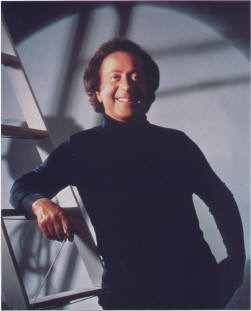 Speaking of Serebrier, he is a phenomenon unto himself. He must easily be the most successful, most award-winning, most often recorded conductor (and composer). The apprentice of Antal Dorati, the assistant conductor to Leopold Stokowski (who sent Serebrier into his career proclaiming him “the greatest master of orchestral balance”), 1968 winner of the Ford Foundation American Conductors Award, with over 250 recorded CDs and 33 Grammy nominations (including a Latin Grammy award for best classical album). Perhaps he is not limelight-seeking enough. He actually provided a partial answer on Monday when he introduced a 1965 National Education Television program that showed the premiere of Ives’s fourth symphony, in which he was involved: When Leopold Stokowski first tried to premiere the Ives, he didn’t get beyond the first bar and lacked enough time for rehearsal. Instead of doing Ives, he called upon the 17-year-old Serebrier to have the latter’s first symphony premiered. A long interview with Time Magazine followed and other media attention was assured; alas, the night his symphony premiered, Sputnik was launched into space and occupied the news for the next weeks. The interview in Time never ran. Serebrier’s fame was postponed.
With the National Gallery Orchestra (which seems to be growing from performance to performance), the troublesome acoustic of the West Garden Court, and all-Strauss, I wasn’t expecting too much from the first half – but was proven wrong entirely. First of all, my “there-is-only-one-Strauss-and-his-name-doesn’t-start-with-a-‘J’” attitude is part charade: Johann Strauss’s music does the soul good from time to time; aside, it reminds me of home. Secondly, the National Gallery Orchestra’s very good, precise, and engaged playing – in itself often cause for joy that night – actually sounded pretty good with the super-reverb added from the hall. For one, it made the orchestra seem twice as large than it already is. Sure, it didn’t exactly allow analytical insights into the music with the lush and dense sound produced, but it packed a punch and impressed: a good combination with the Strauss. The non-Strauss interruption of the first half – wedged between Fledermaus overture, Kaiser-Waltzer, Pizzicato-Polka, and Tritsch-Tratsch-Polka – was the thunderously played waltz out of Spyashchaya krasavitsa which rolls more easily off our tongues as “Sleeping Beauty.”
After the greatly enjoyable first half, I looked forward to what had initially attracted me to the concert: Serebrier’s own compositions and arrangements. The conducting composer gave the U.S. premieres of his 2001 and 2002 compositions Tango in Blue and Casi un Tango. Whereas the mono-melodious Strauss had not suffered (if anything, benefitted) from the acoustic, Tango in Blue got lost in it. One of several short tangos Serebrier composed over the last years, it is a short, ebullient orchestral work with piano that has the entire band dance several tangos with and against each other. I can see how it would make for great encore and Fanfare calling cards for Serebrier himself or indeed any orchestra playing tango- or South America-related programs. Casi un Tango was thinner, more lyrical, contemplative - and the high, unisono violin parts often challenged the NGO’s string section while the lamenting cor anglais was unnecessarily out of tune. It struck me as a music that chose a complicated way of saying something simple.
 As for Jacob Gade’s (1869-1963) Jalousie from 1936, I have not heard about, but I have certainly heard it before. As a soundtrack to a movie perhaps? It was most agreeable… like sophisticated Henry Mancini, perhaps. Had it not been translated as “Jealousy” in the notes, I would have thought that it was about (window) blinds. Oblivion by Astor Piazzolla was heavenly – assuming a liking of the bandoneon, so expertly and passionately handled by Raul Jaurena. This square, German/Argentine cousin of the accordion that can fold out forever (it only plays when pulled apart and has to be folded together quickly before continuing; as if to catch its breath) has an immediately recognizable sound that is charming, seductive, and mournful all in one. The reaction of the generally very excited crowd, too, declared this contribution unanimously their favorite. Georges Bizet composed the last work on the program, Farandole, taken from the Suite Arlésienne. Serebrier, who led it to a rousing finish, should know Bizet very well; he recently recorded his own arrangement of the Carmen music in a highly acclaimed CD titled “Carmen Symphony” on BIS.
Of course no New Year’s concert could be finished without the Donau-Waltzer, and that blue Danube encore did delight under the continuously high-energy, joyful leadership of the conductor. Better still was the return of Mr. Jaurena for an encore and finally there was the wild clap-along of the Radetzky-Marsch where Serebrier pulled all stops and sent the crowd home happy. And a happy start into the the concert season it was, indeed.
We entered the Great Hall for what turned out to be an absolutely glorious concert by the Bournemouth Symphony Orchestra, in cracking form, conducted by the illustrious José Serebrier. There were four items on the mouth-watering programme, three of them devoted to Leopold Stokowski’s orchestral transcriptions. In order of playing, the concert started with Bach’s Passacaglia and Fugue in C minor. José Serebrier’s opening was sheer magic, with pianissimo strings and the conductor (like Stokowski and nowadays many more) using no baton. However, during the concert he did alternate by being both batonless and “with stick.” The work was played superbly and included a physical display of “free bowing.” It culminated in sumptuous glory, as scored by Stokowski for a 20th century orchestra, “which is the sort of thing Bach would have done himself, given similar resources,” said Stokowski in so many words. No doubt this would have made the cold fish of the so-called “authentic brigade” wince, but it was a huge slice of heaven for this writer.
Next on the programme came the Violin Concerto No. 2, La Clochette, by Paganini. Personally I found the work very much a product of the head as opposed to the heart: ie – all show and little substance. The soloist was the 6’2” blonde Canadian, Lara St. John, who very soon showed that she was a virtuoso of the highest order and included the most devastating display of left hand pizzicato that I have ever witnessed. She was very much a “physical player” in total command of her valuable instrument and, as a bonus, especially for us males, was very easy on the eye, being highly attractive!
After the interval the concert was all Mussorgsky via Stokowski, with a considerable increase in the size of the orchestra and multiple percussion that included Stokowski’s favourite, the gong. (Stoky spent a lot of time in the Far East studying Balinese gongs etc. – indeed he had some in his own collection.) First, A Night on a Bare Mountain, which although it no doubt brought back memories of Fantasia where it merged into Schubert’s Ave Maria, here Stokowski’s blazing “sunrise” concluded his normal concert version with some ear-drum tickling sounds. I warned a few friends in the interval to be wary of when to applaud at the end because Stoky requires a tubular bell player to hang on to his finally note, but yes a few “clowns” came in too early to the obvious frustration of our distinguished conductor. Finally we came to Stokowski’s (more Russian-sounding as opposed to Ravel’s somewhat Gallic treatment) realisation of Mussorgsky’s Pictures at an Exhibition. Despite Stokowski’s omission of two “pictures” (we think for “French” sounding reasons), the work was delivered in absolutely splendid style throughout with the orchestra excelling itself in all sections. I shall never forget the incredible sounds made by the seven horns with their extended massed trill in The Great Gate of Kiev, sounding like a herd of polished and cultivated elephants! The decibels were at their extreme and as we filed out a man behind me said “that blew all the dust from Exeter University and I should think the whole of Exeter must have heard it!”
John J. Davis
It should never be forgotten that Beethoven’s Egmont overture was written to accompany a drama by Goethe. Although heard most often separately from the play, the overture is nevertheless inherently dramatic. This is something José Serebrier clearly bears very much in mind, as his conducting of the Royal Philharmonic Orchestra on this occasion amply demonstrated. Such a spirited opening!
From the audience’s angle it can be tempting to concentrate more on the solo part of a concerto, but the orchestral parts can often be just as interesting. Whether it was in his choice of slightly slower than usual tempi- they were never over-consciously deliberate – or his precise attention to the balancing of orchestral sonorities, though never at the expense of the music’s grand sweep and ability to gather passionate steam when needed in outer movements, José Serebrier showed that being a practicing composer can help deliver a fresh approach to even the best known repertoire. The Royal Philharmonic sounded to have enjoyed the experience also, with practically all orchestral departments making notable contributions along the way.
The issue at the centre of Schumann’s fourth symphony is one of form rather than nuance of sonority, though of course that plays a major role – particularly between the two versions of the work that exist. Sticking to the later version, with its thicker textures, Serebrier encouraged a reading that was full of vitality. Having the major themes reoccur in a variety of guises across the movements can often pose problems for conductors regarding the choice of precise tempi and the interrelationship of moods as a consequence. There was none of that confusion here though as Serebrier’s experience paid dividends. He made Schumann’s tricky transitions into particular points of interest and used them to effectively unify the work’s overall structure. Appropriately, passions grew inexorably towards the final movement climax, which surged with full bodied vigour in the brass particularly.
A final reflection is worth mention: Scottish audiences have long appreciated the quality of José Serebrier’s musicality, but for the London public this was the first opportunity for a number of years. Hopefully more concerts will be forthcoming down south before too long.
Evan Dickerson
Charles Ives's Fourth Symphony had to wait half a century for its premiere, which Leopold Stokowski gave with the American Symphony Orchestra in Carnegie Hall 20 seasons ago. It is still far from a repertory piece. The complex, independent and largely uncoordinated music for different orchestral groups, especially in the second movement, pose difficulties that are insuperable unless the normal procedures for preparing symphony concerts can be modified.
José Serebrier was one of Stokowski's two assistants in that 1965 performance. He has gone on to master the rowdy score and to develop a rehearsal scheme for its realization. Yesterday, with the same orchestra in the same hall, he gave it a splendid anniversary performance.
The preparations were extraordinary, entailing over 50 hours of rehearsal. First, there were extensive sectional sessions, with the orchestra broken down almost part by part. (This is the method Mr. Serebrier hit upon in recording the work with the London Symphony; it allows each group to become confident with its own music before throwing it into the stew with other parts that don't ''fit.'' Stokowski had done it slowly, bar by bar, with the whole band.) Then full runthroughs and a preliminary performance in Connecticut; finally more rehearsals in Carnegie itself.
It all paid off in a reading comparable in lucidity, if not quite in orchestral richness, to the recording. Ives himself probably had only the vaguest idea of how the whole thing would sound put together, and nobody who has not listened to it bit by bit, as Mr. Serebrier has, can really confirm that he did indeed get it all right. One takes it on faith. But this much can be said from ''outside observation'': His performance is transparent. In that clangorous second movement, one cannot hear everything at once, but one can choose this or that strand of the texture, focus in to follow it for a while - and find it securely there, inviting inspection. Seiji Ozawa's interpretation with the Boston Symphony, by comparison, is opaque: the clangor resists penetration.
In interviews, Mr. Serebrier has criticized conductors (among them Mr. Ozawa) who try to do the piece without assistants, but apparently he has been working toward such a version himself; the spots requiring separate leadership have been reduced to the point that the concertmaster, occasionally standing, can cover them.
But they will be standing on the shoulders of Mr. Serebrier, and in all likelihood leading orchestras to whom he has taught the score. For that gratitude and praise are due, as also to the A.S.O. for committing itself to the project. A great city's ''second'' orchestra can hardly do better service than to present difficult, worthy works in truly excellent performances. The concert opened with ''American Fanfare,'' a peppy, syncopated essay by the orchestra's hornist Sharon Moe Miranda in the curtain- raising genre of which Copland's ''Fanfare for the Common Man'' remains the touchstone.
Will Crutchfield
WHILE it might have been interesting to hear the Melbourne Symphony Orchestra and the Sydney Symphony play some unknown music from their native land, tonight's national presentation of the two leading Australian orchestras in works by Tchaikovsky and Prokofiev (Arts & Entertainment Network, 9:30 P.M.) is very much worth watching.
Tchaikovsky's Symphony No. 1 (''Winter Dreams'') opens the program in a performance by the Melbourne Symphony. This listener has always found the composer's early symphonies more satisfying than his later, more familiar works. What a lovely piece this is, with its cheerful mien and rambling lyricism! This is Tchaikovsky at his most temperate: there is nothing of the confessional, no libidinal frenzy. José Serebrier's conducting is appropriately passionate. His beat is clear, his manner authoritative, but he does not pull the reins so tightly as to hamper the music's easy flow.
On a visual level, at least, Prokofiev's ''Alexander Nevsky Cantata'' at the Sydney Opera House is even a more successful video (the production crew is entirely different). It begins with an interview with José Serebrier, in which he talks about the score and its utilization in the great Eisenstein film (the conductor also discovered the music of Tchaikovsky on the radio - two signs of the incredible effect that the media have had on the performing arts). The Sydney Symphony and Sydney Philharmonia Choir deliver a very skillful, energetic and inspired performance for Maestro Serebrier; Prokofiev's sturdy cantata is sung in English translation, with subtitles introducing each new section of the work.
Both orchestras are brilliant, the Melbourne ensemble rather more evenly blended, although the Sydney group seems to possess some brilliant soloists. Both groups seem quite comfortable with the Russian idiom.
Tim Page
The Toulouse Chamber Orchestra, conducted by José Serebrier
The Bermuda Festival - Saturday 18 February - City Hall Theatre
I had the pleasure of seeing the Toulouse Chamber Orchestra, conducted under the baton of José Serebrier, for two nights in a row - I say pleasure because on both evenings they produced perfect performances.
Their second evening at the Bermuda Festival, on Saturday, must have been the more personally taxing for Mr Serebrier, as the Chamber Orchestra was not only performing a selection of his own pieces and arrangements, but the featured artist was his wife, soprano Carole Farley. Despite the pressure, the concert went beautifully and I am only sad that there is not a third event to attend.
The rendition of ‘The Romanian Dances' by Bartók in the previous concert was beautiful, and so who could help but be excited to find Edvard Grieg - another nationalist composer with a focus on Norwegian folk - music on the programme? Indeed, the perfect unison and excellent dynamic control achieved by the 11 musicians did the compositions perfect justice. The opening ‘Holberg Suite' showcased a number of different playing techniques and difficult rhythms that were all executed easily. In this title, there was a lot going on orchestrally, and they performed it without seeming busy or uncontrolled. The difficulty in pieces such as these is in finding the songful timbre despite the sometimes discordant lines, such as those also heard in the ‘Two Elegiac Melodies' and the ‘Songs' - nonetheless the gorgeous musical quality of this Chamber group overcame these potential pitfalls easily.
Ms Farley performed the selection of ‘Songs' in Norwegian with support from the orchestra. The first two were as arranged by Mr Serebrier, while the final piece was all Grieg. Her dynamic tone was even more impressive than in her Thursday evening solo performance, and of particular note was the ‘Mother's Lament'.. Her presence on stage produced a great effect.
Mr Serebrier's compositions were interesting and busy texturally. The extremes were reached in the busy, jabbing Presto of ‘Symphony No 3'. The very high notes of the violin are offset by the lovely tone of the cellos and violas. The main line was held by a number of instruments, but I can happily report that there was not a single crack in the armour - each section held their own superbly. The lamentful ‘Andante' must be one of the most haunting compositions of the modern era, possibly best exemplified by the disembodied, wordless and moaning voice heard offstage and the single, unsettlingly high violin note with which the piece ended.
The ‘Tango in Blue' was particularly enjoyable as it gave the second violins and violas a chance to shine - and shine they did! Within the framework of the familiar rhythms and sounds of the tango there was still room for variation and exploration, leading the audience to wait excitedly for the next main phrase. There was a particularly lovely ‘conversation' between the violins and cellos, and exchange of thematic line between the instrumental sections here.
In great contrast was Giacomo Puccini's ‘Chrysantemi'. Written in one night, this romantic but dark piece was accented by purposefully slurred notes under the theme. The often-repeated phrases were expressed with such variation and feeling as to maintain interest. This piece was especially pleasing to the ear and sensitively performed.
As with all well-known pieces, it was interesting to see what the group did with Mozart's ‘Eine Kleine Nachtmusik', and they played this with some flourish. Although all of the musicians were completely professional, certain instrumental sections were clearly enjoying themselves, smiling and performing with vivace. The continuous line held in the second movement was done very well and while the Rondo Allegro initially felt a little fast, it was sustained magnificently.
All in all, I found the group faithful in their interpretations of the selections. Their abilities absolutely shone as they were challenged in a number of arenas - but never once was their quality compromised or their sound imperfect. The energy and attention of the conductor was always apparent - there was no imbalance and an understanding of every part. I think that I can safely say that the audience enjoyed the evening as much as I did - there were three encores!
José Serebrier, one of the most recorded classical artists in history, is renowned for his role as conductor and composer, performing with many of the most important contemporary musical groups and winning many prestigious awards. Carole Farley has likewise broken many barriers in her career and her work has including numerous recordings. Both have been nominated for Grammys, with Mr Serebrier winning several. The Toulouse Chamber Orchestra is a prominent French group that has travelled the world, performing for several decades
Zoe Brady
The Toulouse Chamber Orchestra, conducted by José Serebrier at the Bermuda Festival
Friday 17 February - City Hall Theatre
There’s an extraordinary spark about the Toulouse Chamber Orchestra, an ability to give new life and character to extremely well known pieces, while infusing everything they perform even the more reflective movements and works with a distinctive vivacity. It’s difficult to find out very much about this French group of musicians, other than to learn that they perform throughout the world and were established more than half a century ago.
It does seem obvious that their partnership with the conductor José Serebrier is an extremely happy one.
The clear empathy and quick understanding between the musicians and their conductor gave the interpretative aspects of the performance an organic flavour in what was otherwise an extremely disciplined approach; absolutely strict timing was their hallmark, and Maestro Serebrier quickened the pace of many of the pieces, the result of which was a bright and exhilarating evening of music at the Bermuda Festival on Friday evening.
The Concert began with the very famous ‘Air’, from Suite No 3 by JS Bach. How many brides have walked down the aisle to this lovely and pensive melody? Maestro Serebrier and the Toulouse Chamber Orchestra infused it with sweetness and a lively tempo, freshening this well-loved work.
A lesser-known piece by a slightly lesser known Bach, CPE Bach benefited from this approach: crisp timing and combined with intricate phrasing as the Serebrier magic touch brought to life a work that straddles the Baroque and Classical periods.
Mozart’s gorgeous and fully classical ’Divertimento in D Major’ sparkled as it should, but more than that, José Serebrier and the Toulouse Chamber Orchestra infused it with a joie de vivre that was in a class of its own. Bright and beautifully accented, the familiar final movement, Allegretto, scooted along in the most delightful manner.
Pianist John Constable joined the Chamber Orchestra to perform ‘Concertino for Piano and Orchestra’ by the early 20th century composer Walter Leigh. A modern work, and reflective of the industrial and warring age this Englishman found himself in, it is at times brittle and at others, reflective, sombre and ultimately combative. The strings surrendered centre stage to this extremely fine pianist, often confining themselves to enhancing his part, but also effectively raising their profile when the piece called upon them to converse with the pianist.
Tchaikovsky in his more sombre moods was the focus of the beginning of the second half with three pieces, the first of which allowed us to learn something more about the talents of the conductor, as the Chamber Orchestra performed his special version of the composer’s ‘Andante Cantabile’. This work is described in the programme as “highly expressive” and it was that, and wistful as well. Then, too, Arensky’s ‘Variations on a Theme by Tchaikovsky’, taken from the slow movement of ‘String Quartet No 2, Op. 35’, is characteristically heart-rending in all of its myriad variants. Tchaikovsky’s own ‘Elegy’ is another wistful and beautiful lament, fulsomely mournful in the hands of José Serebrier and the Toulouse Chamber Orchestra.
While the programme departed Russia for Spain it was for another reflection on spirituality and death, Turina’s ‘La Oracion del Torero’ the bull fighter’s prayer and the piece for which Turina is best known. This is Impressionism at its best with the sense of prayer never very far away, yet with a haunting meditation on the coming bull fight in all its drama and excitement, the life and death of this sport being so innately Spanish and it was all there, at once a pensive yet highly coloured rendering of the mind of the matador. Bartok, another composer who was writing at about the same time as Turina, struggled with the authoritarianism of the early Soviet Union, and so left his homeland for safer shores. He is more well known for his ‘Rumanian Dances’ reflecting rich nationalism through the folk music of this Soviet satellite nation. There is nothing quite like hearing these in person no recording can do them justice. They are meant to beautiful and they were exactly that, gorgeous and haunting renderings of a land left behind.
This was an evening of sumptuous music that was technically extremely impressive, with a programme that allowed the audience to contrast work from the Baroque and early Classical period, and then ponder on the challenges posed by the secular and spiritual during the upheaval of the Impressionist period. There was much to ponder, and everything to enjoy at this performance of José Serebrier and the Toulouse Chamber Orchestra.